
Andere Kunden interessierten sich auch für
 Overcoming or limiting distances40,99 €
 Dilemmas of the semi-peripheries30,99 €
 Sustainability of school canteens in primary schools in Benin56,99 €
 Violence in schools in Côte d'Ivoire49,99 €
 State Reform and Schools of Government51,99 €
 Brazilian Infrastructure, Comparing China and Norway, Neoliberalism29,99 €
 Rise in violence in Guinean schools from 1990 to 200556,99 €





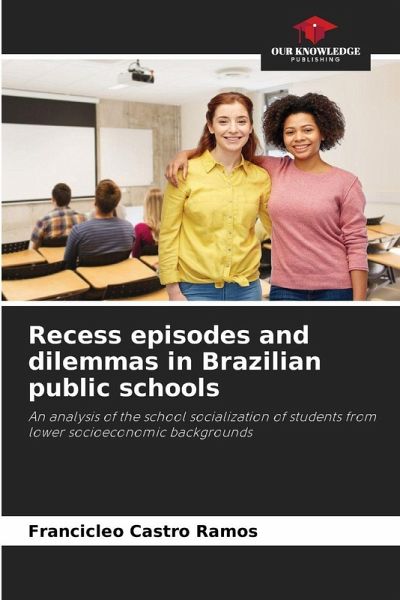
This book examines the school socialization of students from lower socioeconomic backgrounds based on recess episodes. The ethnographic research was conducted in four public elementary schools located in an affluent area of Rio de Janeiro. The social context analyzed is that of the expansion of basic education, which raises questions about the capacity of Brazilian society, through a central institution, to address the problem of educational inequality. In this sense, the theme of equity is a very present concern in sociological reflections that seek to identify the limits and potentialities of school socialization work. It is concluded that, although the 1988 Constitution regulates the task of the school, which is to shape individuals to strengthen democracy, the urban condition of the student is a relevant aspect that permeates relationships at school. Recess episodes show signs of socialization in which integration is precarious and, moreover, point to the school's low capacity to offer students from lower-income classes the opportunity to experience current educational potential.