
Recoverable and Recyclable Catalysts
Ed. by Maurizio Benaglia
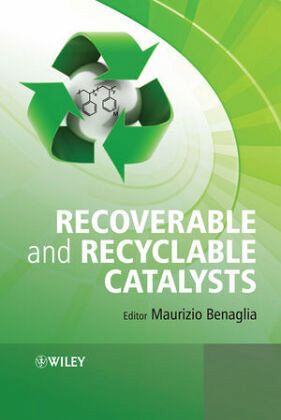
Recoverable and Recyclable Catalysts
Ed. by Maurizio Benaglia
- Gebundenes Buch
- Merkliste
- Auf die Merkliste
- Bewerten Bewerten
- Teilen
- Produkt teilen
- Produkterinnerung
- Produkterinnerung
Drawing on international research, Recoverable and Recyclable Catalysts provides the essentials on recoverable and recyclable catalysts. This practical guide explores the general principles of catalyst recovery and recycling, catalysts on insoluble or soluble supports, thermoresponsive catalysts, self-supported catalysts, and more. Each chapter combines basic general principles, practical information on the design and synthesis of catalysts, and strategies for catalyst recovery. The book presents a comparison of several different catalytic systems. This textbook is essential for students who…mehr
Andere Kunden interessierten sich auch für
 Jens HagenIndustrial Catalysis152,99 €
 Nikos HadjichristidisBlock Copolymers248,99 €
 Klaus HungerIndustrial Organic Pigments202,99 €
 WileyKirk-Othmer Chemical Technology and the Environment, 2 Volume Set654,99 €
 Marko ZlokarnikScale-up165,00 €
 A LapkinGreen Chemistry Metrics162,99 €
 Heinrich StrathmannIntroduction to Membrane Science and Technology68,99 €
-
-
-



Drawing on international research, Recoverable and Recyclable Catalysts provides the essentials on recoverable and recyclable catalysts. This practical guide explores the general principles of catalyst recovery and recycling, catalysts on insoluble or soluble supports, thermoresponsive catalysts, self-supported catalysts, and more. Each chapter combines basic general principles, practical information on the design and synthesis of catalysts, and strategies for catalyst recovery. The book presents a comparison of several different catalytic systems. This textbook is essential for students who want to improve the efficiency and environmental acceptability of industrial processes
Produktdetails
- Produktdetails
- Verlag: Wiley & Sons
- 1. Auflage
- Seitenzahl: 496
- Erscheinungstermin: 1. November 2009
- Englisch
- Abmessung: 253mm x 177mm x 34mm
- Gewicht: 990g
- ISBN-13: 9780470681954
- ISBN-10: 0470681950
- Artikelnr.: 28162909
- Herstellerkennzeichnung
- Libri GmbH
- Europaallee 1
- 36244 Bad Hersfeld
- gpsr@libri.de
- Verlag: Wiley & Sons
- 1. Auflage
- Seitenzahl: 496
- Erscheinungstermin: 1. November 2009
- Englisch
- Abmessung: 253mm x 177mm x 34mm
- Gewicht: 990g
- ISBN-13: 9780470681954
- ISBN-10: 0470681950
- Artikelnr.: 28162909
- Herstellerkennzeichnung
- Libri GmbH
- Europaallee 1
- 36244 Bad Hersfeld
- gpsr@libri.de
Maurizio Benaglia is Associate Professor at the Department of Organic and Industrial Chemistry, University of Milan, Italy. He is author of over ninety publications in international scientific journals, including five review articles. His current research focuses on stereoselective reactions, synthesis of chiral supramolecular systems, synthesis of supported organometallic and metal-free catalysts, and design and synthesis of new chiral catalysts, and environmentally pure catalysts.
Preface xiii
Acknowledgements xv
Contributors xvii
1 The Experimental Assay of Catalyst Recovery: General Concepts 1
John A. Gladysz
1.1 Introduction 1
1.2 Catalyst Precursor vs Catalyst 2
1.3 Catalyst vs Catalyst Resting State 3
1.4 Catalyst Inventory: Loss Mechanisms 5
1.4.1 Catalyst Decomposition 5
1.4.2 Catalyst Leaching 7
1.5 Evaluation of Catalyst Recovery 8
1.5.1 Product Yield, Conversion, or TON as a Function of Cycle: Poor and
Potentially Deceptive Criteria 8
1.5.2 Reaction Rate or TOF as a Function of Cycle 9
1.5.3 Gravimetric and Other Assays of Recovered Catalyst 12
1.5.4 Special Caveats when 'Residues' are Recycled 13
1.6 Prospective 13
References 14
2 Surface-functionalized Nanoporous Catalysts for Renewable Chemistry 15
Brian G. Trewyn, Hung-Ting Chen and Victor S.-Y. Lin
2.1 Introduction 15
2.1.1 Homogeneous Catalysis vs Heterogeneous Catalysis 16
2.1.2 Multi-Site vs Single-Site Heterogeneous Catalysis 16
2.2 Immobilization Strategies of Heterogeneous Catalysts 17
2.2.1 Supported Materials 17
2.2.2 Conventional Methods to Functionalize Silica Surfaces 18
2.2.3 Alternative Synthesis of Immobilized Complex Catalysts on a Solid
Support 25
2.2.4 Techniques for Characterization of Heterogeneous Catalysts 26
2.3 Efficient Heterogeneous Catalysts with Enhanced Reactivity and
Selectivity with Functionality 26
2.3.1 Surface Interaction of Silica and Immobilized Homogeneous Catalysts
26
2.3.2 Introduction of Functionalities and Control of Silica Support
Morphology 29
2.3.3 Selective Surface Functionalization of Solid Support for Utilization
of Nanospace Inside the Porous Structure 31
2.3.4 Cooperative Catalysis by Multifunctionalized Heterogeneous Catalyst
Systems 35
2.3.5 Mesoporous Mixed Metal Oxides for Heterogeneous Catalysts 43
2.4 Other Heterogeneous Catalyst Systems on Nonsilica Supports 44
2.5 Conclusion 45
References 45
3 Insoluble Resin-supported Catalysts 49
Gang Zhao and Zhuo Chai
3.1 Introduction 49
3.2 Transition Metal catalyzed c c Bond Formation Reactions 50
3.2.1 Pd-catalyzed Reactions 50
3.2.2 Asymmetric Additions of Organozinc Reagents to Aldehydes 53
3.2.3 Rh-catalyzed Asymmetric Intermolecular c H Activation 54
3.2.4 Cu-catalyzed Asymmetric Cyclopropanation 55
3.3 Oxidation 56
3.3.1 Oxidation of Sulfides to Sulfoxide 56
3.3.2 Oxidation of Alkanes, Alkenes and Alcohols 57
3.3.3 Epoxidation of Alkenes 58
3.3.4 Asymmetric Hydroformylation of Olefins 59
3.3.5 Asymmetric Dihydroxylation of Alkenes 60
3.4 Reduction 61
3.4.1 Asymmetric Reduction of Ketones 61
3.4.2 Reduction of Carboxamides to Amines 62
3.5 Organocatalyzed Reactions 62
3.5.1 Asymmetric Aldol Reaction and Aminoxylation 63
3.5.2 Asymmetric Tandem Reaction 64
3.5.3 Allylation of Aldehydes 65
3.5.4 Nucleophilic Substitution Reactions 66
3.6 Annulation Reactions 66
3.6.1 Cycloaddition 66
3.6.2 Intramolecular Hydroamination 68
3.7 Miscellaneous 70
3.8 Conclusion 72
References 72
4 Catalysts Bound to Soluble Polymers 77
Tamilselvi Chinnusamy, Petra Hilgers and Oliver Reiser
4.1 Introduction 77
4.2 Soluble Supports - General Considerations 78
4.3 Recent Developments of Soluble Polymer-supported Catalysts 79
4.3.1 Attachment of Catalysts to Polymer Supports 79
4.3.2 Polymer-bound Metal Catalysts - General Considerations 81
4.3.3 Polymer-bound Organocatalysts - General Considerations 81
4.4 Recent Examples for Reactions Promoted by Catalysts Bound to Soluble
Polymers 81
4.4.1 Achiral Catalysts 81
4.4.2 Chiral Catalysts 88
4.5 Conclusion 98
List of Abbreviations 98
References 98
5 Polymeric, Recoverable Catalytic Systems 101
Qiao-Sheng Hu
5.1 Introduction 101
5.2 Polymeric Catalyst Systems 102
5.2.1 1,1 0 -Bi-2-naphthol (BINOL)-based Polymeric Catalytic Systems 102
5.2.2 Bisphosphine-containing Polymeric Catalyst Systems 103
5.2.3 Salen-containing Polymeric Catalytic Systems 108
5.2.4 BINOL-BINAP-based Bifunctional Polymeric Catalytic Systems 108
5.2.5 Dendrimer Catalyst Systems 110
5.2.6 Dendronized Polymeric Catalytic Systems 111
5.3 Summary 114
Acknowledgements 115
References 115
6 Thermomorphic Catalysts 117
David E. Bergbreiter
6.1 Introduction 117
6.2 Thermomorphic Catalyst Separation Strategies 118
6.3 Hydrogenation Reactions Under Thermomorphic Conditions 122
6.4 Hydroformylation Reactions Under Thermomorphic Conditions 126
6.5 Hydroaminations Under Thermomorphic Conditions 129
6.6 Pd-catalyzed Reactions Under Thermomorphic Conditions 130
6.6.1 Pd-catalyzed Allylic Substitution Under Thermomorphic Conditions 130
6.6.2 Pd-catalyzed Cross-coupling Reactions Under Thermomorphic Conditions
131
6.7 Polymerization Reactions Under Thermomorphic Conditions 138
6.8 Organocatalysis Under Thermomorphic Conditions 142
6.9 Cu(I)-catalyzed 1,3-Dipolar Cycloadditions Under Thermomorphic
Conditions 144
6.10 Thermomorphic Hydrosilylation Catalysts 144
6.11 Thermomorphic Catalytic Oxidations 145
6.12 Conclusions 147
References 147
7 Self-supported Asymmetric Catalysts 155
Wenbin Lin and David J. Mihalcik
7.1 Introduction 155
7.2 Self-supported Asymmetric Catalysts Formed by Linking Catalytically
Active Subunits via Metal-Ligand Coordination 156
7.3 Self-supported Asymmetric Catalysts Formed by Post-synthetic
Modifications of Coordination Polymers 163
7.4 Self-supported Asymmetric Catalysts Formed by Linking Multitopic Chiral
Ligands with Catalytic Metal Centers 168
7.5 Conclusions and Outlook 172
Acknowledgments 174
References 174
8 Fluorous Chiral Catalyst Immobilization 179
Tibor Soos
8.1 Introduction 179
8.2 Fluorous Chemistry and its Basic Recovery Concepts 180
8.3 Application of Fluorous Chiral Catalysts 181
8.3.1 Fluorous Nitrogen Ligands 182
8.3.2 Fluorous Oxygen Ligands 192
8.3.3 Phosphorous Ligands 194
8.4 Summary 196
References 197
9 Biphasic Catalysis: Catalysis in Supercritical CO2 and in Water 199
Simon L. Desset and David J. Cole-Hamilton
9.1 Introduction 199
9.2 Biphasic Catalysis 200
9.3 Aqueous Biphasic Catalysis 202
9.3.1 Introduction 202
9.3.2 Aqueous Biphasic Catalysis: Beyond Mass Transfer 203
9.3.3 Additives 203
9.3.4 Surface-active Ligands 212
9.3.5 Homogeneous Reaction with Biphasic Separation 214
9.3.6 Supported Aqueous Phase Catalysis (SAPC) 220
9.3.7 New Reactor Design 227
9.3.8 Conclusion 228
9.4 Supercritical Carbon Dioxide 229
9.4.1 Introduction 229
9.4.2 Supercritical Carbon Dioxide for Catalyst Recycling 230
9.5 Conclusion 246
References 247
10 Asymmetric Catalysis in Ionic Liquids 259
Lijin Xu and Jianliang Xiao
10.1 Introduction 259
10.2 Metal-catalyzed Asymmetric Reactions in ILs 261
10.2.1 Asymmetric Hydrogenation 261
10.2.2 Asymmetric Transfer Hydrogenation 270
10.2.3 Asymmetric Oxidation 271
10.2.4 Asymmetric c c Bond Formation 275
10.2.5 Miscellaneous Reactions 283
10.3 Asymmetric Organocatalytic Reactions in ILs 287
10.3.1 Asymmetric Aldol Reactions 287
10.3.2 Asymmetric Michael Addition 290
10.3.3 Asymmetric Diels-Alder Reaction 292
10.3.4 Asymmetric Mannich Reaction 292
10.3.5 Asymmetric Baylis-Hillman Reaction 293
10.4 Concluding Remarks 294
References 295
11 Recoverable Organic Catalysts 301
Maurizio Benaglia
11.1 Introduction 301
11.2 Achiral Organic Catalysts 304
11.2.1 Oxidation Catalysts 304
11.2.2 Phase Transfer Catalysts 307
11.2.3 Miscellaneous Catalysts 309
11.3 Chiral Organic Catalysts 311
11.3.1 Phase Transfer Catalysts 311
11.3.2 Lewis Base Catalysts 313
11.3.3 Miscellaneous Catalysts 319
11.4 Catalysts Derived from Amino Acids 319
11.4.1 Proline Derivatives 320
11.4.2 Amino Acid-derived Imidazolinones 328
11.4.3 Other Amino Acids 331
11.5 General Considerations on Recyclable Organocatalysts 334
11.6 Outlook and Perspectives 336
References 337
12 Organic Polymer-microencapsulated Metal Catalysts 341
Jun Ou and Patrick H. Toy
12.1 Introduction 341
12.2 Non-cross-linked Polymer-microencapsulated Catalysts 342
12.2.1 Non-cross-linked Polystyrene 342
12.2.2 Non-cross-linked Polystyrene Derivatives 350
12.2.3 Polysulfone 353
12.2.4 Poly(xylylviologen dibromide) 354
12.3 Cross-linked Polymer-microencapsulated Catalysts 355
12.3.1 Divinyl Benzene Cross-linked Polystyrene 355
12.3.2 Oligo(ethylene glycol) Cross-linked Polystyrene 357
12.3.3 Urea Group Cross-linked Polyphenylene 367
12.4 Summary Table 374
12.5 Conclusions 375
References 375
13 Organic Synthesis with Mini Flow Reactors Using Immobilised Catalysts
379
Sascha Ceylan and Andreas Kirschning
13.1 Introduction 379
13.1.1 General Remarks 379
13.1.2 Batch versus Flow Processes 380
13.1.3 Micro versus Mini Flow Reactors 381
13.2 Catalysis in Mini Flow Reactors with Immobilised Catalysts 382
13.2.1 Solid Supports Based on Silica 382
13.2.2 Solid Supports Based on Polymers 387
13.2.3 Monolithic Supports 392
13.2.4 Immobilisation on Membranes 401
13.3 Miscellaneous Enabling Techniques for Mini Flow Systems 404
13.3.1 Ionic Liquids as Media for Immobilisation 404
13.3.2 Inductive Heating - a New Technique for Mini Flow Processes 404
13.4 Perspectives and Outlook 406
References 407
14 Homogeneous Catalysis Using Microreactor Technology 411
Johan C. Brandt and Thomas Wirth
14.1 Introduction 411
14.2 Acid-catalysed Reactions 411
14.3 Liquid-liquid Biphasic Systems 413
14.4 Photocatalysis 418
14.5 Asymmetric Catalytic Reactions 421
14.6 Unusual Reaction Conditions 421
References 423
15 Catalyst Immobilization Strategy: Some General Considerations and a
Comparison of the Main Features of Different Supports 427
Franco Cozzi
15.1 Introduction 427
15.2 General Considerations on Catalyst Immobilization 428
15.2.1 Prerequisite Conditions for Immobilization 428
15.2.2 Reasons Justifying Immobilization 433
15.2.3 A General Discussion on the Practical Aspects of Immobilization 437
15.3 Comparison of Different Supports Employed for the Immobilization of
Proline 442
15.3.1 Organic Supports 442
15.3.2 Inorganic Supports 450
15.4 Comparison of Different Supports Employed for the Immobilization of
Bis(oxazolines) 452
15.4.1 Noncovalent Immobilization 452
15.4.2 Covalent Immobilization 453
15.5 Conclusions 458
References 458
Index 463
Acknowledgements xv
Contributors xvii
1 The Experimental Assay of Catalyst Recovery: General Concepts 1
John A. Gladysz
1.1 Introduction 1
1.2 Catalyst Precursor vs Catalyst 2
1.3 Catalyst vs Catalyst Resting State 3
1.4 Catalyst Inventory: Loss Mechanisms 5
1.4.1 Catalyst Decomposition 5
1.4.2 Catalyst Leaching 7
1.5 Evaluation of Catalyst Recovery 8
1.5.1 Product Yield, Conversion, or TON as a Function of Cycle: Poor and
Potentially Deceptive Criteria 8
1.5.2 Reaction Rate or TOF as a Function of Cycle 9
1.5.3 Gravimetric and Other Assays of Recovered Catalyst 12
1.5.4 Special Caveats when 'Residues' are Recycled 13
1.6 Prospective 13
References 14
2 Surface-functionalized Nanoporous Catalysts for Renewable Chemistry 15
Brian G. Trewyn, Hung-Ting Chen and Victor S.-Y. Lin
2.1 Introduction 15
2.1.1 Homogeneous Catalysis vs Heterogeneous Catalysis 16
2.1.2 Multi-Site vs Single-Site Heterogeneous Catalysis 16
2.2 Immobilization Strategies of Heterogeneous Catalysts 17
2.2.1 Supported Materials 17
2.2.2 Conventional Methods to Functionalize Silica Surfaces 18
2.2.3 Alternative Synthesis of Immobilized Complex Catalysts on a Solid
Support 25
2.2.4 Techniques for Characterization of Heterogeneous Catalysts 26
2.3 Efficient Heterogeneous Catalysts with Enhanced Reactivity and
Selectivity with Functionality 26
2.3.1 Surface Interaction of Silica and Immobilized Homogeneous Catalysts
26
2.3.2 Introduction of Functionalities and Control of Silica Support
Morphology 29
2.3.3 Selective Surface Functionalization of Solid Support for Utilization
of Nanospace Inside the Porous Structure 31
2.3.4 Cooperative Catalysis by Multifunctionalized Heterogeneous Catalyst
Systems 35
2.3.5 Mesoporous Mixed Metal Oxides for Heterogeneous Catalysts 43
2.4 Other Heterogeneous Catalyst Systems on Nonsilica Supports 44
2.5 Conclusion 45
References 45
3 Insoluble Resin-supported Catalysts 49
Gang Zhao and Zhuo Chai
3.1 Introduction 49
3.2 Transition Metal catalyzed c c Bond Formation Reactions 50
3.2.1 Pd-catalyzed Reactions 50
3.2.2 Asymmetric Additions of Organozinc Reagents to Aldehydes 53
3.2.3 Rh-catalyzed Asymmetric Intermolecular c H Activation 54
3.2.4 Cu-catalyzed Asymmetric Cyclopropanation 55
3.3 Oxidation 56
3.3.1 Oxidation of Sulfides to Sulfoxide 56
3.3.2 Oxidation of Alkanes, Alkenes and Alcohols 57
3.3.3 Epoxidation of Alkenes 58
3.3.4 Asymmetric Hydroformylation of Olefins 59
3.3.5 Asymmetric Dihydroxylation of Alkenes 60
3.4 Reduction 61
3.4.1 Asymmetric Reduction of Ketones 61
3.4.2 Reduction of Carboxamides to Amines 62
3.5 Organocatalyzed Reactions 62
3.5.1 Asymmetric Aldol Reaction and Aminoxylation 63
3.5.2 Asymmetric Tandem Reaction 64
3.5.3 Allylation of Aldehydes 65
3.5.4 Nucleophilic Substitution Reactions 66
3.6 Annulation Reactions 66
3.6.1 Cycloaddition 66
3.6.2 Intramolecular Hydroamination 68
3.7 Miscellaneous 70
3.8 Conclusion 72
References 72
4 Catalysts Bound to Soluble Polymers 77
Tamilselvi Chinnusamy, Petra Hilgers and Oliver Reiser
4.1 Introduction 77
4.2 Soluble Supports - General Considerations 78
4.3 Recent Developments of Soluble Polymer-supported Catalysts 79
4.3.1 Attachment of Catalysts to Polymer Supports 79
4.3.2 Polymer-bound Metal Catalysts - General Considerations 81
4.3.3 Polymer-bound Organocatalysts - General Considerations 81
4.4 Recent Examples for Reactions Promoted by Catalysts Bound to Soluble
Polymers 81
4.4.1 Achiral Catalysts 81
4.4.2 Chiral Catalysts 88
4.5 Conclusion 98
List of Abbreviations 98
References 98
5 Polymeric, Recoverable Catalytic Systems 101
Qiao-Sheng Hu
5.1 Introduction 101
5.2 Polymeric Catalyst Systems 102
5.2.1 1,1 0 -Bi-2-naphthol (BINOL)-based Polymeric Catalytic Systems 102
5.2.2 Bisphosphine-containing Polymeric Catalyst Systems 103
5.2.3 Salen-containing Polymeric Catalytic Systems 108
5.2.4 BINOL-BINAP-based Bifunctional Polymeric Catalytic Systems 108
5.2.5 Dendrimer Catalyst Systems 110
5.2.6 Dendronized Polymeric Catalytic Systems 111
5.3 Summary 114
Acknowledgements 115
References 115
6 Thermomorphic Catalysts 117
David E. Bergbreiter
6.1 Introduction 117
6.2 Thermomorphic Catalyst Separation Strategies 118
6.3 Hydrogenation Reactions Under Thermomorphic Conditions 122
6.4 Hydroformylation Reactions Under Thermomorphic Conditions 126
6.5 Hydroaminations Under Thermomorphic Conditions 129
6.6 Pd-catalyzed Reactions Under Thermomorphic Conditions 130
6.6.1 Pd-catalyzed Allylic Substitution Under Thermomorphic Conditions 130
6.6.2 Pd-catalyzed Cross-coupling Reactions Under Thermomorphic Conditions
131
6.7 Polymerization Reactions Under Thermomorphic Conditions 138
6.8 Organocatalysis Under Thermomorphic Conditions 142
6.9 Cu(I)-catalyzed 1,3-Dipolar Cycloadditions Under Thermomorphic
Conditions 144
6.10 Thermomorphic Hydrosilylation Catalysts 144
6.11 Thermomorphic Catalytic Oxidations 145
6.12 Conclusions 147
References 147
7 Self-supported Asymmetric Catalysts 155
Wenbin Lin and David J. Mihalcik
7.1 Introduction 155
7.2 Self-supported Asymmetric Catalysts Formed by Linking Catalytically
Active Subunits via Metal-Ligand Coordination 156
7.3 Self-supported Asymmetric Catalysts Formed by Post-synthetic
Modifications of Coordination Polymers 163
7.4 Self-supported Asymmetric Catalysts Formed by Linking Multitopic Chiral
Ligands with Catalytic Metal Centers 168
7.5 Conclusions and Outlook 172
Acknowledgments 174
References 174
8 Fluorous Chiral Catalyst Immobilization 179
Tibor Soos
8.1 Introduction 179
8.2 Fluorous Chemistry and its Basic Recovery Concepts 180
8.3 Application of Fluorous Chiral Catalysts 181
8.3.1 Fluorous Nitrogen Ligands 182
8.3.2 Fluorous Oxygen Ligands 192
8.3.3 Phosphorous Ligands 194
8.4 Summary 196
References 197
9 Biphasic Catalysis: Catalysis in Supercritical CO2 and in Water 199
Simon L. Desset and David J. Cole-Hamilton
9.1 Introduction 199
9.2 Biphasic Catalysis 200
9.3 Aqueous Biphasic Catalysis 202
9.3.1 Introduction 202
9.3.2 Aqueous Biphasic Catalysis: Beyond Mass Transfer 203
9.3.3 Additives 203
9.3.4 Surface-active Ligands 212
9.3.5 Homogeneous Reaction with Biphasic Separation 214
9.3.6 Supported Aqueous Phase Catalysis (SAPC) 220
9.3.7 New Reactor Design 227
9.3.8 Conclusion 228
9.4 Supercritical Carbon Dioxide 229
9.4.1 Introduction 229
9.4.2 Supercritical Carbon Dioxide for Catalyst Recycling 230
9.5 Conclusion 246
References 247
10 Asymmetric Catalysis in Ionic Liquids 259
Lijin Xu and Jianliang Xiao
10.1 Introduction 259
10.2 Metal-catalyzed Asymmetric Reactions in ILs 261
10.2.1 Asymmetric Hydrogenation 261
10.2.2 Asymmetric Transfer Hydrogenation 270
10.2.3 Asymmetric Oxidation 271
10.2.4 Asymmetric c c Bond Formation 275
10.2.5 Miscellaneous Reactions 283
10.3 Asymmetric Organocatalytic Reactions in ILs 287
10.3.1 Asymmetric Aldol Reactions 287
10.3.2 Asymmetric Michael Addition 290
10.3.3 Asymmetric Diels-Alder Reaction 292
10.3.4 Asymmetric Mannich Reaction 292
10.3.5 Asymmetric Baylis-Hillman Reaction 293
10.4 Concluding Remarks 294
References 295
11 Recoverable Organic Catalysts 301
Maurizio Benaglia
11.1 Introduction 301
11.2 Achiral Organic Catalysts 304
11.2.1 Oxidation Catalysts 304
11.2.2 Phase Transfer Catalysts 307
11.2.3 Miscellaneous Catalysts 309
11.3 Chiral Organic Catalysts 311
11.3.1 Phase Transfer Catalysts 311
11.3.2 Lewis Base Catalysts 313
11.3.3 Miscellaneous Catalysts 319
11.4 Catalysts Derived from Amino Acids 319
11.4.1 Proline Derivatives 320
11.4.2 Amino Acid-derived Imidazolinones 328
11.4.3 Other Amino Acids 331
11.5 General Considerations on Recyclable Organocatalysts 334
11.6 Outlook and Perspectives 336
References 337
12 Organic Polymer-microencapsulated Metal Catalysts 341
Jun Ou and Patrick H. Toy
12.1 Introduction 341
12.2 Non-cross-linked Polymer-microencapsulated Catalysts 342
12.2.1 Non-cross-linked Polystyrene 342
12.2.2 Non-cross-linked Polystyrene Derivatives 350
12.2.3 Polysulfone 353
12.2.4 Poly(xylylviologen dibromide) 354
12.3 Cross-linked Polymer-microencapsulated Catalysts 355
12.3.1 Divinyl Benzene Cross-linked Polystyrene 355
12.3.2 Oligo(ethylene glycol) Cross-linked Polystyrene 357
12.3.3 Urea Group Cross-linked Polyphenylene 367
12.4 Summary Table 374
12.5 Conclusions 375
References 375
13 Organic Synthesis with Mini Flow Reactors Using Immobilised Catalysts
379
Sascha Ceylan and Andreas Kirschning
13.1 Introduction 379
13.1.1 General Remarks 379
13.1.2 Batch versus Flow Processes 380
13.1.3 Micro versus Mini Flow Reactors 381
13.2 Catalysis in Mini Flow Reactors with Immobilised Catalysts 382
13.2.1 Solid Supports Based on Silica 382
13.2.2 Solid Supports Based on Polymers 387
13.2.3 Monolithic Supports 392
13.2.4 Immobilisation on Membranes 401
13.3 Miscellaneous Enabling Techniques for Mini Flow Systems 404
13.3.1 Ionic Liquids as Media for Immobilisation 404
13.3.2 Inductive Heating - a New Technique for Mini Flow Processes 404
13.4 Perspectives and Outlook 406
References 407
14 Homogeneous Catalysis Using Microreactor Technology 411
Johan C. Brandt and Thomas Wirth
14.1 Introduction 411
14.2 Acid-catalysed Reactions 411
14.3 Liquid-liquid Biphasic Systems 413
14.4 Photocatalysis 418
14.5 Asymmetric Catalytic Reactions 421
14.6 Unusual Reaction Conditions 421
References 423
15 Catalyst Immobilization Strategy: Some General Considerations and a
Comparison of the Main Features of Different Supports 427
Franco Cozzi
15.1 Introduction 427
15.2 General Considerations on Catalyst Immobilization 428
15.2.1 Prerequisite Conditions for Immobilization 428
15.2.2 Reasons Justifying Immobilization 433
15.2.3 A General Discussion on the Practical Aspects of Immobilization 437
15.3 Comparison of Different Supports Employed for the Immobilization of
Proline 442
15.3.1 Organic Supports 442
15.3.2 Inorganic Supports 450
15.4 Comparison of Different Supports Employed for the Immobilization of
Bis(oxazolines) 452
15.4.1 Noncovalent Immobilization 452
15.4.2 Covalent Immobilization 453
15.5 Conclusions 458
References 458
Index 463
Preface xiii
Acknowledgements xv
Contributors xvii
1 The Experimental Assay of Catalyst Recovery: General Concepts 1
John A. Gladysz
1.1 Introduction 1
1.2 Catalyst Precursor vs Catalyst 2
1.3 Catalyst vs Catalyst Resting State 3
1.4 Catalyst Inventory: Loss Mechanisms 5
1.4.1 Catalyst Decomposition 5
1.4.2 Catalyst Leaching 7
1.5 Evaluation of Catalyst Recovery 8
1.5.1 Product Yield, Conversion, or TON as a Function of Cycle: Poor and
Potentially Deceptive Criteria 8
1.5.2 Reaction Rate or TOF as a Function of Cycle 9
1.5.3 Gravimetric and Other Assays of Recovered Catalyst 12
1.5.4 Special Caveats when 'Residues' are Recycled 13
1.6 Prospective 13
References 14
2 Surface-functionalized Nanoporous Catalysts for Renewable Chemistry 15
Brian G. Trewyn, Hung-Ting Chen and Victor S.-Y. Lin
2.1 Introduction 15
2.1.1 Homogeneous Catalysis vs Heterogeneous Catalysis 16
2.1.2 Multi-Site vs Single-Site Heterogeneous Catalysis 16
2.2 Immobilization Strategies of Heterogeneous Catalysts 17
2.2.1 Supported Materials 17
2.2.2 Conventional Methods to Functionalize Silica Surfaces 18
2.2.3 Alternative Synthesis of Immobilized Complex Catalysts on a Solid
Support 25
2.2.4 Techniques for Characterization of Heterogeneous Catalysts 26
2.3 Efficient Heterogeneous Catalysts with Enhanced Reactivity and
Selectivity with Functionality 26
2.3.1 Surface Interaction of Silica and Immobilized Homogeneous Catalysts
26
2.3.2 Introduction of Functionalities and Control of Silica Support
Morphology 29
2.3.3 Selective Surface Functionalization of Solid Support for Utilization
of Nanospace Inside the Porous Structure 31
2.3.4 Cooperative Catalysis by Multifunctionalized Heterogeneous Catalyst
Systems 35
2.3.5 Mesoporous Mixed Metal Oxides for Heterogeneous Catalysts 43
2.4 Other Heterogeneous Catalyst Systems on Nonsilica Supports 44
2.5 Conclusion 45
References 45
3 Insoluble Resin-supported Catalysts 49
Gang Zhao and Zhuo Chai
3.1 Introduction 49
3.2 Transition Metal catalyzed c c Bond Formation Reactions 50
3.2.1 Pd-catalyzed Reactions 50
3.2.2 Asymmetric Additions of Organozinc Reagents to Aldehydes 53
3.2.3 Rh-catalyzed Asymmetric Intermolecular c H Activation 54
3.2.4 Cu-catalyzed Asymmetric Cyclopropanation 55
3.3 Oxidation 56
3.3.1 Oxidation of Sulfides to Sulfoxide 56
3.3.2 Oxidation of Alkanes, Alkenes and Alcohols 57
3.3.3 Epoxidation of Alkenes 58
3.3.4 Asymmetric Hydroformylation of Olefins 59
3.3.5 Asymmetric Dihydroxylation of Alkenes 60
3.4 Reduction 61
3.4.1 Asymmetric Reduction of Ketones 61
3.4.2 Reduction of Carboxamides to Amines 62
3.5 Organocatalyzed Reactions 62
3.5.1 Asymmetric Aldol Reaction and Aminoxylation 63
3.5.2 Asymmetric Tandem Reaction 64
3.5.3 Allylation of Aldehydes 65
3.5.4 Nucleophilic Substitution Reactions 66
3.6 Annulation Reactions 66
3.6.1 Cycloaddition 66
3.6.2 Intramolecular Hydroamination 68
3.7 Miscellaneous 70
3.8 Conclusion 72
References 72
4 Catalysts Bound to Soluble Polymers 77
Tamilselvi Chinnusamy, Petra Hilgers and Oliver Reiser
4.1 Introduction 77
4.2 Soluble Supports - General Considerations 78
4.3 Recent Developments of Soluble Polymer-supported Catalysts 79
4.3.1 Attachment of Catalysts to Polymer Supports 79
4.3.2 Polymer-bound Metal Catalysts - General Considerations 81
4.3.3 Polymer-bound Organocatalysts - General Considerations 81
4.4 Recent Examples for Reactions Promoted by Catalysts Bound to Soluble
Polymers 81
4.4.1 Achiral Catalysts 81
4.4.2 Chiral Catalysts 88
4.5 Conclusion 98
List of Abbreviations 98
References 98
5 Polymeric, Recoverable Catalytic Systems 101
Qiao-Sheng Hu
5.1 Introduction 101
5.2 Polymeric Catalyst Systems 102
5.2.1 1,1 0 -Bi-2-naphthol (BINOL)-based Polymeric Catalytic Systems 102
5.2.2 Bisphosphine-containing Polymeric Catalyst Systems 103
5.2.3 Salen-containing Polymeric Catalytic Systems 108
5.2.4 BINOL-BINAP-based Bifunctional Polymeric Catalytic Systems 108
5.2.5 Dendrimer Catalyst Systems 110
5.2.6 Dendronized Polymeric Catalytic Systems 111
5.3 Summary 114
Acknowledgements 115
References 115
6 Thermomorphic Catalysts 117
David E. Bergbreiter
6.1 Introduction 117
6.2 Thermomorphic Catalyst Separation Strategies 118
6.3 Hydrogenation Reactions Under Thermomorphic Conditions 122
6.4 Hydroformylation Reactions Under Thermomorphic Conditions 126
6.5 Hydroaminations Under Thermomorphic Conditions 129
6.6 Pd-catalyzed Reactions Under Thermomorphic Conditions 130
6.6.1 Pd-catalyzed Allylic Substitution Under Thermomorphic Conditions 130
6.6.2 Pd-catalyzed Cross-coupling Reactions Under Thermomorphic Conditions
131
6.7 Polymerization Reactions Under Thermomorphic Conditions 138
6.8 Organocatalysis Under Thermomorphic Conditions 142
6.9 Cu(I)-catalyzed 1,3-Dipolar Cycloadditions Under Thermomorphic
Conditions 144
6.10 Thermomorphic Hydrosilylation Catalysts 144
6.11 Thermomorphic Catalytic Oxidations 145
6.12 Conclusions 147
References 147
7 Self-supported Asymmetric Catalysts 155
Wenbin Lin and David J. Mihalcik
7.1 Introduction 155
7.2 Self-supported Asymmetric Catalysts Formed by Linking Catalytically
Active Subunits via Metal-Ligand Coordination 156
7.3 Self-supported Asymmetric Catalysts Formed by Post-synthetic
Modifications of Coordination Polymers 163
7.4 Self-supported Asymmetric Catalysts Formed by Linking Multitopic Chiral
Ligands with Catalytic Metal Centers 168
7.5 Conclusions and Outlook 172
Acknowledgments 174
References 174
8 Fluorous Chiral Catalyst Immobilization 179
Tibor Soos
8.1 Introduction 179
8.2 Fluorous Chemistry and its Basic Recovery Concepts 180
8.3 Application of Fluorous Chiral Catalysts 181
8.3.1 Fluorous Nitrogen Ligands 182
8.3.2 Fluorous Oxygen Ligands 192
8.3.3 Phosphorous Ligands 194
8.4 Summary 196
References 197
9 Biphasic Catalysis: Catalysis in Supercritical CO2 and in Water 199
Simon L. Desset and David J. Cole-Hamilton
9.1 Introduction 199
9.2 Biphasic Catalysis 200
9.3 Aqueous Biphasic Catalysis 202
9.3.1 Introduction 202
9.3.2 Aqueous Biphasic Catalysis: Beyond Mass Transfer 203
9.3.3 Additives 203
9.3.4 Surface-active Ligands 212
9.3.5 Homogeneous Reaction with Biphasic Separation 214
9.3.6 Supported Aqueous Phase Catalysis (SAPC) 220
9.3.7 New Reactor Design 227
9.3.8 Conclusion 228
9.4 Supercritical Carbon Dioxide 229
9.4.1 Introduction 229
9.4.2 Supercritical Carbon Dioxide for Catalyst Recycling 230
9.5 Conclusion 246
References 247
10 Asymmetric Catalysis in Ionic Liquids 259
Lijin Xu and Jianliang Xiao
10.1 Introduction 259
10.2 Metal-catalyzed Asymmetric Reactions in ILs 261
10.2.1 Asymmetric Hydrogenation 261
10.2.2 Asymmetric Transfer Hydrogenation 270
10.2.3 Asymmetric Oxidation 271
10.2.4 Asymmetric c c Bond Formation 275
10.2.5 Miscellaneous Reactions 283
10.3 Asymmetric Organocatalytic Reactions in ILs 287
10.3.1 Asymmetric Aldol Reactions 287
10.3.2 Asymmetric Michael Addition 290
10.3.3 Asymmetric Diels-Alder Reaction 292
10.3.4 Asymmetric Mannich Reaction 292
10.3.5 Asymmetric Baylis-Hillman Reaction 293
10.4 Concluding Remarks 294
References 295
11 Recoverable Organic Catalysts 301
Maurizio Benaglia
11.1 Introduction 301
11.2 Achiral Organic Catalysts 304
11.2.1 Oxidation Catalysts 304
11.2.2 Phase Transfer Catalysts 307
11.2.3 Miscellaneous Catalysts 309
11.3 Chiral Organic Catalysts 311
11.3.1 Phase Transfer Catalysts 311
11.3.2 Lewis Base Catalysts 313
11.3.3 Miscellaneous Catalysts 319
11.4 Catalysts Derived from Amino Acids 319
11.4.1 Proline Derivatives 320
11.4.2 Amino Acid-derived Imidazolinones 328
11.4.3 Other Amino Acids 331
11.5 General Considerations on Recyclable Organocatalysts 334
11.6 Outlook and Perspectives 336
References 337
12 Organic Polymer-microencapsulated Metal Catalysts 341
Jun Ou and Patrick H. Toy
12.1 Introduction 341
12.2 Non-cross-linked Polymer-microencapsulated Catalysts 342
12.2.1 Non-cross-linked Polystyrene 342
12.2.2 Non-cross-linked Polystyrene Derivatives 350
12.2.3 Polysulfone 353
12.2.4 Poly(xylylviologen dibromide) 354
12.3 Cross-linked Polymer-microencapsulated Catalysts 355
12.3.1 Divinyl Benzene Cross-linked Polystyrene 355
12.3.2 Oligo(ethylene glycol) Cross-linked Polystyrene 357
12.3.3 Urea Group Cross-linked Polyphenylene 367
12.4 Summary Table 374
12.5 Conclusions 375
References 375
13 Organic Synthesis with Mini Flow Reactors Using Immobilised Catalysts
379
Sascha Ceylan and Andreas Kirschning
13.1 Introduction 379
13.1.1 General Remarks 379
13.1.2 Batch versus Flow Processes 380
13.1.3 Micro versus Mini Flow Reactors 381
13.2 Catalysis in Mini Flow Reactors with Immobilised Catalysts 382
13.2.1 Solid Supports Based on Silica 382
13.2.2 Solid Supports Based on Polymers 387
13.2.3 Monolithic Supports 392
13.2.4 Immobilisation on Membranes 401
13.3 Miscellaneous Enabling Techniques for Mini Flow Systems 404
13.3.1 Ionic Liquids as Media for Immobilisation 404
13.3.2 Inductive Heating - a New Technique for Mini Flow Processes 404
13.4 Perspectives and Outlook 406
References 407
14 Homogeneous Catalysis Using Microreactor Technology 411
Johan C. Brandt and Thomas Wirth
14.1 Introduction 411
14.2 Acid-catalysed Reactions 411
14.3 Liquid-liquid Biphasic Systems 413
14.4 Photocatalysis 418
14.5 Asymmetric Catalytic Reactions 421
14.6 Unusual Reaction Conditions 421
References 423
15 Catalyst Immobilization Strategy: Some General Considerations and a
Comparison of the Main Features of Different Supports 427
Franco Cozzi
15.1 Introduction 427
15.2 General Considerations on Catalyst Immobilization 428
15.2.1 Prerequisite Conditions for Immobilization 428
15.2.2 Reasons Justifying Immobilization 433
15.2.3 A General Discussion on the Practical Aspects of Immobilization 437
15.3 Comparison of Different Supports Employed for the Immobilization of
Proline 442
15.3.1 Organic Supports 442
15.3.2 Inorganic Supports 450
15.4 Comparison of Different Supports Employed for the Immobilization of
Bis(oxazolines) 452
15.4.1 Noncovalent Immobilization 452
15.4.2 Covalent Immobilization 453
15.5 Conclusions 458
References 458
Index 463
Acknowledgements xv
Contributors xvii
1 The Experimental Assay of Catalyst Recovery: General Concepts 1
John A. Gladysz
1.1 Introduction 1
1.2 Catalyst Precursor vs Catalyst 2
1.3 Catalyst vs Catalyst Resting State 3
1.4 Catalyst Inventory: Loss Mechanisms 5
1.4.1 Catalyst Decomposition 5
1.4.2 Catalyst Leaching 7
1.5 Evaluation of Catalyst Recovery 8
1.5.1 Product Yield, Conversion, or TON as a Function of Cycle: Poor and
Potentially Deceptive Criteria 8
1.5.2 Reaction Rate or TOF as a Function of Cycle 9
1.5.3 Gravimetric and Other Assays of Recovered Catalyst 12
1.5.4 Special Caveats when 'Residues' are Recycled 13
1.6 Prospective 13
References 14
2 Surface-functionalized Nanoporous Catalysts for Renewable Chemistry 15
Brian G. Trewyn, Hung-Ting Chen and Victor S.-Y. Lin
2.1 Introduction 15
2.1.1 Homogeneous Catalysis vs Heterogeneous Catalysis 16
2.1.2 Multi-Site vs Single-Site Heterogeneous Catalysis 16
2.2 Immobilization Strategies of Heterogeneous Catalysts 17
2.2.1 Supported Materials 17
2.2.2 Conventional Methods to Functionalize Silica Surfaces 18
2.2.3 Alternative Synthesis of Immobilized Complex Catalysts on a Solid
Support 25
2.2.4 Techniques for Characterization of Heterogeneous Catalysts 26
2.3 Efficient Heterogeneous Catalysts with Enhanced Reactivity and
Selectivity with Functionality 26
2.3.1 Surface Interaction of Silica and Immobilized Homogeneous Catalysts
26
2.3.2 Introduction of Functionalities and Control of Silica Support
Morphology 29
2.3.3 Selective Surface Functionalization of Solid Support for Utilization
of Nanospace Inside the Porous Structure 31
2.3.4 Cooperative Catalysis by Multifunctionalized Heterogeneous Catalyst
Systems 35
2.3.5 Mesoporous Mixed Metal Oxides for Heterogeneous Catalysts 43
2.4 Other Heterogeneous Catalyst Systems on Nonsilica Supports 44
2.5 Conclusion 45
References 45
3 Insoluble Resin-supported Catalysts 49
Gang Zhao and Zhuo Chai
3.1 Introduction 49
3.2 Transition Metal catalyzed c c Bond Formation Reactions 50
3.2.1 Pd-catalyzed Reactions 50
3.2.2 Asymmetric Additions of Organozinc Reagents to Aldehydes 53
3.2.3 Rh-catalyzed Asymmetric Intermolecular c H Activation 54
3.2.4 Cu-catalyzed Asymmetric Cyclopropanation 55
3.3 Oxidation 56
3.3.1 Oxidation of Sulfides to Sulfoxide 56
3.3.2 Oxidation of Alkanes, Alkenes and Alcohols 57
3.3.3 Epoxidation of Alkenes 58
3.3.4 Asymmetric Hydroformylation of Olefins 59
3.3.5 Asymmetric Dihydroxylation of Alkenes 60
3.4 Reduction 61
3.4.1 Asymmetric Reduction of Ketones 61
3.4.2 Reduction of Carboxamides to Amines 62
3.5 Organocatalyzed Reactions 62
3.5.1 Asymmetric Aldol Reaction and Aminoxylation 63
3.5.2 Asymmetric Tandem Reaction 64
3.5.3 Allylation of Aldehydes 65
3.5.4 Nucleophilic Substitution Reactions 66
3.6 Annulation Reactions 66
3.6.1 Cycloaddition 66
3.6.2 Intramolecular Hydroamination 68
3.7 Miscellaneous 70
3.8 Conclusion 72
References 72
4 Catalysts Bound to Soluble Polymers 77
Tamilselvi Chinnusamy, Petra Hilgers and Oliver Reiser
4.1 Introduction 77
4.2 Soluble Supports - General Considerations 78
4.3 Recent Developments of Soluble Polymer-supported Catalysts 79
4.3.1 Attachment of Catalysts to Polymer Supports 79
4.3.2 Polymer-bound Metal Catalysts - General Considerations 81
4.3.3 Polymer-bound Organocatalysts - General Considerations 81
4.4 Recent Examples for Reactions Promoted by Catalysts Bound to Soluble
Polymers 81
4.4.1 Achiral Catalysts 81
4.4.2 Chiral Catalysts 88
4.5 Conclusion 98
List of Abbreviations 98
References 98
5 Polymeric, Recoverable Catalytic Systems 101
Qiao-Sheng Hu
5.1 Introduction 101
5.2 Polymeric Catalyst Systems 102
5.2.1 1,1 0 -Bi-2-naphthol (BINOL)-based Polymeric Catalytic Systems 102
5.2.2 Bisphosphine-containing Polymeric Catalyst Systems 103
5.2.3 Salen-containing Polymeric Catalytic Systems 108
5.2.4 BINOL-BINAP-based Bifunctional Polymeric Catalytic Systems 108
5.2.5 Dendrimer Catalyst Systems 110
5.2.6 Dendronized Polymeric Catalytic Systems 111
5.3 Summary 114
Acknowledgements 115
References 115
6 Thermomorphic Catalysts 117
David E. Bergbreiter
6.1 Introduction 117
6.2 Thermomorphic Catalyst Separation Strategies 118
6.3 Hydrogenation Reactions Under Thermomorphic Conditions 122
6.4 Hydroformylation Reactions Under Thermomorphic Conditions 126
6.5 Hydroaminations Under Thermomorphic Conditions 129
6.6 Pd-catalyzed Reactions Under Thermomorphic Conditions 130
6.6.1 Pd-catalyzed Allylic Substitution Under Thermomorphic Conditions 130
6.6.2 Pd-catalyzed Cross-coupling Reactions Under Thermomorphic Conditions
131
6.7 Polymerization Reactions Under Thermomorphic Conditions 138
6.8 Organocatalysis Under Thermomorphic Conditions 142
6.9 Cu(I)-catalyzed 1,3-Dipolar Cycloadditions Under Thermomorphic
Conditions 144
6.10 Thermomorphic Hydrosilylation Catalysts 144
6.11 Thermomorphic Catalytic Oxidations 145
6.12 Conclusions 147
References 147
7 Self-supported Asymmetric Catalysts 155
Wenbin Lin and David J. Mihalcik
7.1 Introduction 155
7.2 Self-supported Asymmetric Catalysts Formed by Linking Catalytically
Active Subunits via Metal-Ligand Coordination 156
7.3 Self-supported Asymmetric Catalysts Formed by Post-synthetic
Modifications of Coordination Polymers 163
7.4 Self-supported Asymmetric Catalysts Formed by Linking Multitopic Chiral
Ligands with Catalytic Metal Centers 168
7.5 Conclusions and Outlook 172
Acknowledgments 174
References 174
8 Fluorous Chiral Catalyst Immobilization 179
Tibor Soos
8.1 Introduction 179
8.2 Fluorous Chemistry and its Basic Recovery Concepts 180
8.3 Application of Fluorous Chiral Catalysts 181
8.3.1 Fluorous Nitrogen Ligands 182
8.3.2 Fluorous Oxygen Ligands 192
8.3.3 Phosphorous Ligands 194
8.4 Summary 196
References 197
9 Biphasic Catalysis: Catalysis in Supercritical CO2 and in Water 199
Simon L. Desset and David J. Cole-Hamilton
9.1 Introduction 199
9.2 Biphasic Catalysis 200
9.3 Aqueous Biphasic Catalysis 202
9.3.1 Introduction 202
9.3.2 Aqueous Biphasic Catalysis: Beyond Mass Transfer 203
9.3.3 Additives 203
9.3.4 Surface-active Ligands 212
9.3.5 Homogeneous Reaction with Biphasic Separation 214
9.3.6 Supported Aqueous Phase Catalysis (SAPC) 220
9.3.7 New Reactor Design 227
9.3.8 Conclusion 228
9.4 Supercritical Carbon Dioxide 229
9.4.1 Introduction 229
9.4.2 Supercritical Carbon Dioxide for Catalyst Recycling 230
9.5 Conclusion 246
References 247
10 Asymmetric Catalysis in Ionic Liquids 259
Lijin Xu and Jianliang Xiao
10.1 Introduction 259
10.2 Metal-catalyzed Asymmetric Reactions in ILs 261
10.2.1 Asymmetric Hydrogenation 261
10.2.2 Asymmetric Transfer Hydrogenation 270
10.2.3 Asymmetric Oxidation 271
10.2.4 Asymmetric c c Bond Formation 275
10.2.5 Miscellaneous Reactions 283
10.3 Asymmetric Organocatalytic Reactions in ILs 287
10.3.1 Asymmetric Aldol Reactions 287
10.3.2 Asymmetric Michael Addition 290
10.3.3 Asymmetric Diels-Alder Reaction 292
10.3.4 Asymmetric Mannich Reaction 292
10.3.5 Asymmetric Baylis-Hillman Reaction 293
10.4 Concluding Remarks 294
References 295
11 Recoverable Organic Catalysts 301
Maurizio Benaglia
11.1 Introduction 301
11.2 Achiral Organic Catalysts 304
11.2.1 Oxidation Catalysts 304
11.2.2 Phase Transfer Catalysts 307
11.2.3 Miscellaneous Catalysts 309
11.3 Chiral Organic Catalysts 311
11.3.1 Phase Transfer Catalysts 311
11.3.2 Lewis Base Catalysts 313
11.3.3 Miscellaneous Catalysts 319
11.4 Catalysts Derived from Amino Acids 319
11.4.1 Proline Derivatives 320
11.4.2 Amino Acid-derived Imidazolinones 328
11.4.3 Other Amino Acids 331
11.5 General Considerations on Recyclable Organocatalysts 334
11.6 Outlook and Perspectives 336
References 337
12 Organic Polymer-microencapsulated Metal Catalysts 341
Jun Ou and Patrick H. Toy
12.1 Introduction 341
12.2 Non-cross-linked Polymer-microencapsulated Catalysts 342
12.2.1 Non-cross-linked Polystyrene 342
12.2.2 Non-cross-linked Polystyrene Derivatives 350
12.2.3 Polysulfone 353
12.2.4 Poly(xylylviologen dibromide) 354
12.3 Cross-linked Polymer-microencapsulated Catalysts 355
12.3.1 Divinyl Benzene Cross-linked Polystyrene 355
12.3.2 Oligo(ethylene glycol) Cross-linked Polystyrene 357
12.3.3 Urea Group Cross-linked Polyphenylene 367
12.4 Summary Table 374
12.5 Conclusions 375
References 375
13 Organic Synthesis with Mini Flow Reactors Using Immobilised Catalysts
379
Sascha Ceylan and Andreas Kirschning
13.1 Introduction 379
13.1.1 General Remarks 379
13.1.2 Batch versus Flow Processes 380
13.1.3 Micro versus Mini Flow Reactors 381
13.2 Catalysis in Mini Flow Reactors with Immobilised Catalysts 382
13.2.1 Solid Supports Based on Silica 382
13.2.2 Solid Supports Based on Polymers 387
13.2.3 Monolithic Supports 392
13.2.4 Immobilisation on Membranes 401
13.3 Miscellaneous Enabling Techniques for Mini Flow Systems 404
13.3.1 Ionic Liquids as Media for Immobilisation 404
13.3.2 Inductive Heating - a New Technique for Mini Flow Processes 404
13.4 Perspectives and Outlook 406
References 407
14 Homogeneous Catalysis Using Microreactor Technology 411
Johan C. Brandt and Thomas Wirth
14.1 Introduction 411
14.2 Acid-catalysed Reactions 411
14.3 Liquid-liquid Biphasic Systems 413
14.4 Photocatalysis 418
14.5 Asymmetric Catalytic Reactions 421
14.6 Unusual Reaction Conditions 421
References 423
15 Catalyst Immobilization Strategy: Some General Considerations and a
Comparison of the Main Features of Different Supports 427
Franco Cozzi
15.1 Introduction 427
15.2 General Considerations on Catalyst Immobilization 428
15.2.1 Prerequisite Conditions for Immobilization 428
15.2.2 Reasons Justifying Immobilization 433
15.2.3 A General Discussion on the Practical Aspects of Immobilization 437
15.3 Comparison of Different Supports Employed for the Immobilization of
Proline 442
15.3.1 Organic Supports 442
15.3.2 Inorganic Supports 450
15.4 Comparison of Different Supports Employed for the Immobilization of
Bis(oxazolines) 452
15.4.1 Noncovalent Immobilization 452
15.4.2 Covalent Immobilization 453
15.5 Conclusions 458
References 458
Index 463