Qamar-Ul Huda
Reenvisioning Peacebuilding and Conflict Resolution in Islam
Qamar-Ul Huda
Reenvisioning Peacebuilding and Conflict Resolution in Islam
- Gebundenes Buch
- Merkliste
- Auf die Merkliste
- Bewerten Bewerten
- Teilen
- Produkt teilen
- Produkterinnerung
- Produkterinnerung
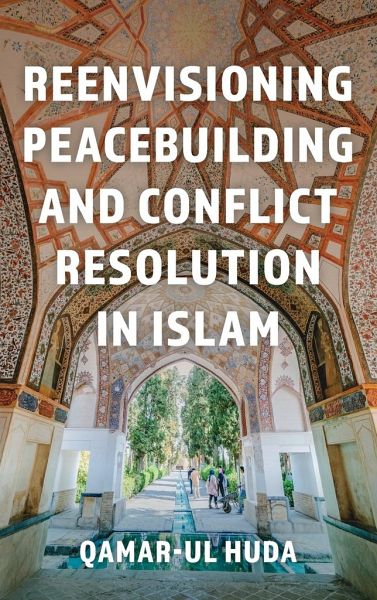
Qamar-ul Huda investigates the application of conflict resolution and peacebuilding in Muslim-majority communities. The book focuses on methods and practices by Muslim practitioners and shows how a faith-based commitment retains the capacity to empower effective social, political, and intellectual action that results in meaningful change.
Andere Kunden interessierten sich auch für
Qamar Ul-HudaReenvisioning Peacebuilding and Conflict Resolution in Islam42,99 €
Michael BrecherA Century of Crisis and Conflict in the International System91,99 €
Kevin PallisterElections in Latin America83,99 €
Values in Foreign Policy49,99 €
Kevin PallisterElections in Latin America33,99 €
Values in Foreign Policy134,99 €
Adaptive Mediation and Conflict Resolution38,99 €-
-
-
Qamar-ul Huda investigates the application of conflict resolution and peacebuilding in Muslim-majority communities. The book focuses on methods and practices by Muslim practitioners and shows how a faith-based commitment retains the capacity to empower effective social, political, and intellectual action that results in meaningful change.
Produktdetails
- Produktdetails
- Verlag: Rowman & Littlefield Publishers
- Seitenzahl: 328
- Erscheinungstermin: 16. April 2024
- Englisch
- Abmessung: 235mm x 157mm x 22mm
- Gewicht: 627g
- ISBN-13: 9781538192238
- ISBN-10: 1538192233
- Artikelnr.: 69590203
- Herstellerkennzeichnung
- Libri GmbH
- Europaallee 1
- 36244 Bad Hersfeld
- gpsr@libri.de
- Verlag: Rowman & Littlefield Publishers
- Seitenzahl: 328
- Erscheinungstermin: 16. April 2024
- Englisch
- Abmessung: 235mm x 157mm x 22mm
- Gewicht: 627g
- ISBN-13: 9781538192238
- ISBN-10: 1538192233
- Artikelnr.: 69590203
- Herstellerkennzeichnung
- Libri GmbH
- Europaallee 1
- 36244 Bad Hersfeld
- gpsr@libri.de
Qamar-ul Huda is the Michael E. Paul Chair in International Affairs and a Distinguished Visiting Professor at the United States Naval Academy in Annapolis, Maryland. He previously taught at Georgetown University's School of Government. He co-founded and served as Vice President of the Center for Global Policy, a nonpartisan think tank that focuses on U.S. foreign policy and geopolitics. Dr. Huda served as a Senior Policy Advisor in the U.S. Department of State Secretary's Office for Religion and Global Affairs, where he focused on civil society, religious communities, and diplomacy. The US State Department recruited Dr. Huda to be seconded as the first Director of Dialogue and Collaboration at Hedayah: The International Center of Excellence for Countering Violent Extremism, based in the United Arab Emirates. For ten years, he worked at the U.S. Institute of Peace headquarters in Washington, D.C., a Congressionally Funded national institute dedicated to reducing and preventing global conflict. At the Institute, he served as a senior expert in conflict resolution and religious peacebuilding, and designed and supervised conflict resolution and meditation courses in the Middle East, South Asia, and Southeast Asia. At the U.S. Naval Academy, Dr. Huda teaches courses on U.S. diplomacy, conflict studies, conflict resolution, international peacebuilding, foreign policy, international relations, and the regions of Afghanistan, Iran, and South Asia. He taught at the University of California, Los Angeles, Boston College, Brandeis University, and the College of Holy Cross. Dr. Huda has published three books and six training manuals on conflict, mediation, and religious peacebuilding, which are still used by leading international organizations. He was a Fulbright scholar, a Social Science Research Council grant recipient, and was selected on the prestigious 500 Most Influential Muslims List from 2017 to 2023. He earned his doctorate in political history from the University of California, Los Angeles (UCLA) and a Master of Arts degree from the University of California, Los Angeles (UCLA) in political economy of Asia. He received his Bachelor of Arts in international relations, philosophy, and religion from Colgate University.
Table of Contents
Introduction
Section I. Peacebuilding, Conflict Resolution & Violence
Chapter 1. Integrated Peace and Human Security Paradigms
Chapter 2. Peacebuilding in a Globalized World
Chapter 3. Rethinking Violence and Countering Violent Extremism
Section II. Religion as an Influential Force
Chapter 4.Religion and Civil Society
Chapter 5. The Discourse of Islam and Peacebuilding
Chapter 6. Living in Peace
Chapter 7. Interfaith Dialogue and Challenges of Pluralism
Section III. Peacebuilding with Peace Education
Chapter 8. Peace Education
Chapter 9. Islamic Peace Education
Section IV. Ethics, Music, and the Sacred
Chapter 10. Modern Islamic Ethics in a Global World
Chapter 11: The Sacred, Memory, Music, and Peacebuilding
Epilogue
Glossary
Bibliography
Introduction
Section I. Peacebuilding, Conflict Resolution & Violence
Chapter 1. Integrated Peace and Human Security Paradigms
Chapter 2. Peacebuilding in a Globalized World
Chapter 3. Rethinking Violence and Countering Violent Extremism
Section II. Religion as an Influential Force
Chapter 4.Religion and Civil Society
Chapter 5. The Discourse of Islam and Peacebuilding
Chapter 6. Living in Peace
Chapter 7. Interfaith Dialogue and Challenges of Pluralism
Section III. Peacebuilding with Peace Education
Chapter 8. Peace Education
Chapter 9. Islamic Peace Education
Section IV. Ethics, Music, and the Sacred
Chapter 10. Modern Islamic Ethics in a Global World
Chapter 11: The Sacred, Memory, Music, and Peacebuilding
Epilogue
Glossary
Bibliography
Table of Contents
Introduction
Section I. Peacebuilding, Conflict Resolution & Violence
Chapter 1. Integrated Peace and Human Security Paradigms
Chapter 2. Peacebuilding in a Globalized World
Chapter 3. Rethinking Violence and Countering Violent Extremism
Section II. Religion as an Influential Force
Chapter 4.Religion and Civil Society
Chapter 5. The Discourse of Islam and Peacebuilding
Chapter 6. Living in Peace
Chapter 7. Interfaith Dialogue and Challenges of Pluralism
Section III. Peacebuilding with Peace Education
Chapter 8. Peace Education
Chapter 9. Islamic Peace Education
Section IV. Ethics, Music, and the Sacred
Chapter 10. Modern Islamic Ethics in a Global World
Chapter 11: The Sacred, Memory, Music, and Peacebuilding
Epilogue
Glossary
Bibliography
Introduction
Section I. Peacebuilding, Conflict Resolution & Violence
Chapter 1. Integrated Peace and Human Security Paradigms
Chapter 2. Peacebuilding in a Globalized World
Chapter 3. Rethinking Violence and Countering Violent Extremism
Section II. Religion as an Influential Force
Chapter 4.Religion and Civil Society
Chapter 5. The Discourse of Islam and Peacebuilding
Chapter 6. Living in Peace
Chapter 7. Interfaith Dialogue and Challenges of Pluralism
Section III. Peacebuilding with Peace Education
Chapter 8. Peace Education
Chapter 9. Islamic Peace Education
Section IV. Ethics, Music, and the Sacred
Chapter 10. Modern Islamic Ethics in a Global World
Chapter 11: The Sacred, Memory, Music, and Peacebuilding
Epilogue
Glossary
Bibliography