
Andere Kunden interessierten sich auch für
 An Introduction To Reflective Thinking22,99 €
 Research on Reflective Practice in TESOL56,99 €
 Educating Chinese-Heritage Students in the Global-Local Nexus55,99 €
 Teacher Professional Knowledge and Development for Reflective and Inclusive Practices57,99 €
 Action Research and Reflective Practice50,99 €
 International Students from Asia in Canadian Universities54,99 €
 Reflective Teacher Development in Primary Science31,99 €


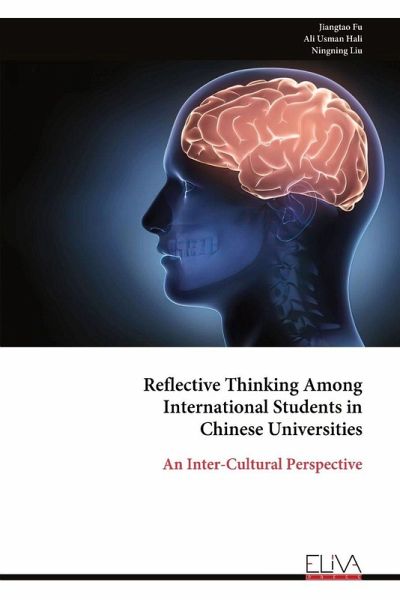
Reflective thinking (RT) is increasingly recognized as a vital competency in global education, yet its development and assessment in multilingual, intercultural contexts remain underexplored. This study examines how international students in Chinese universities engage in RT, both as a measurable cognitive construct and a lived, adaptive process shaped by emotional and cultural transitions. A sequential mixed-methods approach was employed to integrate psychometric validation with experiential insight. Survey data from 482 international students were analyzed using exploratory and confirmatory factor analysis, confirming a robust four-factor model of the Reflective Thinking Scale (RTS): Habitual Action, Understanding, Reflection, and Critical Reflection. The RTS demonstrated strong internal consistency (¿ = .77) and high test-retest reliability (r = .83). Significant differences across gender and academic level suggest demographic influences on reflective capacity. Qualitative data from reflective journals and semi-structured interviews revealed four key themes: navigating academic and cultural dissonance, evolving reflective practices, emotional resilience, and identity negotiation in intercultural settings.