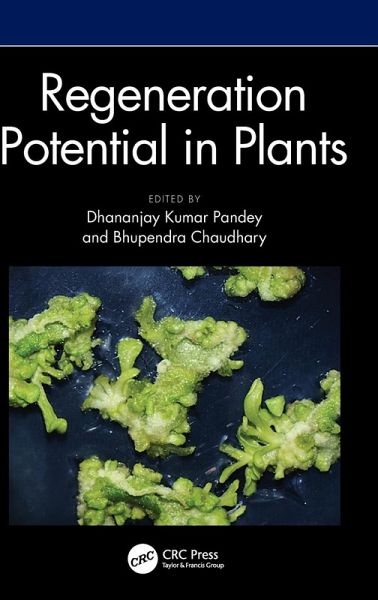
Regeneration Potential in Plants delves into the intricate world of plant regeneration, exploring the biological and molecular mechanisms that enable plants to regenerate under different conditions.
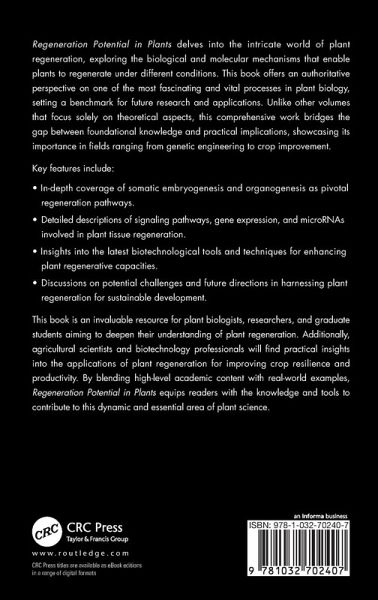
Regeneration Potential in Plants delves into the intricate world of plant regeneration, exploring the biological and molecular mechanisms that enable plants to regenerate under different conditions.
Dhananjay Kumar Pandey, PhD, is an accomplished academician and researcher with expertise in plant molecular biology and agronomic trait enhancement in crops. He currently serves as an assistant professor at Amity University, Jharkhand. With over eight years of research and teaching experience in India and abroad, he has made notable contributions to his field. His academic journey includes postdoctoral research stints at Adam Mickiewicz University, Poland, and the University of California, San Diego, USA. His research focuses on unraveling molecular mechanisms underlying plant development for improved crop traits. He has authored more than 20 papers in esteemed international journals and filed eight patents stemming from his pioneering research. Some key contributions include unraveling the transcriptional network of cotton fiber elongation, exploring the evolutionary diversity of plant profilin genes, and investigating novel strategies for crop biofortification. His research has global relevance, evident from collaborations across borders. He has also shared his insights through book chapters, notably in the fields of agri/bioinformatics and next¿generation sequencing applications in biological sciences. As an assistant professor at Amity University, he continues to be a driving force in plant molecular biology research, offering valuable contributions to the advancement of agriculture and biotechnology. Bhupendra Chaudhary, PhD, is an associate professor at the School of Life Sciences, Jawaharlal Nehru University in New Delhi, India. His expertise lies in genomics and genetic engineering, particularly applied to improving crop plants¿ attributes, stress resilience, and field traits, with a focus on cotton fibers. He has held leadership positions, such as being the Head of the Department at the School of Biotechnology at Gautam Buddha University. His academic journey includes earning his MPhil and PhD degrees from the University of Delhi in 1999 and 2006, respectively. He also contributed to international academia as a DBT visiting associate at the Department of Ecology, Evolution, and Organismal Biology at Iowa State University, USA, from 2007 to 2008. Prior to that, he served as a lecturer of botany at VisväBharati (Central) University, Santiniketan, between 2005 and 2009. His research dedication is reflected in his significant contribution to the field, with over 40 research papers published in respected international peer¿reviewed journals. Additionally, he has successfully completed seven extramural research projects as the principal investigator, securing funding from various national agencies. Overall, his profile showcases a strong commitment to research and academic excellence in the field of genomics, genetic engineering, and crop enhancement.
Inhaltsangabe
1. Introduction to Plant Regeneration Concept and Significance 2. Cellular and Molecular Mechanisms of Plant Regeneration 3. Exploring the Role of Plant Growth Regulators in Regeneration 4. Somatic Embryogenesis: A Key Pathway of Regeneration 5. Unlocking the Potential of miRNAs for Plant In Vitro Regeneration 6. Regeneration in Woody Plants: Challenges and Opportunities 7. Regeneration of Endangered Medicinal Plants 8. Understanding the Role of Epigenetics in Plant Regeneration, Heterosis, and Stress Response 9. Applications of Plant Regeneration in Crop Improvement 10. Future Horizons and Emerging Trends in Plant Regeneration Research
1. Introduction to Plant Regeneration Concept and Significance 2. Cellular and Molecular Mechanisms of Plant Regeneration 3. Exploring the Role of Plant Growth Regulators in Regeneration 4. Somatic Embryogenesis: A Key Pathway of Regeneration 5. Unlocking the Potential of miRNAs for Plant In Vitro Regeneration 6. Regeneration in Woody Plants: Challenges and Opportunities 7. Regeneration of Endangered Medicinal Plants 8. Understanding the Role of Epigenetics in Plant Regeneration, Heterosis, and Stress Response 9. Applications of Plant Regeneration in Crop Improvement 10. Future Horizons and Emerging Trends in Plant Regeneration Research
Es gelten unsere Allgemeinen Geschäftsbedingungen: www.buecher.de/agb
Impressum
www.buecher.de ist ein Internetauftritt der buecher.de internetstores GmbH
Geschäftsführung: Monica Sawhney | Roland Kölbl | Günter Hilger
Sitz der Gesellschaft: Batheyer Straße 115 - 117, 58099 Hagen
Postanschrift: Bürgermeister-Wegele-Str. 12, 86167 Augsburg
Amtsgericht Hagen HRB 13257
Steuernummer: 321/5800/1497
USt-IdNr: DE450055826