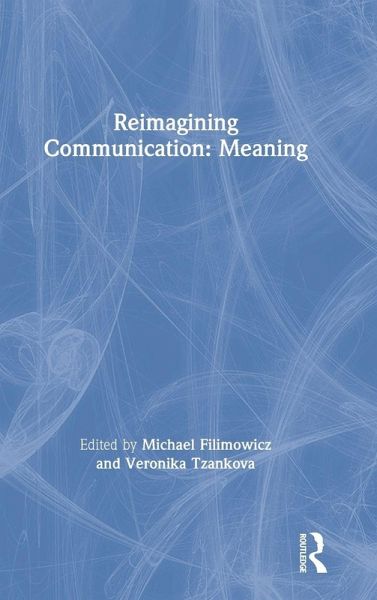
Reimagining Communication: Meaning surveys the foundational theoretical and methodological approaches that continue to shape Communication Studies, synthesizing the complex relationship of communication to meaning making in a uniquely accessible and engaging way.
Reimagining Communication: Meaning surveys the foundational theoretical and methodological approaches that continue to shape Communication Studies, synthesizing the complex relationship of communication to meaning making in a uniquely accessible and engaging way.
Michael Filimowicz, PhD, is Senior Lecturer in the School of Interactive Arts and Technology at Simon Fraser University. His research is in the area of computer mediated communication, with a focus on new media poetics applied in the development of new immersive audiovisual displays for simulations, exhibition, games, and telepresence as well as research creation. Veronika Tzankova is a PhD candidate in the School of Interactive Arts and Technology, Simon Fraser University and a Communications Instructor at Columbia College-both in Vancouver, Canada. Her background is in human-computer interaction and communication. Sports shape the essence of her research which explores the potential of interactive technologies to enhance bodily awareness in high-risk sports activities.
Inhaltsangabe
Series Introduction (Michael Filimowicz and Veronika Tzankova) Volume Introduction (Veronika Tzankova and Michael Filimowicz) Chapter 1 Reimagining Semiotics in Communication Chapter 2 Hermeneutics Chapter 3 Paralanguage (The Cracked Lookingglass of a Servant, or the Uses, Virtues, and Value of Liminality) Chapter 4 Corpus-methodology and discursive conceptualizations of depression Chapter 5 Communication in Critical Theory (Frankfurt School) Chapter 6 Reimagining communication in mediated participatory culture: An emerging framework Chapter 7 Global Culture Chapter 8 Cultural Hybridity, or Hyperreality in K-pop Female Idols?: Toward Critical, Explanatory Approaches to Cultural Assemblage in Neoliberal Culture Industry Chapter 9 Postcolonial Scholarship and Communication: Applications for Understanding Conceptions of the Immigrant Today Chapter 10 Cyberhate, Communication, And Transdisciplinarity Chapter 11 Political Economy of Communication: The Critical Analysis of the Media's Economic Structures Chapter 12 The Propaganda Machine: Social Media Bias and the Future of Democracy Chapter 13 From Fans to Followers to Anti-Fans: Young Online Audiences of Microcelebrities Chapter 14 Reimagining Media Education: Technology Education as a Key Component of Critical Media Education in the Digital Era Chapter 15 From Media Ecology to Media Evolution: Towards a Long-Term Theory of Media Change Chapter 16 Media Psychology
Series Introduction (Michael Filimowicz and Veronika Tzankova) Volume Introduction (Veronika Tzankova and Michael Filimowicz) Chapter 1 Reimagining Semiotics in Communication Chapter 2 Hermeneutics Chapter 3 Paralanguage (The Cracked Lookingglass of a Servant, or the Uses, Virtues, and Value of Liminality) Chapter 4 Corpus-methodology and discursive conceptualizations of depression Chapter 5 Communication in Critical Theory (Frankfurt School) Chapter 6 Reimagining communication in mediated participatory culture: An emerging framework Chapter 7 Global Culture Chapter 8 Cultural Hybridity, or Hyperreality in K-pop Female Idols?: Toward Critical, Explanatory Approaches to Cultural Assemblage in Neoliberal Culture Industry Chapter 9 Postcolonial Scholarship and Communication: Applications for Understanding Conceptions of the Immigrant Today Chapter 10 Cyberhate, Communication, And Transdisciplinarity Chapter 11 Political Economy of Communication: The Critical Analysis of the Media's Economic Structures Chapter 12 The Propaganda Machine: Social Media Bias and the Future of Democracy Chapter 13 From Fans to Followers to Anti-Fans: Young Online Audiences of Microcelebrities Chapter 14 Reimagining Media Education: Technology Education as a Key Component of Critical Media Education in the Digital Era Chapter 15 From Media Ecology to Media Evolution: Towards a Long-Term Theory of Media Change Chapter 16 Media Psychology
Es gelten unsere Allgemeinen Geschäftsbedingungen: www.buecher.de/agb
Impressum
www.buecher.de ist ein Internetauftritt der buecher.de internetstores GmbH
Geschäftsführung: Monica Sawhney | Roland Kölbl | Günter Hilger
Sitz der Gesellschaft: Batheyer Straße 115 - 117, 58099 Hagen
Postanschrift: Bürgermeister-Wegele-Str. 12, 86167 Augsburg
Amtsgericht Hagen HRB 13257
Steuernummer: 321/5800/1497
USt-IdNr: DE450055826