
Andere Kunden interessierten sich auch für
 Relational and Body-Centered Practices for Healing Trauma170,99 €
 Relational and Body-Centered Practices for Healing Trauma194,99 €
 The wounded self36,99 €
 Relational Patterns, Therapeutic Presence31,99 €
 A Clinician's Guide to Understanding and Using Psychoanalysis in Practice31,99 €
 A Multidisciplinary Approach to Embodiment19,99 €
 Anxiety and Substance Use Disorders102,99 €

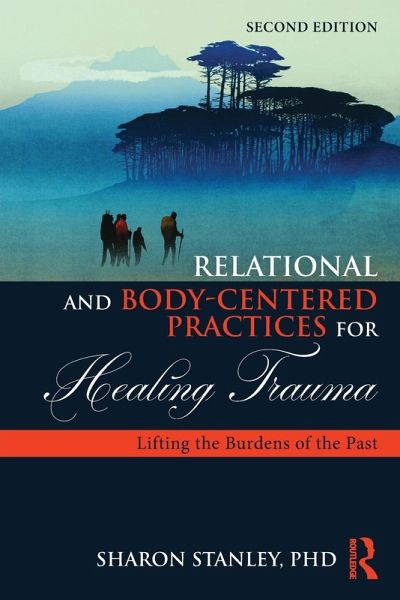
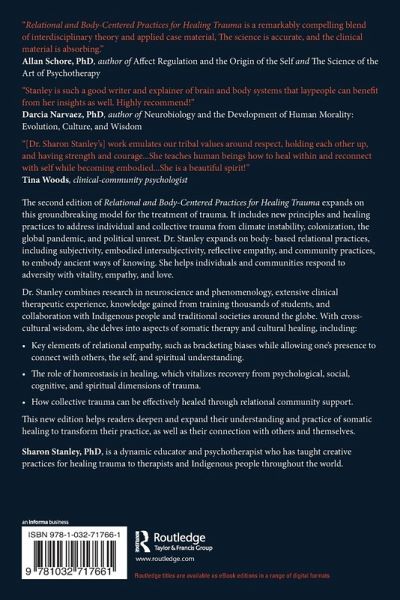
The second edition of Relational and Body-Centered Practices for Healing Trauma expands on this groundbreaking model for the treatment of trauma. It includes new principles and healing practices to address individual and collective trauma from climate instability, colonization, the global pandemic, and political unrest. Dr. Stanley expands on body-based relational practices, including subjectivity, embodied intersubjectivity, reflective empathy, and community practices, to embody ancient ways of knowing. She helps individuals and communities respond to adversity with vitality, empathy, and love.
Dr. Stanley combines research in neuroscience and phenomenology, extensive clinical therapeutic experience, knowledge gained from training thousands of students, and collaboration with Indigenous people and traditional societies around the globe. With cross-cultural wisdom, she delves into aspects of somatic therapy and cultural healing, including:
Key elements of relationalempathy, such as bracketing biases while allowing one's presence to connect with others, the self, and spiritual understandingThe role of homeostasis in healing, which vitalizes recovery from psychological, social, cognitive, and spiritual dimensions of traumaHow collective trauma can be effectively healed through relational community support
This new edition helps readers deepen and expand their understanding and practice of somatic healing to transform their practice, as well as their connection with others and themselves.
Dr. Stanley combines research in neuroscience and phenomenology, extensive clinical therapeutic experience, knowledge gained from training thousands of students, and collaboration with Indigenous people and traditional societies around the globe. With cross-cultural wisdom, she delves into aspects of somatic therapy and cultural healing, including:
Key elements of relationalempathy, such as bracketing biases while allowing one's presence to connect with others, the self, and spiritual understandingThe role of homeostasis in healing, which vitalizes recovery from psychological, social, cognitive, and spiritual dimensions of traumaHow collective trauma can be effectively healed through relational community support
This new edition helps readers deepen and expand their understanding and practice of somatic healing to transform their practice, as well as their connection with others and themselves.
"Relational and Body-Centered Practices for Healing Trauma is a remarkably compelling blend of interdisciplinary theory and applied case material. The science is accurate, and the clinical material is absorbing. Sharon Stanley's integration of anthropological and cultural material with relational body techniques is unique. This book will have an indelible impact on the field."
Allan Schore, PhD, author of Affect Regulation and the Origin of the Self and The Science of the Art of Psychotherapy
"Sharon Stanley has written a brilliant and comprehensive testament to the absolute necessity of including the somatic connection between the body and the brain in healing trauma. She explores the emerging literature linking the neurophysiology of the fight/flight limbic system, the autonomic nervous system, and the right-brain centers for procedural memory and modulation of arousal with techniques that re-regulate homeostasis. Detailed case studies provide a manual for specific body-based interventions. This book is a must read for therapists."
Robert Scaer, MD, author of The Trauma Spectrum and The Body Bears the Burden
"What a marvelous book! Relational and Body-Centered Practices for Healing Trauma is an amazing integration of developmental neuroscience and clinical psychotherapy. Well written and engaging, it provides plenty of examples to facilitate applied understanding in somatic healing. It will be an excellent resource for clinicians of all stripes, with step-by-step illustrations of therapeutic approaches."
Darcia Narvaez, PhD, author of Neurobiology and the Development of Human Morality: Evolution, Culture, and Wisdom
Allan Schore, PhD, author of Affect Regulation and the Origin of the Self and The Science of the Art of Psychotherapy
"Sharon Stanley has written a brilliant and comprehensive testament to the absolute necessity of including the somatic connection between the body and the brain in healing trauma. She explores the emerging literature linking the neurophysiology of the fight/flight limbic system, the autonomic nervous system, and the right-brain centers for procedural memory and modulation of arousal with techniques that re-regulate homeostasis. Detailed case studies provide a manual for specific body-based interventions. This book is a must read for therapists."
Robert Scaer, MD, author of The Trauma Spectrum and The Body Bears the Burden
"What a marvelous book! Relational and Body-Centered Practices for Healing Trauma is an amazing integration of developmental neuroscience and clinical psychotherapy. Well written and engaging, it provides plenty of examples to facilitate applied understanding in somatic healing. It will be an excellent resource for clinicians of all stripes, with step-by-step illustrations of therapeutic approaches."
Darcia Narvaez, PhD, author of Neurobiology and the Development of Human Morality: Evolution, Culture, and Wisdom
"Relational and Body-Centered Practices for Healing Trauma is a remarkably compelling blend of interdisciplinary theory and applied case material. The science is accurate, and the clinical material is absorbing. Sharon Stanley's integration of anthropological and cultural material with relational body techniques is unique. This book will have an indelible impact on the field."
Allan Schore, PhD, author of Affect Regulation and the Origin of the Self and The Science of the Art of Psychotherapy
"Sharon Stanley has written a brilliant and comprehensive testament to the absolute necessity of including the somatic connection between the body and the brain in healing trauma. She explores the emerging literature linking the neurophysiology of the fight/flight limbic system, the autonomic nervous system, and the right-brain centers for procedural memory and modulation of arousal with techniques that re-regulate homeostasis. Detailed case studies provide a manual for specific body-based interventions. This book is a must read for therapists."
Robert Scaer, MD, author of The Trauma Spectrum and The Body Bears the Burden
"What a marvelous book! Relational and Body-Centered Practices for Healing Trauma is an amazing integration of developmental neuroscience and clinical psychotherapy. Well written and engaging, it provides plenty of examples to facilitate applied understanding in somatic healing. It will be an excellent resource for clinicians of all stripes, with step-by-step illustrations of therapeutic approaches."
Darcia Narvaez, PhD, author of Neurobiology and the Development of Human Morality: Evolution, Culture, and Wisdom
Allan Schore, PhD, author of Affect Regulation and the Origin of the Self and The Science of the Art of Psychotherapy
"Sharon Stanley has written a brilliant and comprehensive testament to the absolute necessity of including the somatic connection between the body and the brain in healing trauma. She explores the emerging literature linking the neurophysiology of the fight/flight limbic system, the autonomic nervous system, and the right-brain centers for procedural memory and modulation of arousal with techniques that re-regulate homeostasis. Detailed case studies provide a manual for specific body-based interventions. This book is a must read for therapists."
Robert Scaer, MD, author of The Trauma Spectrum and The Body Bears the Burden
"What a marvelous book! Relational and Body-Centered Practices for Healing Trauma is an amazing integration of developmental neuroscience and clinical psychotherapy. Well written and engaging, it provides plenty of examples to facilitate applied understanding in somatic healing. It will be an excellent resource for clinicians of all stripes, with step-by-step illustrations of therapeutic approaches."
Darcia Narvaez, PhD, author of Neurobiology and the Development of Human Morality: Evolution, Culture, and Wisdom