
Andere Kunden interessierten sich auch für
 Debating Relational Psychoanalysis36,99 €
 Integrative Person-Centred Counselling53,99 €
 You were just a child... looking for love22,99 €
 Practical Clinical Supervision for Psychotherapists40,99 €
 Eco-Centred Therapy144,99 €
 Eco-Centred Therapy29,99 €
 How Psychotherapists Live144,99 €




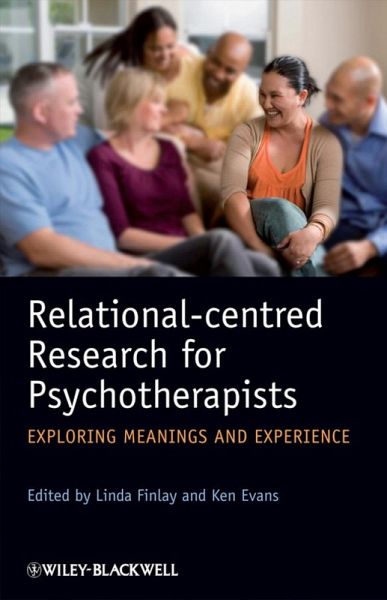
Gives clear guidance on how to set up and conduct small scale research that is based in clinical practice Assumes no prior knowledge of qualitative research and is aimed specifically at psychotherapists Recognises development of the evidence base for psychotherapy through qualitative research as a key objective for practitioners.
"This is a useful and informative introductory book. It sparked myinterest in pursuing some of the suggested methods and topics ofresearch within my own setting." (Gestalt Journal of Australiaand New Zealand, June 2010)
'This book is highly readable, and humanistic in the best anddeepest sense of the word. Finlay and Evans have done much todemonstrate what psychotherapy and qualitative research have incommon without overlooking their boundaries. They provide a visionand a map that is likely to inspire and give guidance topsychotherapists and researchers who take seriously the explorationof human experience.'--Steen Halling, Professor ofPsychology, Seattle University, USA
'This book is essential reading for seasoned and noviceresearchers alike; Finlay and Evans put relational-centred researchon the map and offer a much-needed bridge across the gulf betweenacademic theory/research and clinicalpractice.'--Professor Simon du Plock, Metanoia Instituteand Middlesex University, UK
'I believe that psychotherapists will resonate stronglywith this approach to research. It just makes so much sense. Thehuman dimensions of research are emphasised --both in its processand in its topic areas. This is a book that can awaken enthusiasmfor what is most alive in human-centredenquiry.'--Professor Les Todres, author ofEmbodied Enquiry: Phenomenological Touchstones for Research,Psychotherapy and Spirituality
'This book is highly readable, and humanistic in the best anddeepest sense of the word. Finlay and Evans have done much todemonstrate what psychotherapy and qualitative research have incommon without overlooking their boundaries. They provide a visionand a map that is likely to inspire and give guidance topsychotherapists and researchers who take seriously the explorationof human experience.'--Steen Halling, Professor ofPsychology, Seattle University, USA
'This book is essential reading for seasoned and noviceresearchers alike; Finlay and Evans put relational-centred researchon the map and offer a much-needed bridge across the gulf betweenacademic theory/research and clinicalpractice.'--Professor Simon du Plock, Metanoia Instituteand Middlesex University, UK
'I believe that psychotherapists will resonate stronglywith this approach to research. It just makes so much sense. Thehuman dimensions of research are emphasised --both in its processand in its topic areas. This is a book that can awaken enthusiasmfor what is most alive in human-centredenquiry.'--Professor Les Todres, author ofEmbodied Enquiry: Phenomenological Touchstones for Research,Psychotherapy and Spirituality