
Andere Kunden interessierten sich auch für
 Religion and the News58,99 €
 Media Portrayals of Religion and the Secular Sacred64,99 €
 Religion and the News188,99 €
 Understanding Muslim Chaplaincy177,99 €
 An Introduction to Said Nursi63,99 €
 Arab Culture and the Novel70,99 €
 Gender and Sexuality in Muslim Cultures67,99 €





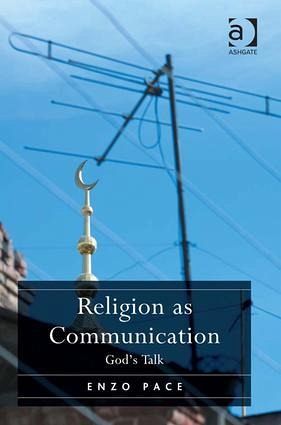
Why do gods persist in contemporary society? This book provides an insight on a new approach to religious studies, drawn from systems theory to consider religion as a means of communication, and offers a critical alternative to the secularization theory to explain why religion persists in modernity.
'Enzo Pace's book is ambitious, original and timely. Steering clear of arid debates about "the decline of religion'"and "the return of religion", it charts new theoretical territory by focusing on religions as systems of communication which respond creatively to their environments. A fresh comparative sociology of religion is the impressive result.' James A. Beckford, University of Warwick, UK 'Rather than impose a non-religious framework, Professor Pace, as a good sociologist, notes that religions operate in systems of historically layered, contested, beliefs. Belief, alternative belief, and even non-belief find their coherence in the long-standing religious syntax of a given society. He approaches this as a substructure of communication, and in the process unfolds a perspective that defies trivialization. It is simply profound.' Anthony J. Blasi, Tennessee State University, USA