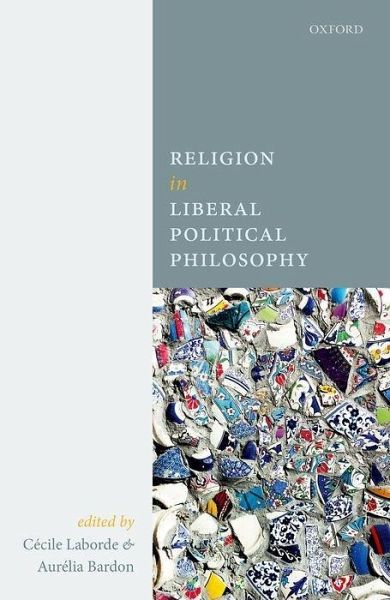
Religion in Liberal Political Philosophy
Herausgeber: Laborde, Cecile; Bardon, Aurelia
Religion in Liberal Political Philosophy
Herausgeber: Laborde, Cecile; Bardon, Aurelia
- Gebundenes Buch
- Merkliste
- Auf die Merkliste
- Bewerten Bewerten
- Teilen
- Produkt teilen
- Produkterinnerung
- Produkterinnerung
This volume provides a significant new contribution to the understanding of the normative status of religion in liberal political philosophy.
Andere Kunden interessierten sich auch für
Stephen LawThe War for Children's Minds42,99 €
Maciej JanowskiPolish Liberal Thought Before 1918108,99 €
Steven WallOxford Studies in Political Philosophy112,99 €
Oxford Studies in Political Philosophy Volume 1088,99 €
Oxford Studies in Political Philosophy Volume 797,99 €
Oxford Studies in Political Philosophy, Volume 3127,99 €
Oxford Studies in Political Philosophy Volume 4127,99 €-
-
-
This volume provides a significant new contribution to the understanding of the normative status of religion in liberal political philosophy.
Produktdetails
- Produktdetails
- Verlag: Oxford University Press
- Seitenzahl: 358
- Erscheinungstermin: 1. August 2017
- Englisch
- Abmessung: 249mm x 150mm x 28mm
- Gewicht: 680g
- ISBN-13: 9780198794394
- ISBN-10: 0198794398
- Artikelnr.: 47869122
- Herstellerkennzeichnung
- Libri GmbH
- Europaallee 1
- 36244 Bad Hersfeld
- gpsr@libri.de
- Verlag: Oxford University Press
- Seitenzahl: 358
- Erscheinungstermin: 1. August 2017
- Englisch
- Abmessung: 249mm x 150mm x 28mm
- Gewicht: 680g
- ISBN-13: 9780198794394
- ISBN-10: 0198794398
- Artikelnr.: 47869122
- Herstellerkennzeichnung
- Libri GmbH
- Europaallee 1
- 36244 Bad Hersfeld
- gpsr@libri.de
Cécile Laborde holds the Nuffield Chair in Political Theory at the University of Oxford. Previously, she was the Director of the Religion and Political Theory Centre at University College London. Aurélia Bardon is a Lecturer in Politics at the University of Liverpool. Her research focuses on public justification, especially on the implications of public justification for religion and religious reasons, as well as on secularism and bioethics.
* Introduction
* Part I - The Special Status of Religion in the Law
* 1: Micah Schwartzman: Religion, Equality, and Anarchy
* 2: Andrew Koppelman: A Rawlsian Defense of Special Treatment for
Religion
* 3: George Letsas: The Irrelevance of Religion to Law
* 4: Enzo Rossi: Understanding Religion, Governing Religion: A Realist
Perspective
* 5: Ronan McCrea: The Consequences of Disaggregation and the
Impossibility of a Third Way
* Part II - Sovereignty, Non-Establishment, Neutrality
* 6: Jean L. Cohen: Sovereignty, the Corporate Religious, and
Jurisdictional/Political Pluralism
* 7: Kevin Vallier: Religious Establishment and Public Justification
* 8: Sune Laegaard: What's the Problem with Symbolic Religious
Establishment? The Alienation and Symbolic Equality Accounts
* 9: Matthew Clayton: Is Ethical Independence Enough?
* 10: Saladin Meckled-Garcia: On the Scope and Object of Neutrality:
Policies, Principles, and 'Burdens of Conscience'
* Part III - Accommodation and Religious Freedom
* 11: Peter Jones: Religious Exemption and Distributive Justice
* 12: Jonathan Seglow: Religious Accommodation: Responsibility,
Integrity, and Self-Respect
* 13: Simon Cabulea May: Exemptions for Conscience
* 14: Alan Patten: Religious Exemptions and Fairness
* 15: Daniel M. Weinstock: How the Interests of Children Limit the
Religious Freedom of Parents
* 16: Annabelle Lever: Equality and Conscience: Ethics and the
Provision of Public Services
* Part IV - Toleration, Conscience, Identity
* 17: Rainer Forst: Religion, Reason, and Toleration: Bayle, Kant - and
Us
* 18: Chandran Kukathas: Toleration Without Limits: A Reconstruction
and Defence of Pierre Bayle's Philosophical Commentary
* 19: Akeel Bilgrami: Liberalism and Identity
* 20: Maeve Cooke: Conscience in Public Life
* 21: Kimberley Brownlee: Is Religious Conviction Special?
* 22: Emanuela Ceva: How Should We Respect Conscience?
* Part I - The Special Status of Religion in the Law
* 1: Micah Schwartzman: Religion, Equality, and Anarchy
* 2: Andrew Koppelman: A Rawlsian Defense of Special Treatment for
Religion
* 3: George Letsas: The Irrelevance of Religion to Law
* 4: Enzo Rossi: Understanding Religion, Governing Religion: A Realist
Perspective
* 5: Ronan McCrea: The Consequences of Disaggregation and the
Impossibility of a Third Way
* Part II - Sovereignty, Non-Establishment, Neutrality
* 6: Jean L. Cohen: Sovereignty, the Corporate Religious, and
Jurisdictional/Political Pluralism
* 7: Kevin Vallier: Religious Establishment and Public Justification
* 8: Sune Laegaard: What's the Problem with Symbolic Religious
Establishment? The Alienation and Symbolic Equality Accounts
* 9: Matthew Clayton: Is Ethical Independence Enough?
* 10: Saladin Meckled-Garcia: On the Scope and Object of Neutrality:
Policies, Principles, and 'Burdens of Conscience'
* Part III - Accommodation and Religious Freedom
* 11: Peter Jones: Religious Exemption and Distributive Justice
* 12: Jonathan Seglow: Religious Accommodation: Responsibility,
Integrity, and Self-Respect
* 13: Simon Cabulea May: Exemptions for Conscience
* 14: Alan Patten: Religious Exemptions and Fairness
* 15: Daniel M. Weinstock: How the Interests of Children Limit the
Religious Freedom of Parents
* 16: Annabelle Lever: Equality and Conscience: Ethics and the
Provision of Public Services
* Part IV - Toleration, Conscience, Identity
* 17: Rainer Forst: Religion, Reason, and Toleration: Bayle, Kant - and
Us
* 18: Chandran Kukathas: Toleration Without Limits: A Reconstruction
and Defence of Pierre Bayle's Philosophical Commentary
* 19: Akeel Bilgrami: Liberalism and Identity
* 20: Maeve Cooke: Conscience in Public Life
* 21: Kimberley Brownlee: Is Religious Conviction Special?
* 22: Emanuela Ceva: How Should We Respect Conscience?
* Introduction
* Part I - The Special Status of Religion in the Law
* 1: Micah Schwartzman: Religion, Equality, and Anarchy
* 2: Andrew Koppelman: A Rawlsian Defense of Special Treatment for
Religion
* 3: George Letsas: The Irrelevance of Religion to Law
* 4: Enzo Rossi: Understanding Religion, Governing Religion: A Realist
Perspective
* 5: Ronan McCrea: The Consequences of Disaggregation and the
Impossibility of a Third Way
* Part II - Sovereignty, Non-Establishment, Neutrality
* 6: Jean L. Cohen: Sovereignty, the Corporate Religious, and
Jurisdictional/Political Pluralism
* 7: Kevin Vallier: Religious Establishment and Public Justification
* 8: Sune Laegaard: What's the Problem with Symbolic Religious
Establishment? The Alienation and Symbolic Equality Accounts
* 9: Matthew Clayton: Is Ethical Independence Enough?
* 10: Saladin Meckled-Garcia: On the Scope and Object of Neutrality:
Policies, Principles, and 'Burdens of Conscience'
* Part III - Accommodation and Religious Freedom
* 11: Peter Jones: Religious Exemption and Distributive Justice
* 12: Jonathan Seglow: Religious Accommodation: Responsibility,
Integrity, and Self-Respect
* 13: Simon Cabulea May: Exemptions for Conscience
* 14: Alan Patten: Religious Exemptions and Fairness
* 15: Daniel M. Weinstock: How the Interests of Children Limit the
Religious Freedom of Parents
* 16: Annabelle Lever: Equality and Conscience: Ethics and the
Provision of Public Services
* Part IV - Toleration, Conscience, Identity
* 17: Rainer Forst: Religion, Reason, and Toleration: Bayle, Kant - and
Us
* 18: Chandran Kukathas: Toleration Without Limits: A Reconstruction
and Defence of Pierre Bayle's Philosophical Commentary
* 19: Akeel Bilgrami: Liberalism and Identity
* 20: Maeve Cooke: Conscience in Public Life
* 21: Kimberley Brownlee: Is Religious Conviction Special?
* 22: Emanuela Ceva: How Should We Respect Conscience?
* Part I - The Special Status of Religion in the Law
* 1: Micah Schwartzman: Religion, Equality, and Anarchy
* 2: Andrew Koppelman: A Rawlsian Defense of Special Treatment for
Religion
* 3: George Letsas: The Irrelevance of Religion to Law
* 4: Enzo Rossi: Understanding Religion, Governing Religion: A Realist
Perspective
* 5: Ronan McCrea: The Consequences of Disaggregation and the
Impossibility of a Third Way
* Part II - Sovereignty, Non-Establishment, Neutrality
* 6: Jean L. Cohen: Sovereignty, the Corporate Religious, and
Jurisdictional/Political Pluralism
* 7: Kevin Vallier: Religious Establishment and Public Justification
* 8: Sune Laegaard: What's the Problem with Symbolic Religious
Establishment? The Alienation and Symbolic Equality Accounts
* 9: Matthew Clayton: Is Ethical Independence Enough?
* 10: Saladin Meckled-Garcia: On the Scope and Object of Neutrality:
Policies, Principles, and 'Burdens of Conscience'
* Part III - Accommodation and Religious Freedom
* 11: Peter Jones: Religious Exemption and Distributive Justice
* 12: Jonathan Seglow: Religious Accommodation: Responsibility,
Integrity, and Self-Respect
* 13: Simon Cabulea May: Exemptions for Conscience
* 14: Alan Patten: Religious Exemptions and Fairness
* 15: Daniel M. Weinstock: How the Interests of Children Limit the
Religious Freedom of Parents
* 16: Annabelle Lever: Equality and Conscience: Ethics and the
Provision of Public Services
* Part IV - Toleration, Conscience, Identity
* 17: Rainer Forst: Religion, Reason, and Toleration: Bayle, Kant - and
Us
* 18: Chandran Kukathas: Toleration Without Limits: A Reconstruction
and Defence of Pierre Bayle's Philosophical Commentary
* 19: Akeel Bilgrami: Liberalism and Identity
* 20: Maeve Cooke: Conscience in Public Life
* 21: Kimberley Brownlee: Is Religious Conviction Special?
* 22: Emanuela Ceva: How Should We Respect Conscience?