

Andere Kunden interessierten sich auch für
 The European Union199,99 €
 Value Politics in the European Union167,99 €
 The European Union after Lisbon186,99 €
 The Pandemic Crisis and the European Union167,99 €
 The European Union in the G847,99 €
 The European Union and Global Development167,99 €
 The 2014 European Parliament Elections in Southern Europe167,99 €



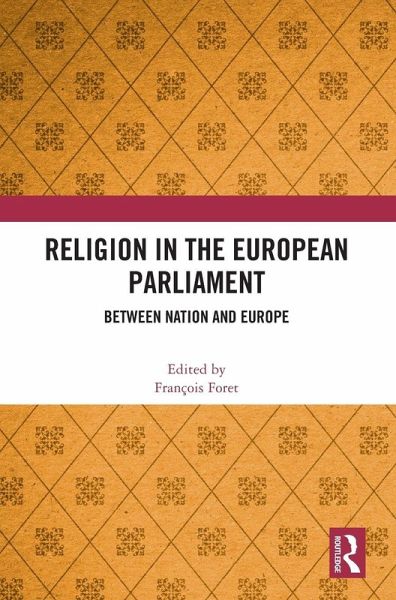
This book explores what the European Union (EU) does to religion and what religion does to the EU. Europe is secularising, and meanwhile struggling with a renewed salience of religion as a political and cultural resource instrumentalised for various purposes. The EU as a whole, and especially the European Parliament as the representative body reflecting the diversity and conflicts of national societies, face this challenge in their everyday functioning.
This book presents the second wave of an unprecedented survey studying what members of the European Parliament (MEPs) believe, and what they do with these beliefs. Research questions include: Are European elites more secularised than EU citizens and national politicians? What is the impact of religion on the political socialisation of MEPs and, conversely, what is the influence of MEPs on religion? How do religion, coalition- and decision-making interact at the European level? What happens in the triangular relationshipbetween nation, Europe, and religion?
Contributions from leading researchers in the field shed light on the shifting effects of religion on attitudes towards European integration, on voting and party dynamics, and on interactions between major transformations such as secularisation, Europeanisation and politicization. This book will be of interest to students and scholars of European integration, the European Parliament, politics and religion, comparative politics and political sociology.
The chapters in this book were originally published as a special issue of Religion, State and Society.
This book presents the second wave of an unprecedented survey studying what members of the European Parliament (MEPs) believe, and what they do with these beliefs. Research questions include: Are European elites more secularised than EU citizens and national politicians? What is the impact of religion on the political socialisation of MEPs and, conversely, what is the influence of MEPs on religion? How do religion, coalition- and decision-making interact at the European level? What happens in the triangular relationshipbetween nation, Europe, and religion?
Contributions from leading researchers in the field shed light on the shifting effects of religion on attitudes towards European integration, on voting and party dynamics, and on interactions between major transformations such as secularisation, Europeanisation and politicization. This book will be of interest to students and scholars of European integration, the European Parliament, politics and religion, comparative politics and political sociology.
The chapters in this book were originally published as a special issue of Religion, State and Society.