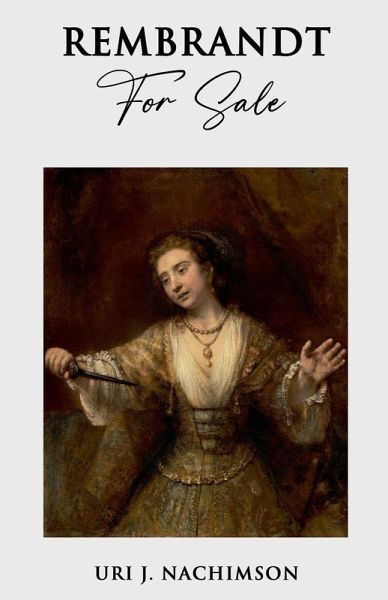
Towards the end of the eighteenth century, the concept of artistic genius was formulated and held up as the highest human species. Genius in art requires breaking the rules or exceeding them in ways that make them unrecognizable. There is a saying that "any sufficiently advanced skill is indistinguishable from magic." So when the Master in Art Alan De Mayo revolutionized art with his "Renaissance paintings," the response from all art critics was total astonishment, and important critics of art named him Rembrandt's successor.
Towards the end of the eighteenth century, the concept of artistic genius was formulated and held up as the highest human species. Genius in art requires breaking the rules or exceeding them in ways that make them unrecognizable. There is a saying that "any sufficiently advanced skill is indistinguishable from magic." So when the Master in Art Alan De Mayo revolutionized art with his "Renaissance paintings," the response from all art critics was total astonishment, and important critics of art named him Rembrandt's successor.
Uri Jerzy Nachimson was born in Szczecin, Poland, in 1947. Two years later, his parents emigrated to Israel. In 1966, he served in the Israeli army in the Northern Command for three years. He participated in the Six-Day War as a photographer in combat. As a freelance photographer, he wandered around Prague as crowds demonstrated in front of Soviet tanks. His travels to Egypt are the inspiration for his book, Seeds of Love. In 1990, he returned for the first time to Poland to seek his roots. He was deeply affected by the attitude of the Poles towards the Jews during and after World War II, and he started to research the history of the Jews of Poland. Thus, the trilogy was born: Lilly's Album, The Polish Patriot, and Identity. Uri's grandmother, Ida Friedberg, was the granddaughter of the Jewish writer A.S. Friedberg, editor of the Polish Jewish newspaper Hazefira, and the author of many books. In 2005, Uri moved to Tuscany, Italy, where he lives with his wife. While in Cortona, he wrote Two Margherita, Broken Hearts in Boulevard Unirii, Recalled to Life, Violette and Ginger, The Girl from Haukaloolloo, Isabella, In the Depth of Silence, and others.
Es gelten unsere Allgemeinen Geschäftsbedingungen: www.buecher.de/agb
Impressum
www.buecher.de ist ein Internetauftritt der buecher.de internetstores GmbH
Geschäftsführung: Monica Sawhney | Roland Kölbl | Günter Hilger
Sitz der Gesellschaft: Batheyer Straße 115 - 117, 58099 Hagen
Postanschrift: Bürgermeister-Wegele-Str. 12, 86167 Augsburg
Amtsgericht Hagen HRB 13257
Steuernummer: 321/5800/1497
USt-IdNr: DE450055826