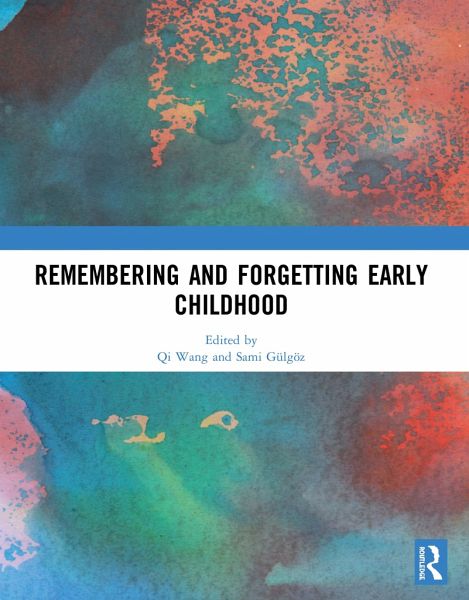
This book brings together scholarship that contributes diverse and new perspectives on childhood amnesia - the scarcity of memories for very early life events.
This book brings together scholarship that contributes diverse and new perspectives on childhood amnesia - the scarcity of memories for very early life events.
Qi Wang is Professor of Human Development at Cornell University. Her research examines individual and cultural mechanisms underlying autobiographical memory. She is the author of The Autobiographical Self in Time and Culture. Sami Gülgöz is Professor of Psychology at Koç University. His past work includes topics varying from text processing to personality. In the last decade, he has concentrated on memory in everyday life, primarily autobiographical memory.
Inhaltsangabe
Introduction: New perspectives on childhood amnesia 1. Manipulating the reported age in earliest memories 2. Looking at the past through a telescope: adults postdated their earliest childhood memories 3. Consistency of adults' earliest memories across two years 4. Thirty-five-month-old children have spontaneous memories despite change of context for retrieval 5. What happened in kindergarten? Mother-child conversations about life story chapters 6. Predictors of age-related and individual variability in autobiographical memory in childhood 7. Origins of adolescents' earliest memories 8. Recollection improves with age: children's and adults' accounts of their childhood experiences 9. The relationship between sociocultural factors and autobiographical memories from childhood: the role of formal schooling 10. Unravelling the nature of early (autobiographical) memory
Introduction: New perspectives on childhood amnesia 1. Manipulating the reported age in earliest memories 2. Looking at the past through a telescope: adults postdated their earliest childhood memories 3. Consistency of adults' earliest memories across two years 4. Thirty-five-month-old children have spontaneous memories despite change of context for retrieval 5. What happened in kindergarten? Mother-child conversations about life story chapters 6. Predictors of age-related and individual variability in autobiographical memory in childhood 7. Origins of adolescents' earliest memories 8. Recollection improves with age: children's and adults' accounts of their childhood experiences 9. The relationship between sociocultural factors and autobiographical memories from childhood: the role of formal schooling 10. Unravelling the nature of early (autobiographical) memory
Es gelten unsere Allgemeinen Geschäftsbedingungen: www.buecher.de/agb
Impressum
www.buecher.de ist ein Internetauftritt der buecher.de internetstores GmbH
Geschäftsführung: Monica Sawhney | Roland Kölbl | Günter Hilger
Sitz der Gesellschaft: Batheyer Straße 115 - 117, 58099 Hagen
Postanschrift: Bürgermeister-Wegele-Str. 12, 86167 Augsburg
Amtsgericht Hagen HRB 13257
Steuernummer: 321/5800/1497
USt-IdNr: DE450055826