
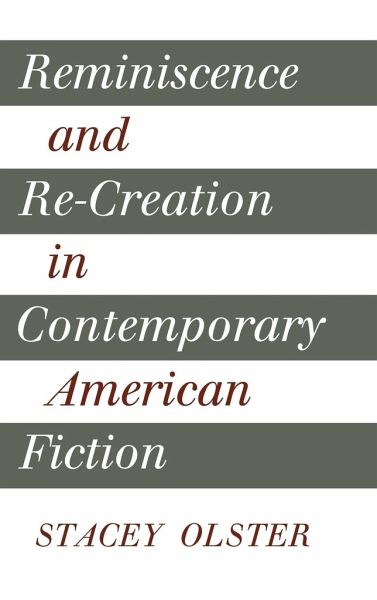
Post-modernist fiction apparently presents a world of chance and randomness, devoid of historical intelligibility. Focusing on American post-modernist writers, Stacey Olster offers a challenge to this perception, showing how the experience of political and historical events has shaped the novelist's perspective. Communism after World War II proved particularly instrumental in this capacity; the failure of the Communist ideal in Russia forced a change in the literary perspective of history during the 1950s. Olster analyzes in detail historical narrative configurations in the works of a pivotal group of writers. Norman Mailer, Thomas Pynchon, John Barth, Robert Coover and E. L. Doctorow share a common vision of historical movement in the shape of an open-ended spiral. The modes of temporal movement constructed by these authors manage to recall an early Puritan prototype while remaining nonapocalyptic in direction.