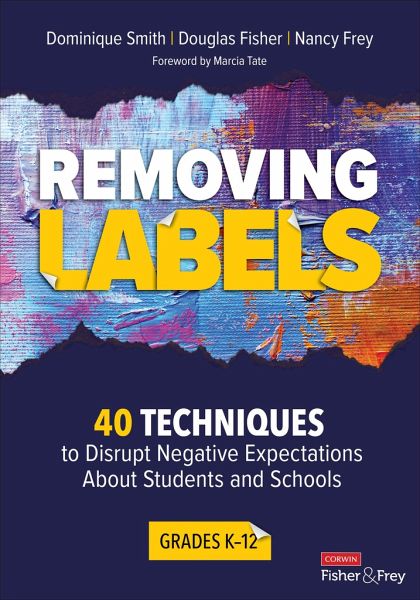
Disrupting the cycle starts with you. No matter how conscientious we are, we carry implicit bias... which quickly turns into assumptions and then labels. Labels define our interactions with and expectations of students. Labels contribute to student identity and agency. And labels can have a negative effect beyond the classroom. It's crucial, then, that teachers remove labels and focus on students' strengths-but this takes real work at an individual, classroom, and schoolwide scale. Removing Labels urges you to take an active approach toward disrupting the negative effects of labels and…mehr
Disrupting the cycle starts with you. No matter how conscientious we are, we carry implicit bias... which quickly turns into assumptions and then labels. Labels define our interactions with and expectations of students. Labels contribute to student identity and agency. And labels can have a negative effect beyond the classroom. It's crucial, then, that teachers remove labels and focus on students' strengths-but this takes real work at an individual, classroom, and schoolwide scale. Removing Labels urges you to take an active approach toward disrupting the negative effects of labels and assumptions that interfere with student learning. This book offers: * 40 practical, replicable teaching techniques-all based in research and best practice-that focus on building relationships, restructuring classroom engagement and management, and understanding the power of social and emotional learning * Suggestions for actions on an individual, classroom, and schoolwide level * Ready-to-go tools and student-facing printables to use in planning and instruction Removing Labels is more than a collection of teaching strategies-it's a commitment to providing truly responsive education that serves all children. When you and your colleagues take action to prevent negative labels from taking hold, the whole community benefits.
Dr. Dominique Smith is an award-winning educator, author, and school leader who has dedicated two decades to transforming schools into inclusive, safe, and empowering spaces for students and educators alike. He currently serves as Principal at Health Sciences High and Middle College in San Diego, California. Dr. Smith earned his Doctorate in Educational Leadership from San Diego State University and a Master of Social Work from the University of Southern California. His dual expertise in education and social work uniquely positions him to bridge the gap between academic success, emotional safety, and equitable school culture. A passionate advocate for belonging, restorative practices, and leadership development, Dr. Smith has co-authored several influential books, including Belonging in School: Creating a Place Where Kids Want to Learn and Teachers Want to Stay, Better Than Carrots or Sticks: Restorative Practices for Positive Classroom Management, Building Equity: Policies and Practices to Empower All Learners, Leader Credibility, How Leadership Works: A Playbook for Instructional Leaders, and The Restorative Practices Playbook. In recognition of his commitment to fostering safe and supportive school environments, Dr. Smith received the National School Safety Award from the School Safety Advocacy Council. His TED Talk on building authentic relationships between students and teachers has inspired educators across the country to reimagine connection as the cornerstone of effective teaching and learning. Through his leadership, writing, and speaking, Dr. Smith continues to champion the belief that when students feel seen, heard, and valued, they are empowered to thrive - both academically and personally. His work challenges schools to move beyond compliance and discipline toward cultures of belonging, accountability, and restorative growth.
Inhaltsangabe
Foreword Publisher's Acknowledgments Introduction: Interrupting the Cycle Begins With You Section 1. Individual Approaches Technique 1. Learning Names the Right Way Technique 2. Interest Surveys Technique 3. Banking Time Technique 4. 2 × 10 Conversations Technique 5. Affective Statements Technique 6. Impromptu Conferences Technique 7. Empathetic Feedback Technique 8. Reconnecting After an Absence Technique 9. Labeling Emotions Technique 10. Solving Problems (Do the Next Right Thing) Section 2. Classroom Approaches Technique 11. Creating a Welcoming Classroom Climate Technique 12. Class Meetings Technique 13. Classroom Sociograms Technique 14. The Mask Activity Technique 15. Asset Mapping Technique 16. Peer Partnerships Technique 17. Five Different Peer Partnerships Technique 18. Self-Assessment in Collaborative Learning Technique 19. Equitable Grouping Strategies Technique 20. Gradual Release of Responsibility Instructional Framework Technique 21. Teaching With Relevance in Mind Technique 22. Jigsaw Technique 23. Accountable Talk Technique 24. Making Decisions Technique 25. Alternatives to Public Humiliation Technique 26. When Young Children Label Others-The Crumple Doll Technique 27. When Older Students Label Others-Insults and Epithets Technique 28. Trauma-Sensitive Classroom Design Technique 29. The Dot Inventory Technique 30. Culturally Sustaining Pedagogies Technique 31. Schoolwide Inclusive Practices Technique 32. Student Empowerment Technique 33. Collective Responsibility Technique 34. Recognizing and Responding to Implicit Bias Technique 35. Racial Autobiography Technique 36. Social Capital Technique 37. A Welcoming Front Office Technique 38. Community Ambassadors Technique 39. The Master Schedule Technique 40. Distributed Leadership Coda References Index