
Andere Kunden interessierten sich auch für
 At the Margins of Empire38,99 €
 Communal Geographies137,99 €
 Sufism in Punjab41,99 €
 At the Margins of Empire137,99 €
 Medieval Panjab in Transition37,99 €
 Locating the 'Local' in South Asia137,99 €
 Rabindranath Tagore's Ideational Universe41,99 €







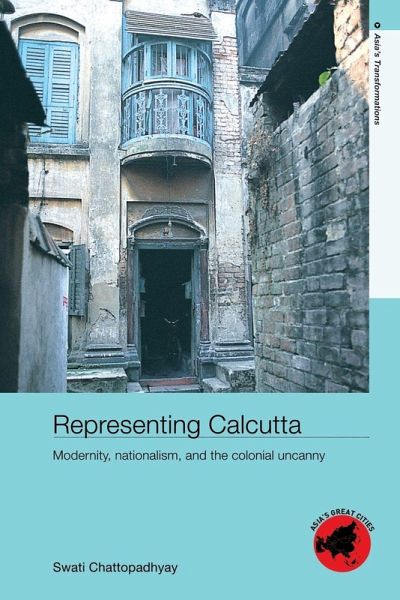
Representing Calcutta: Modernity, Nationalism, and the Colonial Uncanny is a spatial history of colonial Calcutta, addressing the question of modernity that haunts our perception of Calcutta. The book responds to two interrelated concerns about the city. The first is the image of Calcutta as the worst case scenario of a Third World city - the proverbial "city of dreadful nights." The second is the changing nature of the city's public spaces - the demise of certain forms of urban sociality that have been mourned in recent literature as the passing of Bengali modernity.
This book explores the history of the city, focusing in particular on its emergence from colonialism into postcolonial modernity. Drawing on postcolonial and spatial theory, the author analyzes the city under British colonial rule and in its later incarnations, and also examines such issues as gender, identity, and nationalism. It is a an essential text for scholars with an interest in colonialism, SouthAsia, and urban development.
This book explores the history of the city, focusing in particular on its emergence from colonialism into postcolonial modernity. Drawing on postcolonial and spatial theory, the author analyzes the city under British colonial rule and in its later incarnations, and also examines such issues as gender, identity, and nationalism. It is a an essential text for scholars with an interest in colonialism, SouthAsia, and urban development.
'The author ably juggles racial, gendered, moral, architectural, literary and artistic geographies to craft a highly innovative, scholarly and stylishly executed study ... on a personal note, as the granddaughter of a suburban Calcutta architect I particularly welcome this book.' - Social & Cultural Geography