
46,99 €
inkl. MwSt.
Versandkostenfrei*Erscheint vorauss. 10. Juni 2026
Melden Sie sich
hier
hier
für den Produktalarm an, um über die Verfügbarkeit des Produkts informiert zu werden.
oder sofort lesen als eBook

23 °P sammeln
Andere Kunden interessierten sich auch für
 Research Methods for Criminal Justice and Criminology60,99 €
 The Evolution of Ethics in America50,99 €
 Skinhead History, Identity, and Culture56,99 €
 Gringo Injustice52,99 €
 Police Militarization53,99 €
 Basics of Research Methods for Criminal Justice and Criminology219,99 €
 Guns on the Internet45,99 €

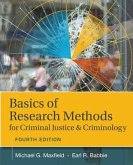

This book explains and illustrates criminal justice research topics, including ethics in research, research design, causation, operationalization of variables, sampling, methods of data collection (including surveys), reliance on existing data, validity, and reliability. For each approach, the book addresses the procedures and issues involved, the method's strengths and drawbacks, and examples of actual research using that method. Every section begins with a brief summary of the research method. Introductory essays set the stage for students regarding the who, what, when, where, and why of each research example, and relevant discussion questions and exercises direct students to focus on the important concepts. Research Methods for Criminal Justice and Criminology: A Text and Reader features interesting and relevant articles from leading journals, which have been expertly edited to highlight research design issues. The text offers instructors a well-rounded and convenient collection that eliminates the need to sift through journals to find articles that illustrate important precepts. The author has included new material on ethical issues, researcher safety during field work, and tips on how to communicate what works in criminal justice to the public. Articles in the second edition address issues relevant to the field today, such as crime and policing during the COVID-19 pandemic, online extremism, sextortion, mass murder, problem-solving courts, the death penalty, saturation enforcement, drug use, victimization among the LGBT community, perceptions of immigration and crime, correctional interventions, measuring theft, perceptions of safety, bullying and hate crimes, correctional staff training and attitudes, social media exposure and opinions about law enforcement, and crisis intervention team training. Ensuring a rich array, additional articles are downloadable at the Support Material tab. Instructors can access password-protected PowerPoint slides, test banks, and exercises at the link under Instructor & Student Resources. The book encourages classroom discussion and critical thinking and is an essential tool for undergraduate and graduate research methods courses in criminal justice, criminology, and related fields.