

Andere Kunden interessierten sich auch für
 Researching Memory and Identity in Russia and Eastern Europe83,99 €
 Memory Archipelago of the Communist Past91,99 €
 The COVID-19 Pandemic and Memory106,99 €
 The COVID-19 Pandemic and Memory106,99 €
 Memory Archipelago of the Communist Past128,39 €
 Soviet Communal Living38,99 €
 Soviet Communal Living38,99 €



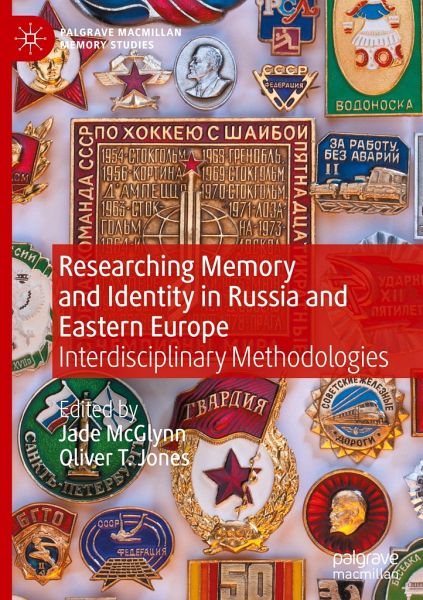
This book offers a collection of innovative methodological approaches to Memory Studies in Russia and Eastern Europe. Providing insights into the relationship between memory and identity, the twelve chapters provide multidisciplinary analysis of how history is used to reinforce, remould, and reinvent national and group identities.
This analysis includes a strong emphasis on interrogating the role of the researcher and the impact of methodology, exploring the field's most pressing challenges, such as the subjectivity of remembrance, reception versus production of discourse, and the inclusion of marginal perspectives.
By focussing on countries in which the past is highly politicised, including Serbia, Ukraine, Poland, Russia and the Baltic States, the volume also analyses the diverse - and often conflicting - ways in which historical narratives emerge from these states' efforts to create new pasts that shape their respective visions of the future, with pressingramifications across this region and beyond.
This analysis includes a strong emphasis on interrogating the role of the researcher and the impact of methodology, exploring the field's most pressing challenges, such as the subjectivity of remembrance, reception versus production of discourse, and the inclusion of marginal perspectives.
By focussing on countries in which the past is highly politicised, including Serbia, Ukraine, Poland, Russia and the Baltic States, the volume also analyses the diverse - and often conflicting - ways in which historical narratives emerge from these states' efforts to create new pasts that shape their respective visions of the future, with pressingramifications across this region and beyond.
This book is significant in its conceptualization and meticulous selection of cases. The book can be regarded as an important and concrete contribution to the study of historical politics and the politics of memory. ... A notable strength of the volume lies in its emphasis on the significance of these dynamics in Central and Eastern Europe, a region where collective memories play a pivotal role in understanding democratic transition, European integration, and the rise of right-wing populism. (José M. Faraldo, Zeitschrift für Ostmitteleuropa-Forschung, Vol. 74 (3), 2025)