
38,99 €
inkl. MwSt.
Versandkostenfrei*
Versandfertig in über 4 Wochen
payback
19 °P sammeln
  • Broschiertes Buch

In early 2022, the issue of whether or not to remove the word 'bersiap' from an exhibition at Rijksmuseum Amsterdam prompted parliamentary questions, the initiation of legal proceedings against the museum, and an unusually fierce public debate about a word that had hitherto only been known to the Dutch Indies community. This book provides background and depth to this debate. In the first months following the declaration of independence, the battle-cry of 'bersiap!' resounded in countless cities and villages in Indonesia. The call to make ready for the young nation's struggle for freedom marked…mehr

Produktbeschreibung
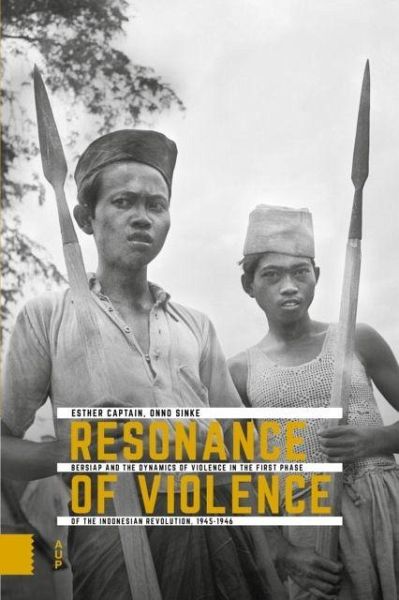
In early 2022, the issue of whether or not to remove the word 'bersiap' from an exhibition at Rijksmuseum Amsterdam prompted parliamentary questions, the initiation of legal proceedings against the museum, and an unusually fierce public debate about a word that had hitherto only been known to the Dutch Indies community. This book provides background and depth to this debate. In the first months following the declaration of independence, the battle-cry of 'bersiap!' resounded in countless cities and villages in Indonesia. The call to make ready for the young nation's struggle for freedom marked the start of the Indonesian Revolution, ushering in a period of extreme violence. Resonance of Violence outlines the dynamics of the extreme violence, in which Indonesian combat groups took up arms against Indo-Europeans, Moluccans, Dutch and Chinese, as well as Japanese civilians and disarmed Japanese and British (Indian) soldiers. The book also emphatically situates this terrifying period within the broader context of intra-Indonesian violence and the violence used by the Japanese, British and Dutch side against Indonesian non-combatants. It covers not only Java and Sumatra, but also the islands beyond, as well as the difficult task of establishing casualty numbers and the 'rediscovery' of the bersiap period in the 1980s.
Autorenporträt
Esther Captain is a historian and works as a senior researcher at the Royal Netherlands Institute of Southeast Asian and Caribbean Studies (kitlv) in Leiden. She is endowed professor of Intergenerational Impact of Colonialism and Slavery at Utrecht University. She is currently involved in a research programme on the role of the House of Orange-Nassau in Dutch colonial history. Onno Sinke is a historian and works as a researcher for the Netherlands Institute for Military History in The Hague. During the research for this book he was seconded to the kitlv/Royal Netherlands Institute of Southeast Asian and Caribbean Studies in Leiden.