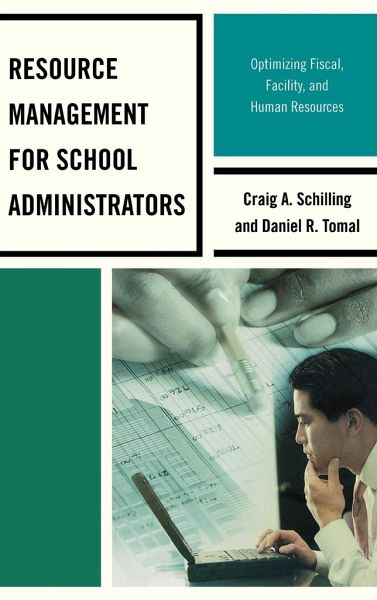
Everything you need to know on managing school resources are covered: national and state perspectives, future challenges to funding public education, resource allocation, developing a school district budget, sources of revenue, accounting budgeting and reporting, financial statements, allocating resource for higher student performance, human resource, laws and policies, compensation, facilities and auxiliary services and safety and security Each chapter contains a comprehensive case study and exercises for easy application. This practical book will be useful to all school leaders who are trying to improve their school resource management.…mehr
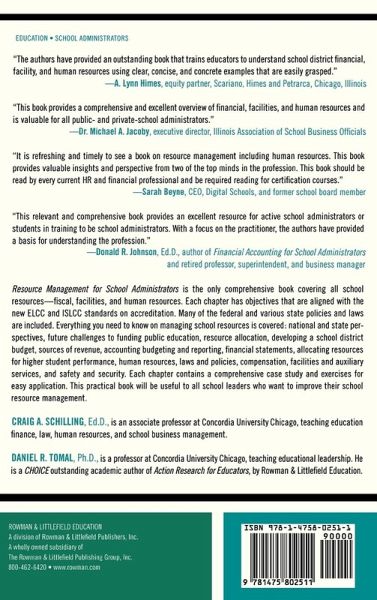
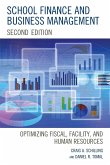
Everything you need to know on managing school resources are covered: national and state perspectives, future challenges to funding public education, resource allocation, developing a school district budget, sources of revenue, accounting budgeting and reporting, financial statements, allocating resource for higher student performance, human resource, laws and policies, compensation, facilities and auxiliary services and safety and security Each chapter contains a comprehensive case study and exercises for easy application. This practical book will be useful to all school leaders who are trying to improve their school resource management.
Daniel R. Tomal, PhD is professor at Concordia University Chicago teaching educational leadership. He is a consultant and an author of ten books such as Action Research for Educators and Challenging Students to Learn by Rowman & Littlefield Education, and has made guest appearance on many national radio and television shows. Craig A. Schilling, EdD is associate professor at Concordia University Chicago teaching education finance, law, human resources and school business management. He has served on a number of state and national associations and spoken at state, national and international conferences.
Inhaltsangabe
Foreword Preface Acknowledgments Chapter 1: Financial Management Principles and Historical Perspectives ObjectivesAdequacy, Equity, and EqualityNational Perspectives on Financing EducationState Perspectives on Financing EducationFuture Challenges to Funding Public EducationSummaryCase studyExercises and discussion questionsReferencesChapter 2: Resource Allocation and Financial Planning ObjectivesPlanning School District BudgetsDeveloping a School District BudgetSources of RevenueTaxpayer EquitySummary Case studiesExercises and discussion questions ReferencesChapter 3: Accounting, Budgeting and Reporting ObjectivesWhy do we have accounting systems?Student Activity AccountsFundraisingFinancial StatementsAuditsSummaryCase studiesExercises and discussion questionsReferencesChapter 4: Managing Resources for Higher Performance and Productivity ObjectivesWhat are Educational Resources?The Relationship Between Resource Allocation and AchievementAllocating Resources for Higher Performance and ProductivityEducational ChoiceSummaryCase studyExercises and discussion questionsReferencesChapter 5: Managing Human Resources ObjectivesPlanning staffing needs and enrollment forecastingEmployment lawsEmployee evaluation and compensation programsCollective bargainingSummaryCase studyExercises and discussion questionsReferencesChapter 6: Managing Facilities for Higher Performance and Productivity ObjectivesSchool Facilities in the United StatesFacility design and student achievementSchool facility planningEnvironmental issuesSummary Case studyExercises and discussion questionsReferences Chapter 7: Auxiliary Services: Food, Safety, Security, and Transportation ObjectivesMajor Auxiliary Services Food serviceSafety and security TransportationSummaryCase studyExercises and discussion questionsReferences Epilogue Appendix School Resource Web Sites References Index About the Authors
Foreword Preface Acknowledgments Chapter 1: Financial Management Principles and Historical Perspectives ObjectivesAdequacy, Equity, and EqualityNational Perspectives on Financing EducationState Perspectives on Financing EducationFuture Challenges to Funding Public EducationSummaryCase studyExercises and discussion questionsReferencesChapter 2: Resource Allocation and Financial Planning ObjectivesPlanning School District BudgetsDeveloping a School District BudgetSources of RevenueTaxpayer EquitySummary Case studiesExercises and discussion questions ReferencesChapter 3: Accounting, Budgeting and Reporting ObjectivesWhy do we have accounting systems?Student Activity AccountsFundraisingFinancial StatementsAuditsSummaryCase studiesExercises and discussion questionsReferencesChapter 4: Managing Resources for Higher Performance and Productivity ObjectivesWhat are Educational Resources?The Relationship Between Resource Allocation and AchievementAllocating Resources for Higher Performance and ProductivityEducational ChoiceSummaryCase studyExercises and discussion questionsReferencesChapter 5: Managing Human Resources ObjectivesPlanning staffing needs and enrollment forecastingEmployment lawsEmployee evaluation and compensation programsCollective bargainingSummaryCase studyExercises and discussion questionsReferencesChapter 6: Managing Facilities for Higher Performance and Productivity ObjectivesSchool Facilities in the United StatesFacility design and student achievementSchool facility planningEnvironmental issuesSummary Case studyExercises and discussion questionsReferences Chapter 7: Auxiliary Services: Food, Safety, Security, and Transportation ObjectivesMajor Auxiliary Services Food serviceSafety and security TransportationSummaryCase studyExercises and discussion questionsReferences Epilogue Appendix School Resource Web Sites References Index About the Authors
Es gelten unsere Allgemeinen Geschäftsbedingungen: www.buecher.de/agb
Impressum
www.buecher.de ist ein Internetauftritt der buecher.de internetstores GmbH
Geschäftsführung: Monica Sawhney | Roland Kölbl | Günter Hilger
Sitz der Gesellschaft: Batheyer Straße 115 - 117, 58099 Hagen
Postanschrift: Bürgermeister-Wegele-Str. 12, 86167 Augsburg
Amtsgericht Hagen HRB 13257
Steuernummer: 321/5800/1497
USt-IdNr: DE450055826