
Andere Kunden interessierten sich auch für
 Rethinking Modernization88,99 €
 Rethinking Contemporary Social Theory222,99 €
 Rethinking Sociological Theory222,99 €
 Social Theory and Social Policy88,99 €
 Rethinking Agency205,99 €
 Rethinking Comparative Cultural Sociology55,99 €
 Rethinking Church, State, and Modernity85,99 €





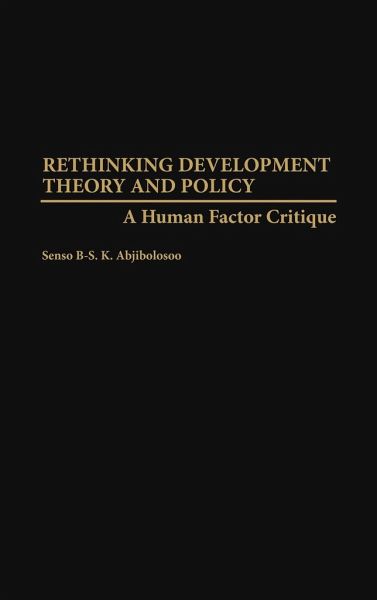
For many decades post-colonial leaders in developing countries have tried various development plans based on orthodox development thinking and theorizing. Yet the developing world has failed to achieve sustained human-centered development. Many of the development plans have failed or been abandoned. Why does the developing world run the risk of falling behind their previously attained standards of living? This book takes a detailed look at the key paradigms of orthodox development thinking, discusses the various theories about economic growth, and concludes that the myths of orthodox development thinking regarding the origins of and obstacles to economic growth and human factor decay are the cause of economic underdevelopment in developing countries. The book goes on to argue that developing countries need to establish and maintain efficient and effective human factor development programs in order to set the stage for human-centered development and to experience positive economic growth and a development turnaround.