

Andere Kunden interessierten sich auch für
 Rethinking Writing Education in the Age of Generative AI41,99 €
 Human Freedom in the Age of AI41,99 €
 The Role of Generative Artificial Intelligence in Higher Education45,99 €
 Customer Relationship Management in the Digital Age55,99 €
 AI and Authorship in Scholarly Communication50,99 €
 Digital Identity in the Age of Big Tech38,99 €
 Future Tech Startups and Innovation in the Age of AI141,99 €




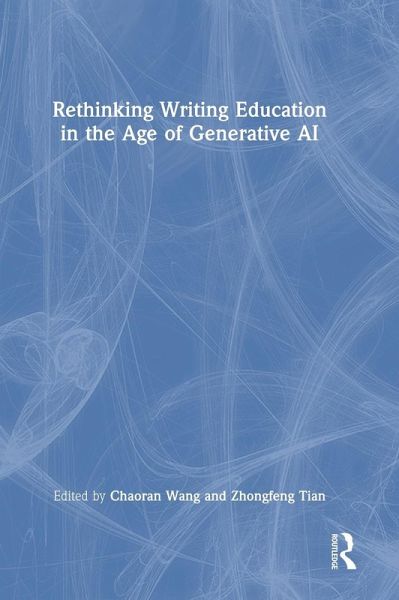
Bringing together leading scholars and practitioners, Rethinking Writing Education in the Age of Generative AI offers a timely exploration of pressing issues in writing pedagogies within an increasingly AI-mediated educational landscape.
From conceptual and empirical work to theory-guided praxis, the book situates the challenges we face today within the historical evolution of writing education and our evolving relationship with AI technologies. Covering a range of contexts such as L2/multilingual writing, first-year writing, writing centers, and writing program administration and faculty development, the book examines various AI-informed writing pedagogies and practices. Drawing on interdisciplinary perspectives from writing studies, education, and applied linguistics, the book bridges theory and practice to address critical questions of innovation, ethics, and equity in AI-supported teaching.
This book is essential for writing educators and researchers lookingto leverage AIs to facilitate the teaching and learning of writing in critical and transformative ways.
Chapters: Chapter 6 of this book is freely available as a downloadable Open Access PDF at http://www.taylorfrancis.com under a Creative Commons [Attribution-Non Commercial-No Derivatives (CC BY-NC-ND)] 4.0 license.
From conceptual and empirical work to theory-guided praxis, the book situates the challenges we face today within the historical evolution of writing education and our evolving relationship with AI technologies. Covering a range of contexts such as L2/multilingual writing, first-year writing, writing centers, and writing program administration and faculty development, the book examines various AI-informed writing pedagogies and practices. Drawing on interdisciplinary perspectives from writing studies, education, and applied linguistics, the book bridges theory and practice to address critical questions of innovation, ethics, and equity in AI-supported teaching.
This book is essential for writing educators and researchers lookingto leverage AIs to facilitate the teaching and learning of writing in critical and transformative ways.
Chapters: Chapter 6 of this book is freely available as a downloadable Open Access PDF at http://www.taylorfrancis.com under a Creative Commons [Attribution-Non Commercial-No Derivatives (CC BY-NC-ND)] 4.0 license.