

Andere Kunden interessierten sich auch für
 Richard Wagner's Letters to August Roeckel;18,99 €
") Wagner's Life And Works V1-2 (1890)26,99 €
Wagner's Life And Works V1-2 (1890)26,99 € Wagner's Ring Of The Nibelung19,99 €
") The Ethics Of Wagner's The Ring Of The Nibelung (1906)18,99 €
The Ethics Of Wagner's The Ring Of The Nibelung (1906)18,99 € Wagner's Nibelungen Ring V115,99 €
") Beschreibung Der Vorzuglichsten Merkwurdigkeiten Der Churfurstlichen Residenstadt Dresden (1782)22,99 €
Beschreibung Der Vorzuglichsten Merkwurdigkeiten Der Churfurstlichen Residenstadt Dresden (1782)22,99 €") A Dresden Romance (1884)19,99 €
A Dresden Romance (1884)19,99 €


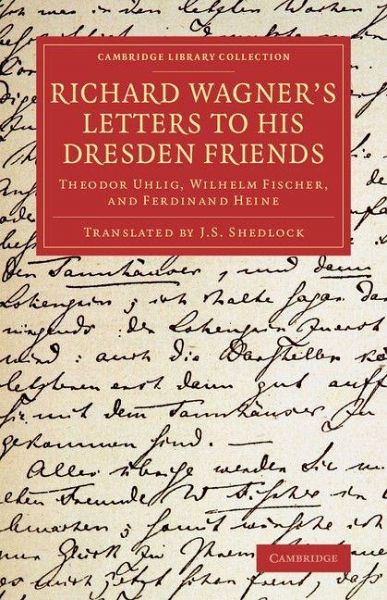
Richard Wagner (1813-83) grew up in Dresden and served as Kapellmeister to King Frederick Augustus II of Saxony there from 1843 until he was forced to flee the country after the 1849 uprising. His operas Rienzi and Der fliegende Holländer received their first performances at the Dresden Court Theatre. During his time in the city, Wagner became firm friends with the composer and violinist Theodor Uhlig, the stage manager and chorus master Wilhelm Fischer, and the comedian and costume designer Ferdinand Heine. This collection of letters from the composer to his three great friends covers the period 1841-68. First published in 1888, the letters are reissued here in the 1890 English translation by the pianist and Beethoven scholar John South Shedlock (1843-1919). They offer an intimate and compelling insight into Wagner's personal and professional life and his forthright views on many contemporary musicians and public figures.