Versandkostenfrei innerhalb Deutschlands
125,99 €
inkl. MwSt.
Versandkostenfrei*
Erscheint vorauss. 4. März 2026
Melden Sie sich
hier
hier
für den Produktalarm an, um über die Verfügbarkeit des Produkts informiert zu werden.

63 °P sammeln
- Gebundenes Buch
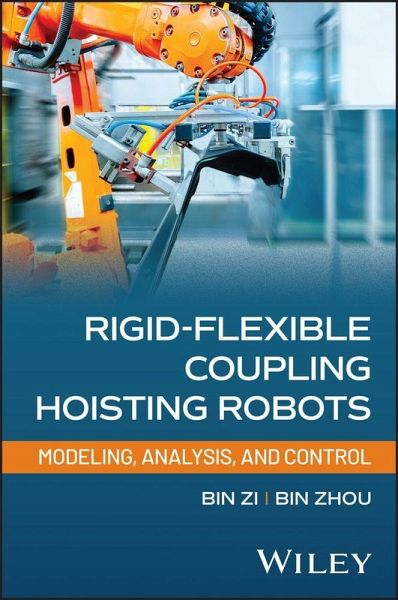
Comprehensive resource detailing the technology of rigid-flexible coupling robots and their applications Rigid-Flexible Coupling Hoisting Robots: Modeling, Analysis, and Control introduces the configuration and optimization design, mechanics and fundamental mechanical issues, uncertainty analysis, trajectory planning, control, and applications of rigid-flexible coupling hoisting robots. The book also reviews kinematics and dynamics modeling as well as design methods to enhance overall performance including motion decoupling, reconfigurable design, and optimization design. A series of numerical…mehr
Andere Kunden interessierten sich auch für
 Julius Ludwig WeisbachThe Mechanics of Hoisting Machinery32,99 €
![]() "Brownhoist": Patent Automatic Hoisting and Conveying Appliances29,99 €
"Brownhoist": Patent Automatic Hoisting and Conveying Appliances29,99 € Kinematics, Statics, Kinetics, Statics Of Rigid Bodies And Of Elastic Solids40,99 €
 Nicolae PandreaDynamics of the Rigid Solid with General Constraints by a Multibody Approach116,99 €
 Joseph Gregory HornerAn Elementary Treatise On Hoisting Machinery Including the Elements of Crane Construction and Descriptions of the Various Types of Cranes in Use34,99 €
 Andrew J. DayBraking of Road Vehicles69,99 €
 Andy SchreierDistributed Brillouin sensor in polymer optical fibers utilizing BOFDA38,90 €
-
-
-







Comprehensive resource detailing the technology of rigid-flexible coupling robots and their applications Rigid-Flexible Coupling Hoisting Robots: Modeling, Analysis, and Control introduces the configuration and optimization design, mechanics and fundamental mechanical issues, uncertainty analysis, trajectory planning, control, and applications of rigid-flexible coupling hoisting robots. The book also reviews kinematics and dynamics modeling as well as design methods to enhance overall performance including motion decoupling, reconfigurable design, and optimization design. A series of numerical simulations and specific experiments on real prototypes are included to help readers quickly grasp both theory and practical application. Summarizing the numerous achievements the authors have made in the field in recent years, Rigid-Flexible Coupling Hoisting Robots: Modeling, Analysis, and Control includes information on: * Fundamental challenges including trajectory planning, tracking control, and force control * Multi-objective optimization design for workspace dexterity and stiffness * Kinematic uncertainty analysis with random parameters, narrowly bounded uncertainty, and large-bounded uncertainty * Dynamic uncertainty analysis with hybrid-random and interval parameters * Controller design and platform development Rigid-Flexible Coupling Hoisting Robots: Modeling, Analysis, and Control is an essential reference on the subject for researchers and engineers in the field as well as graduate students in related programs of study.
Produktdetails
- Produktdetails
- Verlag: Wiley
- Seitenzahl: 384
- Erscheinungstermin: 4. März 2026
- Englisch
- ISBN-13: 9781394308941
- ISBN-10: 1394308949
- Artikelnr.: 75016731
- Herstellerkennzeichnung
- Libri GmbH
- Europaallee 1
- 36244 Bad Hersfeld
- gpsr@libri.de
- Verlag: Wiley
- Seitenzahl: 384
- Erscheinungstermin: 4. März 2026
- Englisch
- ISBN-13: 9781394308941
- ISBN-10: 1394308949
- Artikelnr.: 75016731
- Herstellerkennzeichnung
- Libri GmbH
- Europaallee 1
- 36244 Bad Hersfeld
- gpsr@libri.de
Bin Zi is currently a Professor with the School of Mechano-Electronic Engineering, Xidian University, Xi'an, China. He has published 5 monographs, more than 200 papers and more than 100 authorized invention patents. His research interests include the theory, technology and equipment of intelligent rigid-flexible coupling robots, and automation of intelligent manufacturing system. Bin Zhou is currently an associate professor with the School of Mechanical Engineering, Hefei University of Technology, Hefei, China. he has authored more than 20 papers and more than 15 authorized invention patents. His research interests include uncertainty analysis and reliability-based optimization design, and intelligent control of rigid-flexible coupling robots.
1 Introduction
1.1 The Evolution of Rigid-Flexible Coupling Robots
1.2 The History and Development of Rigid-Flexible Coupling Hoisting Robots
1.3 The Applications of Rigid-Flexible Coupling Hoisting Robots in Various
Fields
1.3.1 Construction
1.3.2 Ocean
1.3.3 Storage
1.4 Scope and Organization of This Book
References
2 Kinematics and Dynamic Modeling of Rigid-Flexible Coupled Hoisting Robots
2.1 Preamble
2.2 Mechanism Design and Kinematic Analysis of Rigid-Flexible Coupling
Hoisting Robots
2.2.1 Mechanism Design of Rigid-Flexible Coupling Hoisting Robot
2.2.2 Kinematic Modeling of Rigid-Flexible Coupled Hoisting Robots
2.3 Dynamic Modeling of Rigid-Flexible Coupling Hoisting Robots
2.3.1 Dynamic Modeling of Rigid-Flexible Coupled Hoisting Robot Based on
Lagrange Method
2.3.2 Dynamic Modeling of Rigid-Flexible Coupled Hoisting Robot Based on
Newton-Euler Method
2.4 Conclusions
References
3 Motion Decoupling, Reconfigurable Design of Rigid-Flexible Coupling
Hoisting Robots3.1 Preamble
3.2 Motion Decoupling Design for a 7-DOF Rigid-Flexible Coupling Hoisting
Robot
3.2.1 Coupling Characteristic Analysis and Motion-Decoupling Method
3.2.2 Mechanical design of 7-DOF Rigid-Flexible Coupling Hoisting Robot
3.3 Modular and Reconfigurable Mechanism Design of Rigid-Flexible Coupling
Hoisting Robots
3.3.1 Design Methodology
3.3.2 Mechanical Description
3.3.3 Typical Configuration
3.4 Integrated Mechanism Design of Dual Machine Collaborative
Rigid-Flexible Coupling Hoisting Robots
3.4.1 Mechanical Design
3.4.2 Kinematic Modeling
3.4.3 Dynamic Modeling
3.5 Conclusions
References
4 Optimization Design of Rigid-Flexible Coupling Hoisting Robots
4.1 Preamble
4.2 Multi-Objective Optimization Design for Workspace and Dexterity
4.2.1 Kinematic Modeling and Static Modeling of RFCHR
4.2.2 Performance Indices of RFCHR
4.2.3 Multi-Objective Optimal Design
4.3 Multi-Objective Optimization Design for Reliability, Workspace, and
Stiffness
4.3.1 Performance Indices of RFCHR
4.3.2 Multi-Objective Optimization Design
4.4 Experiment and Verification
4.5 Conclusions
References
5 Kinematic Analysis of Rigid-Flexible Coupling Hoisting Robots with
Uncertainty
5.1 Preamble
5.2 Kinematic Uncertainty Analysis with Random Parameters
5.2.1 Mechanism Description
5.2.2 Inverse Kinematics
5.2.3 DACS Equilibrium Equation Under Narrowly Random Model
5.2.4 MHRM For Luffing Angular Response Field of the DACS With Narrow
Uncertainty
5.2.5 Numerical examples
5.2.6 Conclusions
5.3 Kinematic Uncertainty Analysis with Interval Variables
5.3.1 Interval Kinematic Equilibrium Equation
5.3.2 Hybrid Compound Function/Subinterval Perturbation Method
5.3.3 Numerical Examples
5.3.4 Conclusions
5.4 Kinematic Uncertainty Analysis Based on Evidence Theory
5.4.1 Architecture and Kinematics
5.4.2 Error Transfer Model
5.4.3 Uncertainty Analysis Based on Evidence Theory
5.4.4 Simulation and Comparison
5.4.5 Conclusions
5.5 Kinematic Uncertainty Analysis with Hybrid Random and Interval
Parameters5.5.1 Hybrid Uncertain DACS With Random and Interval Parameters
5.5.2 The LAR analysis of the DACS with small uncertainty
5.5.3 Hybrid LAR Field Calculation of the DACS
5.5.4 Numerical Examples
5.5.5 Conclusion
5.6 Conclusions
References
6 Dynamic Analysis of Rigid-Flexible Coupling Hoisting Robots with
Uncertainty
6.1 Preamble154
6.2 Static Uncertainty Analysis with Fuzzy Parameters
6.2.1 Fuzzy Static Equilibrium Equation
6.2.2 CFFPM
6.2.3 MCFFPM
6.2.4 Numerical Examples
6.2.5 Conclusions
6.3 Dynamic Uncertainty Analysis with Hybrid Random and Interval
Parameters6.3.1 LSOAAC Equilibrium Equation Under the Hybrid Uncertain
Model
6.3.2 MHUAM for the Dynamic Response Analysis of LSOAAC
6.3.3 Hybrid LSOAAC Response Field Calculation
6.3.4 Numerical Examples
6.3.5 Conclusions
6.4 Conclusions
References
7 Trajectory Planning and Tracking Control of Rigid-Flexible Coupling
Hoisting Robots
7.1 Preamble
7.2 Trajectory Planning for Rigid-Flexible Coupling Hoisting Robots
7.2.1 Inverse Kinematic Modeling
7.2.2 Dynamic Modeling
7.2.3 Point-To-Point Trajectory Planning
7.2.4 Numerical Simulation and Experiments
7.2.5 Conclusions
7.3 Fuzzy Control for Rigid-Flexible Coupling Hoisting Robots
7.3.1 Fuzzy Trajectory Tracking Control
7.3.2 Numerical Simulations
7.3.3 Experiment Validation
7.3.4 Conclusion
7.4 Force Control for Rigid-Flexible Coupling Hoisting Robots
7.4.1 Construction of Experimental Platform
7.4.2 Cable Driving Force Control Method
7.4.3 Control and Monitoring Program Design
7.4.4 Test and Verification Experiment
7.4.5 Conclusion
7.5 Conclusions
References
8 Platform Development and Application for Rigid-Flexible Coupling Hoisting
Robots248
8.1 Preamble
8.2 Platform Development and Performance Verification of a Rigid-Flexible
Coupling Robot for Yard Operations
8.2.1 Physical Prototype Development
8.2.2 Robot Motion Performance Experiment
8.3 Platform Development and Performance Verification for the 7-DOF
Rigid-Flexible Coupling Hoisting Robot
8.3.1 Physical Prototype Development
8.3.2 Verification of Decoupling Performance
8.3.3 Overall Performance
8.4 Conclusions
References
1 Introduction
1.1 The Evolution of Rigid-Flexible Coupling Robots
1.2 The History and Development of Rigid-Flexible Coupling Hoisting Robots
1.3 The Applications of Rigid-Flexible Coupling Hoisting Robots in Various
Fields
1.3.1 Construction
1.3.2 Ocean
1.3.3 Storage
1.4 Scope and Organization of This Book
References
2 Kinematics and Dynamic Modeling of Rigid-Flexible Coupled Hoisting Robots
2.1 Preamble
2.2 Mechanism Design and Kinematic Analysis of Rigid-Flexible Coupling
Hoisting Robots
2.2.1 Mechanism Design of Rigid-Flexible Coupling Hoisting Robot
2.2.2 Kinematic Modeling of Rigid-Flexible Coupled Hoisting Robots
2.3 Dynamic Modeling of Rigid-Flexible Coupling Hoisting Robots
2.3.1 Dynamic Modeling of Rigid-Flexible Coupled Hoisting Robot Based on
Lagrange Method
2.3.2 Dynamic Modeling of Rigid-Flexible Coupled Hoisting Robot Based on
Newton-Euler Method
2.4 Conclusions
References
3 Motion Decoupling, Reconfigurable Design of Rigid-Flexible Coupling
Hoisting Robots
3.1 Preamble
3.2 Motion Decoupling Design for a 7-DOF Rigid-Flexible Coupling Hoisting
Robot
3.2.1 Coupling Characteristic Analysis and Motion-Decoupling Method
3.2.2 Mechanical design of 7-DOF Rigid-Flexible Coupling Hoisting Robot
3.3 Modular and Reconfigurable Mechanism Design of Rigid-Flexible Coupling
Hoisting Robots
3.3.1 Design Methodology
3.3.2 Mechanical Description
3.3.3 Typical Configuration
3.4 Integrated Mechanism Design of Dual Machine Collaborative
Rigid-Flexible Coupling Hoisting Robots
3.4.1 Mechanical Design
3.4.2 Kinematic Modeling
3.4.3 Dynamic Modeling
3.5 Conclusions
References
4 Optimization Design of Rigid-Flexible Coupling Hoisting Robots
4.1 Preamble
4.2 Multi-Objective Optimization Design for Workspace and Dexterity
4.2.1 Kinematic Modeling and Static Modeling of RFCHR
4.2.2 Performance Indices of RFCHR
4.2.3 Multi-Objective Optimal Design
4.3 Multi-Objective Optimization Design for Reliability, Workspace, and
Stiffness
4.3.1 Performance Indices of RFCHR
4.3.2 Multi-Objective Optimization Design
4.4 Experiment and Verification
4.5 Conclusions
References
5 Kinematic Analysis of Rigid-Flexible Coupling Hoisting Robots with
Uncertainty
5.1 Preamble
5.2 Kinematic Uncertainty Analysis with Random Parameters
5.2.1 Mechanism Description
5.2.2 Inverse Kinematics
5.2.3 DACS Equilibrium Equation Under Narrowly Random Model
5.2.4 MHRM For Luffing Angular Response Field of the DACS With Narrow
Uncertainty
5.2.5 Numerical examples
5.2.6 Conclusions
5.3 Kinematic Uncertainty Analysis with Interval Variables
5.3.1 Interval Kinematic Equilibrium Equation
5.3.2 Hybrid Compound Function/Subinterval Perturbation Method
5.3.3 Numerical Examples
5.3.4 Conclusions
5.4 Kinematic Uncertainty Analysis Based on Evidence Theory
5.4.1 Architecture and Kinematics
5.4.2 Error Transfer Model
5.4.3 Uncertainty Analysis Based on Evidence Theory
5.4.4 Simulation and Comparison
5.4.5 Conclusions
5.5 Kinematic Uncertainty Analysis with Hybrid Random and Interval
Parameters
5.5.1 Hybrid Uncertain DACS With Random and Interval Parameters
5.5.2 The LAR analysis of the DACS with small uncertainty
5.5.3 Hybrid LAR Field Calculation of the DACS
5.5.4 Numerical Examples
5.5.5 Conclusion
5.6 Conclusions
References
6 Dynamic Analysis of Rigid-Flexible Coupling Hoisting Robots with
Uncertainty
6.1 Preamble154
6.2 Static Uncertainty Analysis with Fuzzy Parameters
6.2.1 Fuzzy Static Equilibrium Equation
6.2.2 CFFPM
6.2.3 MCFFPM
6.2.4 Numerical Examples
6.2.5 Conclusions
6.3 Dynamic Uncertainty Analysis with Hybrid Random and Interval Parameters
6.3.1 LSOAAC Equilibrium Equation Under the Hybrid Uncertain Model
6.3.2 MHUAM for the Dynamic Response Analysis of LSOAAC
6.3.3 Hybrid LSOAAC Response Field Calculation
6.3.4 Numerical Examples
6.3.5 Conclusions
6.4 Conclusions
References
7 Trajectory Planning and Tracking Control of Rigid-Flexible Coupling
Hoisting Robots
7.1 Preamble
7.2 Trajectory Planning for Rigid-Flexible Coupling Hoisting Robots
7.2.1 Inverse Kinematic Modeling
7.2.2 Dynamic Modeling
7.2.3 Point-To-Point Trajectory Planning
7.2.4 Numerical Simulation and Experiments
7.2.5 Conclusions
7.3 Fuzzy Control for Rigid-Flexible Coupling Hoisting Robots
7.3.1 Fuzzy Trajectory Tracking Control
7.3.2 Numerical Simulations
7.3.3 Experiment Validation
7.3.4 Conclusion
7.4 Force Control for Rigid-Flexible Coupling Hoisting Robots
7.4.1 Construction of Experimental Platform
7.4.2 Cable Driving Force Control Method
7.4.3 Control and Monitoring Program Design
7.4.4 Test and Verification Experiment
7.4.5 Conclusion
7.5 Conclusions
References
8 Platform Development and Application for Rigid-Flexible Coupling Hoisting
Robots
8.1 Preamble
8.2 Platform Development and Performance Verification of a Rigid-Flexible
Coupling Robot for Yard Operations
8.2.1 Physical Prototype Development
8.2.2 Robot Motion Performance Experiment
8.3 Platform Development and Performance Verification for the 7-DOF
Rigid-Flexible Coupling Hoisting Robot
8.3.1 Physical Prototype Development
8.3.2 Verification of Decoupling Performance
8.3.3 Overall Performance
8.4 Conclusions
References
1.1 The Evolution of Rigid-Flexible Coupling Robots
1.2 The History and Development of Rigid-Flexible Coupling Hoisting Robots
1.3 The Applications of Rigid-Flexible Coupling Hoisting Robots in Various
Fields
1.3.1 Construction
1.3.2 Ocean
1.3.3 Storage
1.4 Scope and Organization of This Book
References
2 Kinematics and Dynamic Modeling of Rigid-Flexible Coupled Hoisting Robots
2.1 Preamble
2.2 Mechanism Design and Kinematic Analysis of Rigid-Flexible Coupling
Hoisting Robots
2.2.1 Mechanism Design of Rigid-Flexible Coupling Hoisting Robot
2.2.2 Kinematic Modeling of Rigid-Flexible Coupled Hoisting Robots
2.3 Dynamic Modeling of Rigid-Flexible Coupling Hoisting Robots
2.3.1 Dynamic Modeling of Rigid-Flexible Coupled Hoisting Robot Based on
Lagrange Method
2.3.2 Dynamic Modeling of Rigid-Flexible Coupled Hoisting Robot Based on
Newton-Euler Method
2.4 Conclusions
References
3 Motion Decoupling, Reconfigurable Design of Rigid-Flexible Coupling
Hoisting Robots3.1 Preamble
3.2 Motion Decoupling Design for a 7-DOF Rigid-Flexible Coupling Hoisting
Robot
3.2.1 Coupling Characteristic Analysis and Motion-Decoupling Method
3.2.2 Mechanical design of 7-DOF Rigid-Flexible Coupling Hoisting Robot
3.3 Modular and Reconfigurable Mechanism Design of Rigid-Flexible Coupling
Hoisting Robots
3.3.1 Design Methodology
3.3.2 Mechanical Description
3.3.3 Typical Configuration
3.4 Integrated Mechanism Design of Dual Machine Collaborative
Rigid-Flexible Coupling Hoisting Robots
3.4.1 Mechanical Design
3.4.2 Kinematic Modeling
3.4.3 Dynamic Modeling
3.5 Conclusions
References
4 Optimization Design of Rigid-Flexible Coupling Hoisting Robots
4.1 Preamble
4.2 Multi-Objective Optimization Design for Workspace and Dexterity
4.2.1 Kinematic Modeling and Static Modeling of RFCHR
4.2.2 Performance Indices of RFCHR
4.2.3 Multi-Objective Optimal Design
4.3 Multi-Objective Optimization Design for Reliability, Workspace, and
Stiffness
4.3.1 Performance Indices of RFCHR
4.3.2 Multi-Objective Optimization Design
4.4 Experiment and Verification
4.5 Conclusions
References
5 Kinematic Analysis of Rigid-Flexible Coupling Hoisting Robots with
Uncertainty
5.1 Preamble
5.2 Kinematic Uncertainty Analysis with Random Parameters
5.2.1 Mechanism Description
5.2.2 Inverse Kinematics
5.2.3 DACS Equilibrium Equation Under Narrowly Random Model
5.2.4 MHRM For Luffing Angular Response Field of the DACS With Narrow
Uncertainty
5.2.5 Numerical examples
5.2.6 Conclusions
5.3 Kinematic Uncertainty Analysis with Interval Variables
5.3.1 Interval Kinematic Equilibrium Equation
5.3.2 Hybrid Compound Function/Subinterval Perturbation Method
5.3.3 Numerical Examples
5.3.4 Conclusions
5.4 Kinematic Uncertainty Analysis Based on Evidence Theory
5.4.1 Architecture and Kinematics
5.4.2 Error Transfer Model
5.4.3 Uncertainty Analysis Based on Evidence Theory
5.4.4 Simulation and Comparison
5.4.5 Conclusions
5.5 Kinematic Uncertainty Analysis with Hybrid Random and Interval
Parameters5.5.1 Hybrid Uncertain DACS With Random and Interval Parameters
5.5.2 The LAR analysis of the DACS with small uncertainty
5.5.3 Hybrid LAR Field Calculation of the DACS
5.5.4 Numerical Examples
5.5.5 Conclusion
5.6 Conclusions
References
6 Dynamic Analysis of Rigid-Flexible Coupling Hoisting Robots with
Uncertainty
6.1 Preamble154
6.2 Static Uncertainty Analysis with Fuzzy Parameters
6.2.1 Fuzzy Static Equilibrium Equation
6.2.2 CFFPM
6.2.3 MCFFPM
6.2.4 Numerical Examples
6.2.5 Conclusions
6.3 Dynamic Uncertainty Analysis with Hybrid Random and Interval
Parameters6.3.1 LSOAAC Equilibrium Equation Under the Hybrid Uncertain
Model
6.3.2 MHUAM for the Dynamic Response Analysis of LSOAAC
6.3.3 Hybrid LSOAAC Response Field Calculation
6.3.4 Numerical Examples
6.3.5 Conclusions
6.4 Conclusions
References
7 Trajectory Planning and Tracking Control of Rigid-Flexible Coupling
Hoisting Robots
7.1 Preamble
7.2 Trajectory Planning for Rigid-Flexible Coupling Hoisting Robots
7.2.1 Inverse Kinematic Modeling
7.2.2 Dynamic Modeling
7.2.3 Point-To-Point Trajectory Planning
7.2.4 Numerical Simulation and Experiments
7.2.5 Conclusions
7.3 Fuzzy Control for Rigid-Flexible Coupling Hoisting Robots
7.3.1 Fuzzy Trajectory Tracking Control
7.3.2 Numerical Simulations
7.3.3 Experiment Validation
7.3.4 Conclusion
7.4 Force Control for Rigid-Flexible Coupling Hoisting Robots
7.4.1 Construction of Experimental Platform
7.4.2 Cable Driving Force Control Method
7.4.3 Control and Monitoring Program Design
7.4.4 Test and Verification Experiment
7.4.5 Conclusion
7.5 Conclusions
References
8 Platform Development and Application for Rigid-Flexible Coupling Hoisting
Robots248
8.1 Preamble
8.2 Platform Development and Performance Verification of a Rigid-Flexible
Coupling Robot for Yard Operations
8.2.1 Physical Prototype Development
8.2.2 Robot Motion Performance Experiment
8.3 Platform Development and Performance Verification for the 7-DOF
Rigid-Flexible Coupling Hoisting Robot
8.3.1 Physical Prototype Development
8.3.2 Verification of Decoupling Performance
8.3.3 Overall Performance
8.4 Conclusions
References
1 Introduction
1.1 The Evolution of Rigid-Flexible Coupling Robots
1.2 The History and Development of Rigid-Flexible Coupling Hoisting Robots
1.3 The Applications of Rigid-Flexible Coupling Hoisting Robots in Various
Fields
1.3.1 Construction
1.3.2 Ocean
1.3.3 Storage
1.4 Scope and Organization of This Book
References
2 Kinematics and Dynamic Modeling of Rigid-Flexible Coupled Hoisting Robots
2.1 Preamble
2.2 Mechanism Design and Kinematic Analysis of Rigid-Flexible Coupling
Hoisting Robots
2.2.1 Mechanism Design of Rigid-Flexible Coupling Hoisting Robot
2.2.2 Kinematic Modeling of Rigid-Flexible Coupled Hoisting Robots
2.3 Dynamic Modeling of Rigid-Flexible Coupling Hoisting Robots
2.3.1 Dynamic Modeling of Rigid-Flexible Coupled Hoisting Robot Based on
Lagrange Method
2.3.2 Dynamic Modeling of Rigid-Flexible Coupled Hoisting Robot Based on
Newton-Euler Method
2.4 Conclusions
References
3 Motion Decoupling, Reconfigurable Design of Rigid-Flexible Coupling
Hoisting Robots
3.1 Preamble
3.2 Motion Decoupling Design for a 7-DOF Rigid-Flexible Coupling Hoisting
Robot
3.2.1 Coupling Characteristic Analysis and Motion-Decoupling Method
3.2.2 Mechanical design of 7-DOF Rigid-Flexible Coupling Hoisting Robot
3.3 Modular and Reconfigurable Mechanism Design of Rigid-Flexible Coupling
Hoisting Robots
3.3.1 Design Methodology
3.3.2 Mechanical Description
3.3.3 Typical Configuration
3.4 Integrated Mechanism Design of Dual Machine Collaborative
Rigid-Flexible Coupling Hoisting Robots
3.4.1 Mechanical Design
3.4.2 Kinematic Modeling
3.4.3 Dynamic Modeling
3.5 Conclusions
References
4 Optimization Design of Rigid-Flexible Coupling Hoisting Robots
4.1 Preamble
4.2 Multi-Objective Optimization Design for Workspace and Dexterity
4.2.1 Kinematic Modeling and Static Modeling of RFCHR
4.2.2 Performance Indices of RFCHR
4.2.3 Multi-Objective Optimal Design
4.3 Multi-Objective Optimization Design for Reliability, Workspace, and
Stiffness
4.3.1 Performance Indices of RFCHR
4.3.2 Multi-Objective Optimization Design
4.4 Experiment and Verification
4.5 Conclusions
References
5 Kinematic Analysis of Rigid-Flexible Coupling Hoisting Robots with
Uncertainty
5.1 Preamble
5.2 Kinematic Uncertainty Analysis with Random Parameters
5.2.1 Mechanism Description
5.2.2 Inverse Kinematics
5.2.3 DACS Equilibrium Equation Under Narrowly Random Model
5.2.4 MHRM For Luffing Angular Response Field of the DACS With Narrow
Uncertainty
5.2.5 Numerical examples
5.2.6 Conclusions
5.3 Kinematic Uncertainty Analysis with Interval Variables
5.3.1 Interval Kinematic Equilibrium Equation
5.3.2 Hybrid Compound Function/Subinterval Perturbation Method
5.3.3 Numerical Examples
5.3.4 Conclusions
5.4 Kinematic Uncertainty Analysis Based on Evidence Theory
5.4.1 Architecture and Kinematics
5.4.2 Error Transfer Model
5.4.3 Uncertainty Analysis Based on Evidence Theory
5.4.4 Simulation and Comparison
5.4.5 Conclusions
5.5 Kinematic Uncertainty Analysis with Hybrid Random and Interval
Parameters
5.5.1 Hybrid Uncertain DACS With Random and Interval Parameters
5.5.2 The LAR analysis of the DACS with small uncertainty
5.5.3 Hybrid LAR Field Calculation of the DACS
5.5.4 Numerical Examples
5.5.5 Conclusion
5.6 Conclusions
References
6 Dynamic Analysis of Rigid-Flexible Coupling Hoisting Robots with
Uncertainty
6.1 Preamble154
6.2 Static Uncertainty Analysis with Fuzzy Parameters
6.2.1 Fuzzy Static Equilibrium Equation
6.2.2 CFFPM
6.2.3 MCFFPM
6.2.4 Numerical Examples
6.2.5 Conclusions
6.3 Dynamic Uncertainty Analysis with Hybrid Random and Interval Parameters
6.3.1 LSOAAC Equilibrium Equation Under the Hybrid Uncertain Model
6.3.2 MHUAM for the Dynamic Response Analysis of LSOAAC
6.3.3 Hybrid LSOAAC Response Field Calculation
6.3.4 Numerical Examples
6.3.5 Conclusions
6.4 Conclusions
References
7 Trajectory Planning and Tracking Control of Rigid-Flexible Coupling
Hoisting Robots
7.1 Preamble
7.2 Trajectory Planning for Rigid-Flexible Coupling Hoisting Robots
7.2.1 Inverse Kinematic Modeling
7.2.2 Dynamic Modeling
7.2.3 Point-To-Point Trajectory Planning
7.2.4 Numerical Simulation and Experiments
7.2.5 Conclusions
7.3 Fuzzy Control for Rigid-Flexible Coupling Hoisting Robots
7.3.1 Fuzzy Trajectory Tracking Control
7.3.2 Numerical Simulations
7.3.3 Experiment Validation
7.3.4 Conclusion
7.4 Force Control for Rigid-Flexible Coupling Hoisting Robots
7.4.1 Construction of Experimental Platform
7.4.2 Cable Driving Force Control Method
7.4.3 Control and Monitoring Program Design
7.4.4 Test and Verification Experiment
7.4.5 Conclusion
7.5 Conclusions
References
8 Platform Development and Application for Rigid-Flexible Coupling Hoisting
Robots
8.1 Preamble
8.2 Platform Development and Performance Verification of a Rigid-Flexible
Coupling Robot for Yard Operations
8.2.1 Physical Prototype Development
8.2.2 Robot Motion Performance Experiment
8.3 Platform Development and Performance Verification for the 7-DOF
Rigid-Flexible Coupling Hoisting Robot
8.3.1 Physical Prototype Development
8.3.2 Verification of Decoupling Performance
8.3.3 Overall Performance
8.4 Conclusions
References
1 Introduction
1.1 The Evolution of Rigid-Flexible Coupling Robots
1.2 The History and Development of Rigid-Flexible Coupling Hoisting Robots
1.3 The Applications of Rigid-Flexible Coupling Hoisting Robots in Various
Fields
1.3.1 Construction
1.3.2 Ocean
1.3.3 Storage
1.4 Scope and Organization of This Book
References
2 Kinematics and Dynamic Modeling of Rigid-Flexible Coupled Hoisting Robots
2.1 Preamble
2.2 Mechanism Design and Kinematic Analysis of Rigid-Flexible Coupling
Hoisting Robots
2.2.1 Mechanism Design of Rigid-Flexible Coupling Hoisting Robot
2.2.2 Kinematic Modeling of Rigid-Flexible Coupled Hoisting Robots
2.3 Dynamic Modeling of Rigid-Flexible Coupling Hoisting Robots
2.3.1 Dynamic Modeling of Rigid-Flexible Coupled Hoisting Robot Based on
Lagrange Method
2.3.2 Dynamic Modeling of Rigid-Flexible Coupled Hoisting Robot Based on
Newton-Euler Method
2.4 Conclusions
References
3 Motion Decoupling, Reconfigurable Design of Rigid-Flexible Coupling
Hoisting Robots3.1 Preamble
3.2 Motion Decoupling Design for a 7-DOF Rigid-Flexible Coupling Hoisting
Robot
3.2.1 Coupling Characteristic Analysis and Motion-Decoupling Method
3.2.2 Mechanical design of 7-DOF Rigid-Flexible Coupling Hoisting Robot
3.3 Modular and Reconfigurable Mechanism Design of Rigid-Flexible Coupling
Hoisting Robots
3.3.1 Design Methodology
3.3.2 Mechanical Description
3.3.3 Typical Configuration
3.4 Integrated Mechanism Design of Dual Machine Collaborative
Rigid-Flexible Coupling Hoisting Robots
3.4.1 Mechanical Design
3.4.2 Kinematic Modeling
3.4.3 Dynamic Modeling
3.5 Conclusions
References
4 Optimization Design of Rigid-Flexible Coupling Hoisting Robots
4.1 Preamble
4.2 Multi-Objective Optimization Design for Workspace and Dexterity
4.2.1 Kinematic Modeling and Static Modeling of RFCHR
4.2.2 Performance Indices of RFCHR
4.2.3 Multi-Objective Optimal Design
4.3 Multi-Objective Optimization Design for Reliability, Workspace, and
Stiffness
4.3.1 Performance Indices of RFCHR
4.3.2 Multi-Objective Optimization Design
4.4 Experiment and Verification
4.5 Conclusions
References
5 Kinematic Analysis of Rigid-Flexible Coupling Hoisting Robots with
Uncertainty
5.1 Preamble
5.2 Kinematic Uncertainty Analysis with Random Parameters
5.2.1 Mechanism Description
5.2.2 Inverse Kinematics
5.2.3 DACS Equilibrium Equation Under Narrowly Random Model
5.2.4 MHRM For Luffing Angular Response Field of the DACS With Narrow
Uncertainty
5.2.5 Numerical examples
5.2.6 Conclusions
5.3 Kinematic Uncertainty Analysis with Interval Variables
5.3.1 Interval Kinematic Equilibrium Equation
5.3.2 Hybrid Compound Function/Subinterval Perturbation Method
5.3.3 Numerical Examples
5.3.4 Conclusions
5.4 Kinematic Uncertainty Analysis Based on Evidence Theory
5.4.1 Architecture and Kinematics
5.4.2 Error Transfer Model
5.4.3 Uncertainty Analysis Based on Evidence Theory
5.4.4 Simulation and Comparison
5.4.5 Conclusions
5.5 Kinematic Uncertainty Analysis with Hybrid Random and Interval
Parameters5.5.1 Hybrid Uncertain DACS With Random and Interval Parameters
5.5.2 The LAR analysis of the DACS with small uncertainty
5.5.3 Hybrid LAR Field Calculation of the DACS
5.5.4 Numerical Examples
5.5.5 Conclusion
5.6 Conclusions
References
6 Dynamic Analysis of Rigid-Flexible Coupling Hoisting Robots with
Uncertainty
6.1 Preamble154
6.2 Static Uncertainty Analysis with Fuzzy Parameters
6.2.1 Fuzzy Static Equilibrium Equation
6.2.2 CFFPM
6.2.3 MCFFPM
6.2.4 Numerical Examples
6.2.5 Conclusions
6.3 Dynamic Uncertainty Analysis with Hybrid Random and Interval
Parameters6.3.1 LSOAAC Equilibrium Equation Under the Hybrid Uncertain
Model
6.3.2 MHUAM for the Dynamic Response Analysis of LSOAAC
6.3.3 Hybrid LSOAAC Response Field Calculation
6.3.4 Numerical Examples
6.3.5 Conclusions
6.4 Conclusions
References
7 Trajectory Planning and Tracking Control of Rigid-Flexible Coupling
Hoisting Robots
7.1 Preamble
7.2 Trajectory Planning for Rigid-Flexible Coupling Hoisting Robots
7.2.1 Inverse Kinematic Modeling
7.2.2 Dynamic Modeling
7.2.3 Point-To-Point Trajectory Planning
7.2.4 Numerical Simulation and Experiments
7.2.5 Conclusions
7.3 Fuzzy Control for Rigid-Flexible Coupling Hoisting Robots
7.3.1 Fuzzy Trajectory Tracking Control
7.3.2 Numerical Simulations
7.3.3 Experiment Validation
7.3.4 Conclusion
7.4 Force Control for Rigid-Flexible Coupling Hoisting Robots
7.4.1 Construction of Experimental Platform
7.4.2 Cable Driving Force Control Method
7.4.3 Control and Monitoring Program Design
7.4.4 Test and Verification Experiment
7.4.5 Conclusion
7.5 Conclusions
References
8 Platform Development and Application for Rigid-Flexible Coupling Hoisting
Robots248
8.1 Preamble
8.2 Platform Development and Performance Verification of a Rigid-Flexible
Coupling Robot for Yard Operations
8.2.1 Physical Prototype Development
8.2.2 Robot Motion Performance Experiment
8.3 Platform Development and Performance Verification for the 7-DOF
Rigid-Flexible Coupling Hoisting Robot
8.3.1 Physical Prototype Development
8.3.2 Verification of Decoupling Performance
8.3.3 Overall Performance
8.4 Conclusions
References
1 Introduction
1.1 The Evolution of Rigid-Flexible Coupling Robots
1.2 The History and Development of Rigid-Flexible Coupling Hoisting Robots
1.3 The Applications of Rigid-Flexible Coupling Hoisting Robots in Various
Fields
1.3.1 Construction
1.3.2 Ocean
1.3.3 Storage
1.4 Scope and Organization of This Book
References
2 Kinematics and Dynamic Modeling of Rigid-Flexible Coupled Hoisting Robots
2.1 Preamble
2.2 Mechanism Design and Kinematic Analysis of Rigid-Flexible Coupling
Hoisting Robots
2.2.1 Mechanism Design of Rigid-Flexible Coupling Hoisting Robot
2.2.2 Kinematic Modeling of Rigid-Flexible Coupled Hoisting Robots
2.3 Dynamic Modeling of Rigid-Flexible Coupling Hoisting Robots
2.3.1 Dynamic Modeling of Rigid-Flexible Coupled Hoisting Robot Based on
Lagrange Method
2.3.2 Dynamic Modeling of Rigid-Flexible Coupled Hoisting Robot Based on
Newton-Euler Method
2.4 Conclusions
References
3 Motion Decoupling, Reconfigurable Design of Rigid-Flexible Coupling
Hoisting Robots
3.1 Preamble
3.2 Motion Decoupling Design for a 7-DOF Rigid-Flexible Coupling Hoisting
Robot
3.2.1 Coupling Characteristic Analysis and Motion-Decoupling Method
3.2.2 Mechanical design of 7-DOF Rigid-Flexible Coupling Hoisting Robot
3.3 Modular and Reconfigurable Mechanism Design of Rigid-Flexible Coupling
Hoisting Robots
3.3.1 Design Methodology
3.3.2 Mechanical Description
3.3.3 Typical Configuration
3.4 Integrated Mechanism Design of Dual Machine Collaborative
Rigid-Flexible Coupling Hoisting Robots
3.4.1 Mechanical Design
3.4.2 Kinematic Modeling
3.4.3 Dynamic Modeling
3.5 Conclusions
References
4 Optimization Design of Rigid-Flexible Coupling Hoisting Robots
4.1 Preamble
4.2 Multi-Objective Optimization Design for Workspace and Dexterity
4.2.1 Kinematic Modeling and Static Modeling of RFCHR
4.2.2 Performance Indices of RFCHR
4.2.3 Multi-Objective Optimal Design
4.3 Multi-Objective Optimization Design for Reliability, Workspace, and
Stiffness
4.3.1 Performance Indices of RFCHR
4.3.2 Multi-Objective Optimization Design
4.4 Experiment and Verification
4.5 Conclusions
References
5 Kinematic Analysis of Rigid-Flexible Coupling Hoisting Robots with
Uncertainty
5.1 Preamble
5.2 Kinematic Uncertainty Analysis with Random Parameters
5.2.1 Mechanism Description
5.2.2 Inverse Kinematics
5.2.3 DACS Equilibrium Equation Under Narrowly Random Model
5.2.4 MHRM For Luffing Angular Response Field of the DACS With Narrow
Uncertainty
5.2.5 Numerical examples
5.2.6 Conclusions
5.3 Kinematic Uncertainty Analysis with Interval Variables
5.3.1 Interval Kinematic Equilibrium Equation
5.3.2 Hybrid Compound Function/Subinterval Perturbation Method
5.3.3 Numerical Examples
5.3.4 Conclusions
5.4 Kinematic Uncertainty Analysis Based on Evidence Theory
5.4.1 Architecture and Kinematics
5.4.2 Error Transfer Model
5.4.3 Uncertainty Analysis Based on Evidence Theory
5.4.4 Simulation and Comparison
5.4.5 Conclusions
5.5 Kinematic Uncertainty Analysis with Hybrid Random and Interval
Parameters
5.5.1 Hybrid Uncertain DACS With Random and Interval Parameters
5.5.2 The LAR analysis of the DACS with small uncertainty
5.5.3 Hybrid LAR Field Calculation of the DACS
5.5.4 Numerical Examples
5.5.5 Conclusion
5.6 Conclusions
References
6 Dynamic Analysis of Rigid-Flexible Coupling Hoisting Robots with
Uncertainty
6.1 Preamble154
6.2 Static Uncertainty Analysis with Fuzzy Parameters
6.2.1 Fuzzy Static Equilibrium Equation
6.2.2 CFFPM
6.2.3 MCFFPM
6.2.4 Numerical Examples
6.2.5 Conclusions
6.3 Dynamic Uncertainty Analysis with Hybrid Random and Interval Parameters
6.3.1 LSOAAC Equilibrium Equation Under the Hybrid Uncertain Model
6.3.2 MHUAM for the Dynamic Response Analysis of LSOAAC
6.3.3 Hybrid LSOAAC Response Field Calculation
6.3.4 Numerical Examples
6.3.5 Conclusions
6.4 Conclusions
References
7 Trajectory Planning and Tracking Control of Rigid-Flexible Coupling
Hoisting Robots
7.1 Preamble
7.2 Trajectory Planning for Rigid-Flexible Coupling Hoisting Robots
7.2.1 Inverse Kinematic Modeling
7.2.2 Dynamic Modeling
7.2.3 Point-To-Point Trajectory Planning
7.2.4 Numerical Simulation and Experiments
7.2.5 Conclusions
7.3 Fuzzy Control for Rigid-Flexible Coupling Hoisting Robots
7.3.1 Fuzzy Trajectory Tracking Control
7.3.2 Numerical Simulations
7.3.3 Experiment Validation
7.3.4 Conclusion
7.4 Force Control for Rigid-Flexible Coupling Hoisting Robots
7.4.1 Construction of Experimental Platform
7.4.2 Cable Driving Force Control Method
7.4.3 Control and Monitoring Program Design
7.4.4 Test and Verification Experiment
7.4.5 Conclusion
7.5 Conclusions
References
8 Platform Development and Application for Rigid-Flexible Coupling Hoisting
Robots
8.1 Preamble
8.2 Platform Development and Performance Verification of a Rigid-Flexible
Coupling Robot for Yard Operations
8.2.1 Physical Prototype Development
8.2.2 Robot Motion Performance Experiment
8.3 Platform Development and Performance Verification for the 7-DOF
Rigid-Flexible Coupling Hoisting Robot
8.3.1 Physical Prototype Development
8.3.2 Verification of Decoupling Performance
8.3.3 Overall Performance
8.4 Conclusions
References
1.1 The Evolution of Rigid-Flexible Coupling Robots
1.2 The History and Development of Rigid-Flexible Coupling Hoisting Robots
1.3 The Applications of Rigid-Flexible Coupling Hoisting Robots in Various
Fields
1.3.1 Construction
1.3.2 Ocean
1.3.3 Storage
1.4 Scope and Organization of This Book
References
2 Kinematics and Dynamic Modeling of Rigid-Flexible Coupled Hoisting Robots
2.1 Preamble
2.2 Mechanism Design and Kinematic Analysis of Rigid-Flexible Coupling
Hoisting Robots
2.2.1 Mechanism Design of Rigid-Flexible Coupling Hoisting Robot
2.2.2 Kinematic Modeling of Rigid-Flexible Coupled Hoisting Robots
2.3 Dynamic Modeling of Rigid-Flexible Coupling Hoisting Robots
2.3.1 Dynamic Modeling of Rigid-Flexible Coupled Hoisting Robot Based on
Lagrange Method
2.3.2 Dynamic Modeling of Rigid-Flexible Coupled Hoisting Robot Based on
Newton-Euler Method
2.4 Conclusions
References
3 Motion Decoupling, Reconfigurable Design of Rigid-Flexible Coupling
Hoisting Robots3.1 Preamble
3.2 Motion Decoupling Design for a 7-DOF Rigid-Flexible Coupling Hoisting
Robot
3.2.1 Coupling Characteristic Analysis and Motion-Decoupling Method
3.2.2 Mechanical design of 7-DOF Rigid-Flexible Coupling Hoisting Robot
3.3 Modular and Reconfigurable Mechanism Design of Rigid-Flexible Coupling
Hoisting Robots
3.3.1 Design Methodology
3.3.2 Mechanical Description
3.3.3 Typical Configuration
3.4 Integrated Mechanism Design of Dual Machine Collaborative
Rigid-Flexible Coupling Hoisting Robots
3.4.1 Mechanical Design
3.4.2 Kinematic Modeling
3.4.3 Dynamic Modeling
3.5 Conclusions
References
4 Optimization Design of Rigid-Flexible Coupling Hoisting Robots
4.1 Preamble
4.2 Multi-Objective Optimization Design for Workspace and Dexterity
4.2.1 Kinematic Modeling and Static Modeling of RFCHR
4.2.2 Performance Indices of RFCHR
4.2.3 Multi-Objective Optimal Design
4.3 Multi-Objective Optimization Design for Reliability, Workspace, and
Stiffness
4.3.1 Performance Indices of RFCHR
4.3.2 Multi-Objective Optimization Design
4.4 Experiment and Verification
4.5 Conclusions
References
5 Kinematic Analysis of Rigid-Flexible Coupling Hoisting Robots with
Uncertainty
5.1 Preamble
5.2 Kinematic Uncertainty Analysis with Random Parameters
5.2.1 Mechanism Description
5.2.2 Inverse Kinematics
5.2.3 DACS Equilibrium Equation Under Narrowly Random Model
5.2.4 MHRM For Luffing Angular Response Field of the DACS With Narrow
Uncertainty
5.2.5 Numerical examples
5.2.6 Conclusions
5.3 Kinematic Uncertainty Analysis with Interval Variables
5.3.1 Interval Kinematic Equilibrium Equation
5.3.2 Hybrid Compound Function/Subinterval Perturbation Method
5.3.3 Numerical Examples
5.3.4 Conclusions
5.4 Kinematic Uncertainty Analysis Based on Evidence Theory
5.4.1 Architecture and Kinematics
5.4.2 Error Transfer Model
5.4.3 Uncertainty Analysis Based on Evidence Theory
5.4.4 Simulation and Comparison
5.4.5 Conclusions
5.5 Kinematic Uncertainty Analysis with Hybrid Random and Interval
Parameters5.5.1 Hybrid Uncertain DACS With Random and Interval Parameters
5.5.2 The LAR analysis of the DACS with small uncertainty
5.5.3 Hybrid LAR Field Calculation of the DACS
5.5.4 Numerical Examples
5.5.5 Conclusion
5.6 Conclusions
References
6 Dynamic Analysis of Rigid-Flexible Coupling Hoisting Robots with
Uncertainty
6.1 Preamble154
6.2 Static Uncertainty Analysis with Fuzzy Parameters
6.2.1 Fuzzy Static Equilibrium Equation
6.2.2 CFFPM
6.2.3 MCFFPM
6.2.4 Numerical Examples
6.2.5 Conclusions
6.3 Dynamic Uncertainty Analysis with Hybrid Random and Interval
Parameters6.3.1 LSOAAC Equilibrium Equation Under the Hybrid Uncertain
Model
6.3.2 MHUAM for the Dynamic Response Analysis of LSOAAC
6.3.3 Hybrid LSOAAC Response Field Calculation
6.3.4 Numerical Examples
6.3.5 Conclusions
6.4 Conclusions
References
7 Trajectory Planning and Tracking Control of Rigid-Flexible Coupling
Hoisting Robots
7.1 Preamble
7.2 Trajectory Planning for Rigid-Flexible Coupling Hoisting Robots
7.2.1 Inverse Kinematic Modeling
7.2.2 Dynamic Modeling
7.2.3 Point-To-Point Trajectory Planning
7.2.4 Numerical Simulation and Experiments
7.2.5 Conclusions
7.3 Fuzzy Control for Rigid-Flexible Coupling Hoisting Robots
7.3.1 Fuzzy Trajectory Tracking Control
7.3.2 Numerical Simulations
7.3.3 Experiment Validation
7.3.4 Conclusion
7.4 Force Control for Rigid-Flexible Coupling Hoisting Robots
7.4.1 Construction of Experimental Platform
7.4.2 Cable Driving Force Control Method
7.4.3 Control and Monitoring Program Design
7.4.4 Test and Verification Experiment
7.4.5 Conclusion
7.5 Conclusions
References
8 Platform Development and Application for Rigid-Flexible Coupling Hoisting
Robots248
8.1 Preamble
8.2 Platform Development and Performance Verification of a Rigid-Flexible
Coupling Robot for Yard Operations
8.2.1 Physical Prototype Development
8.2.2 Robot Motion Performance Experiment
8.3 Platform Development and Performance Verification for the 7-DOF
Rigid-Flexible Coupling Hoisting Robot
8.3.1 Physical Prototype Development
8.3.2 Verification of Decoupling Performance
8.3.3 Overall Performance
8.4 Conclusions
References
1 Introduction
1.1 The Evolution of Rigid-Flexible Coupling Robots
1.2 The History and Development of Rigid-Flexible Coupling Hoisting Robots
1.3 The Applications of Rigid-Flexible Coupling Hoisting Robots in Various
Fields
1.3.1 Construction
1.3.2 Ocean
1.3.3 Storage
1.4 Scope and Organization of This Book
References
2 Kinematics and Dynamic Modeling of Rigid-Flexible Coupled Hoisting Robots
2.1 Preamble
2.2 Mechanism Design and Kinematic Analysis of Rigid-Flexible Coupling
Hoisting Robots
2.2.1 Mechanism Design of Rigid-Flexible Coupling Hoisting Robot
2.2.2 Kinematic Modeling of Rigid-Flexible Coupled Hoisting Robots
2.3 Dynamic Modeling of Rigid-Flexible Coupling Hoisting Robots
2.3.1 Dynamic Modeling of Rigid-Flexible Coupled Hoisting Robot Based on
Lagrange Method
2.3.2 Dynamic Modeling of Rigid-Flexible Coupled Hoisting Robot Based on
Newton-Euler Method
2.4 Conclusions
References
3 Motion Decoupling, Reconfigurable Design of Rigid-Flexible Coupling
Hoisting Robots
3.1 Preamble
3.2 Motion Decoupling Design for a 7-DOF Rigid-Flexible Coupling Hoisting
Robot
3.2.1 Coupling Characteristic Analysis and Motion-Decoupling Method
3.2.2 Mechanical design of 7-DOF Rigid-Flexible Coupling Hoisting Robot
3.3 Modular and Reconfigurable Mechanism Design of Rigid-Flexible Coupling
Hoisting Robots
3.3.1 Design Methodology
3.3.2 Mechanical Description
3.3.3 Typical Configuration
3.4 Integrated Mechanism Design of Dual Machine Collaborative
Rigid-Flexible Coupling Hoisting Robots
3.4.1 Mechanical Design
3.4.2 Kinematic Modeling
3.4.3 Dynamic Modeling
3.5 Conclusions
References
4 Optimization Design of Rigid-Flexible Coupling Hoisting Robots
4.1 Preamble
4.2 Multi-Objective Optimization Design for Workspace and Dexterity
4.2.1 Kinematic Modeling and Static Modeling of RFCHR
4.2.2 Performance Indices of RFCHR
4.2.3 Multi-Objective Optimal Design
4.3 Multi-Objective Optimization Design for Reliability, Workspace, and
Stiffness
4.3.1 Performance Indices of RFCHR
4.3.2 Multi-Objective Optimization Design
4.4 Experiment and Verification
4.5 Conclusions
References
5 Kinematic Analysis of Rigid-Flexible Coupling Hoisting Robots with
Uncertainty
5.1 Preamble
5.2 Kinematic Uncertainty Analysis with Random Parameters
5.2.1 Mechanism Description
5.2.2 Inverse Kinematics
5.2.3 DACS Equilibrium Equation Under Narrowly Random Model
5.2.4 MHRM For Luffing Angular Response Field of the DACS With Narrow
Uncertainty
5.2.5 Numerical examples
5.2.6 Conclusions
5.3 Kinematic Uncertainty Analysis with Interval Variables
5.3.1 Interval Kinematic Equilibrium Equation
5.3.2 Hybrid Compound Function/Subinterval Perturbation Method
5.3.3 Numerical Examples
5.3.4 Conclusions
5.4 Kinematic Uncertainty Analysis Based on Evidence Theory
5.4.1 Architecture and Kinematics
5.4.2 Error Transfer Model
5.4.3 Uncertainty Analysis Based on Evidence Theory
5.4.4 Simulation and Comparison
5.4.5 Conclusions
5.5 Kinematic Uncertainty Analysis with Hybrid Random and Interval
Parameters
5.5.1 Hybrid Uncertain DACS With Random and Interval Parameters
5.5.2 The LAR analysis of the DACS with small uncertainty
5.5.3 Hybrid LAR Field Calculation of the DACS
5.5.4 Numerical Examples
5.5.5 Conclusion
5.6 Conclusions
References
6 Dynamic Analysis of Rigid-Flexible Coupling Hoisting Robots with
Uncertainty
6.1 Preamble154
6.2 Static Uncertainty Analysis with Fuzzy Parameters
6.2.1 Fuzzy Static Equilibrium Equation
6.2.2 CFFPM
6.2.3 MCFFPM
6.2.4 Numerical Examples
6.2.5 Conclusions
6.3 Dynamic Uncertainty Analysis with Hybrid Random and Interval Parameters
6.3.1 LSOAAC Equilibrium Equation Under the Hybrid Uncertain Model
6.3.2 MHUAM for the Dynamic Response Analysis of LSOAAC
6.3.3 Hybrid LSOAAC Response Field Calculation
6.3.4 Numerical Examples
6.3.5 Conclusions
6.4 Conclusions
References
7 Trajectory Planning and Tracking Control of Rigid-Flexible Coupling
Hoisting Robots
7.1 Preamble
7.2 Trajectory Planning for Rigid-Flexible Coupling Hoisting Robots
7.2.1 Inverse Kinematic Modeling
7.2.2 Dynamic Modeling
7.2.3 Point-To-Point Trajectory Planning
7.2.4 Numerical Simulation and Experiments
7.2.5 Conclusions
7.3 Fuzzy Control for Rigid-Flexible Coupling Hoisting Robots
7.3.1 Fuzzy Trajectory Tracking Control
7.3.2 Numerical Simulations
7.3.3 Experiment Validation
7.3.4 Conclusion
7.4 Force Control for Rigid-Flexible Coupling Hoisting Robots
7.4.1 Construction of Experimental Platform
7.4.2 Cable Driving Force Control Method
7.4.3 Control and Monitoring Program Design
7.4.4 Test and Verification Experiment
7.4.5 Conclusion
7.5 Conclusions
References
8 Platform Development and Application for Rigid-Flexible Coupling Hoisting
Robots
8.1 Preamble
8.2 Platform Development and Performance Verification of a Rigid-Flexible
Coupling Robot for Yard Operations
8.2.1 Physical Prototype Development
8.2.2 Robot Motion Performance Experiment
8.3 Platform Development and Performance Verification for the 7-DOF
Rigid-Flexible Coupling Hoisting Robot
8.3.1 Physical Prototype Development
8.3.2 Verification of Decoupling Performance
8.3.3 Overall Performance
8.4 Conclusions
References