
Andere Kunden interessierten sich auch für
 What Am I Doing Here?19,99 €
 News from Nowhere and Other Writings16,99 €
 In Patagonia9,99 €
 Thus Spoke Zarathustra8,99 €
 The Ascent of Rum Doodle8,99 €
 Mythologies16,99 €
 Without Ever Reaching the Summit9,99 €
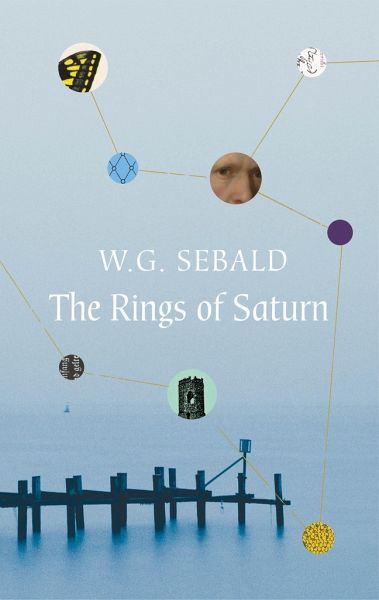
Einer geht zu Fuß durch die Grafschaft Suffolk, eine spärlich besiedelte Gegend an der englischen Ostküste, und dort findet er, in den Heidelandschaften und abgelegten Küstenorten, die ganze Welt wieder. Überall stößt er auf Spuren vergangener Herrlichkeit und Schande. Den geringfügigen Rest am Wegrand bringt er zum Sprechen. Jeder Stein kündet von märchenhaften und unheimlichen Geschichten.
A Walking tour through the haunted landscapes of the past, in the company of the exiled and the departed. The Rings of Saturn begins as the record of a journey on foot through coastal East Anglia.
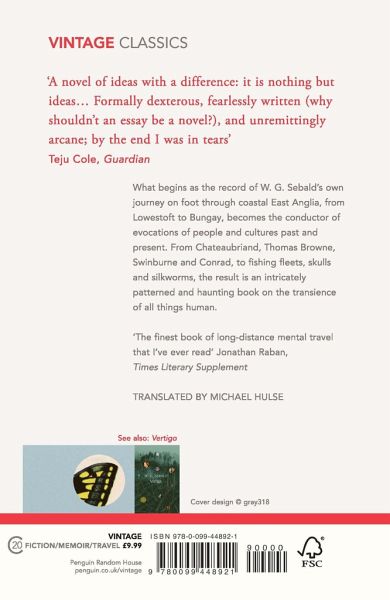
From Lowestoft to Southwold to Bungay, Sebald´s own story becomes the conductor of evocations of people and cultures past and present: of Chateaubriand, Thomas Browne, Swinburne and Conrad, of fishing fleets, skulls and silkworms.
The result is a book unlike any other in contemporary literature, an intricately patterned and endlessly thought-provoking meditation on the transience of all things human.
A Walking tour through the haunted landscapes of the past, in the company of the exiled and the departed. The Rings of Saturn begins as the record of a journey on foot through coastal East Anglia.
From Lowestoft to Southwold to Bungay, Sebald´s own story becomes the conductor of evocations of people and cultures past and present: of Chateaubriand, Thomas Browne, Swinburne and Conrad, of fishing fleets, skulls and silkworms.
The result is a book unlike any other in contemporary literature, an intricately patterned and endlessly thought-provoking meditation on the transience of all things human.
A novel of ideas with a difference: it is nothing but ideas. Framed around the narrator's long walks in East Anglia, Sebald shows how one man looks aslant at historical atrocity. Formally dexterous, fearlessly written (why shouldn't an essay be a novel?), and unremittingly arcane; by the end I was in tears Teju Cole Guardian