
Andere Kunden interessierten sich auch für
 COVID-19 PANDEMIC RISK COMMUNICATION BY NIGERIAN NEWSPAPERS29,99 €
 EU and US Foreign Economic Policy Responses to China41,99 €
 Middle Eastern Diasporas and Political Communication38,99 €
 Communication Strategies of Governments and NGOs38,99 €
 Strategies of adaptation and commercialisation from global entertainment tv-formats on the basis of the endemol company17,95 €
 Governments and Marriage Education Policy38,99 €
 Cognitive Radio. Future of Wireless Communication15,95 €






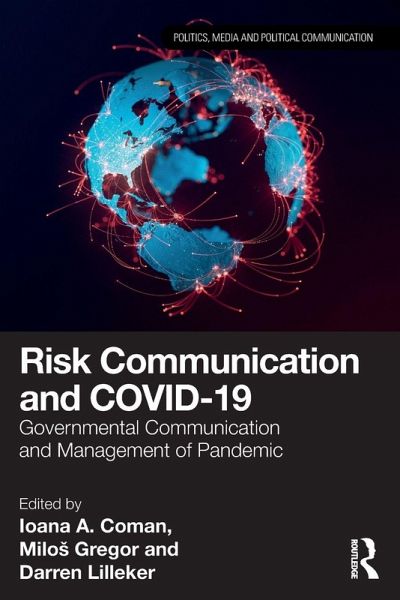
Risk Communication and COVID-19 explores the "risk communication" responses by national governments to the outbreak and global spread of the COVID-19 strain of coronavirus.
The book focuses on 17 country case studies, representing countries all around the world, covering a range of democratic and authoritarian systems, styles of leadership, and political contexts. The chapters analyze communication drawing on a modified risk communication framework to determine what patterns governmental risk communication followed in several areas: messenger attributes, consistency and clarity of communication, communication methods, message attributes, and public trust in government. The book also analyzes how these attributes changed and developed over time from 2020 to 2022. The analyzed period is divided into several parts representing different pandemic milestones, such as the first cases, the second wave of the pandemic, vaccination, and adaptation to the endemic logic of dealing with the COVID-19 virus. Importantly, the book draws out key lessons which can inform communication strategies during crises, particularly when the crisis necessitates public behavioral adjustments. The lessons are framed to further understanding of the challenges faced within the field of political risk communication during crises in the twenty-first century.
This book will be of great interest to students and researchers of politics, communication, and public relations, specifically on courses and modules relating to current affairs, risk communication, crisis communication, and strategic communication, as well as practitioners working in the field of health crisis communication.
The book focuses on 17 country case studies, representing countries all around the world, covering a range of democratic and authoritarian systems, styles of leadership, and political contexts. The chapters analyze communication drawing on a modified risk communication framework to determine what patterns governmental risk communication followed in several areas: messenger attributes, consistency and clarity of communication, communication methods, message attributes, and public trust in government. The book also analyzes how these attributes changed and developed over time from 2020 to 2022. The analyzed period is divided into several parts representing different pandemic milestones, such as the first cases, the second wave of the pandemic, vaccination, and adaptation to the endemic logic of dealing with the COVID-19 virus. Importantly, the book draws out key lessons which can inform communication strategies during crises, particularly when the crisis necessitates public behavioral adjustments. The lessons are framed to further understanding of the challenges faced within the field of political risk communication during crises in the twenty-first century.
This book will be of great interest to students and researchers of politics, communication, and public relations, specifically on courses and modules relating to current affairs, risk communication, crisis communication, and strategic communication, as well as practitioners working in the field of health crisis communication.