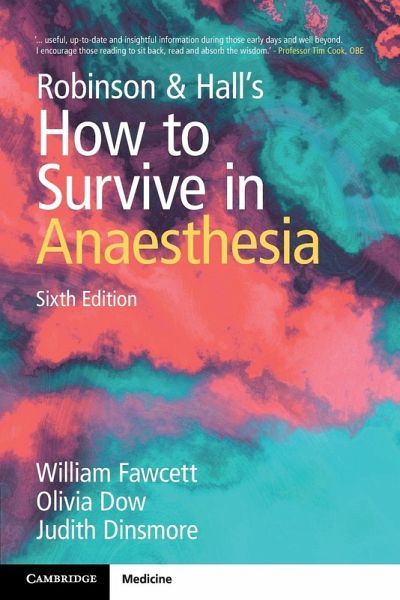
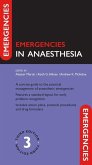
A fully updated go-to reference providing trainees with rapid access and assimilation of information on anaesthesia, pain medicine and intensive care. Features new chapters on ultrasound and reducing risk and covers a range of elective and emergency procedures and techniques, following patient management throughout the entire perioperative pathway.
A fully updated go-to reference providing trainees with rapid access and assimilation of information on anaesthesia, pain medicine and intensive care. Features new chapters on ultrasound and reducing risk and covers a range of elective and emergency procedures and techniques, following patient management throughout the entire perioperative pathway.
William Fawcett is a Consultant Anaesthetist at The Royal Surrey County Hospital, Guildford and Professor at the School of Medicine at Surrey University. He is an Associate Editor for British Journal of Anaesthesia - Education, the CPD journal for the Royal College of Anaesthetists. He is a Past Vice-President of the Association of Anaesthetists.
Inhaltsangabe
Preface to 6th edition Preface to the fifth edition xiii Preface to the fourth edition xi Preface to the third edition xv Preface to the second edition xvi Preface to the first edition xvii Foreword abbreviations Part I. Nuts and Bolts: 1. Evaluation of the airway 2. Control of the airway 3. Tracheal intubation 4. The difficult or failed intubation 5. Vascular access 6. Basic pharmacology 7. Intravenous fluids 8. Anaesthetic equipment: the machine, breathing systems and ventilators 9. Ultrasound in anaesthesia and intensive care 10. Monitoring in anaesthesia 11. Reducing risk Part II. Crises and Complications: 12. Cardiac Arrest 13. Haemorrhage and blood transfusion 14. Anaphylactic reactions 15. Malignant hyperthermia 16. Local anaesthetic systemic toxicity 17. Stridor - upper airway obstruction 18. Pneumothorax 19. Common intraoperative problems 20. Postoperative problems 21. Anaesthetic mishaps Part III. Passing the Gas: 22. Preoperative evaluation and preparation 23. Principles of emergency anaesthesia 24. Emergency laparotomy 25. Anaesthesia for minimally invasive surgery 26. Anaesthesia for Abdominal surgery 27. Anaesthesia for Gynaecological surgery 28. Anaesthesia for Urological surgery 29. Anaesthesia for Maxillofacial and ENT surgery 30. Anaesthesia for Orthopaedic surgery 31. Anaesthesia for day case surgery 32. Epidural and spinal (neuraxial) anaesthesia 33. Common regional blocks 34. Obstetric anaesthesia 35. Anaesthesia in the corridor Part IV. Walking the Walk (and Talking the Talk): 36. Management of the patient in the recovery area 37. Postoperative analgesia 38. Recognition and management of the sick patient 39. Intensive care (Critical care) Part I 40. Intensive care (Critical care) Part II 41. Perioperative medicine 42. Management of head injuries 43. Chronic pain 44. Be the best! Part V. And Finally...: 45. Anaesthetic aphorisms.
Preface to 6th edition Preface to the fifth edition xiii Preface to the fourth edition xi Preface to the third edition xv Preface to the second edition xvi Preface to the first edition xvii Foreword abbreviations Part I. Nuts and Bolts: 1. Evaluation of the airway 2. Control of the airway 3. Tracheal intubation 4. The difficult or failed intubation 5. Vascular access 6. Basic pharmacology 7. Intravenous fluids 8. Anaesthetic equipment: the machine, breathing systems and ventilators 9. Ultrasound in anaesthesia and intensive care 10. Monitoring in anaesthesia 11. Reducing risk Part II. Crises and Complications: 12. Cardiac Arrest 13. Haemorrhage and blood transfusion 14. Anaphylactic reactions 15. Malignant hyperthermia 16. Local anaesthetic systemic toxicity 17. Stridor - upper airway obstruction 18. Pneumothorax 19. Common intraoperative problems 20. Postoperative problems 21. Anaesthetic mishaps Part III. Passing the Gas: 22. Preoperative evaluation and preparation 23. Principles of emergency anaesthesia 24. Emergency laparotomy 25. Anaesthesia for minimally invasive surgery 26. Anaesthesia for Abdominal surgery 27. Anaesthesia for Gynaecological surgery 28. Anaesthesia for Urological surgery 29. Anaesthesia for Maxillofacial and ENT surgery 30. Anaesthesia for Orthopaedic surgery 31. Anaesthesia for day case surgery 32. Epidural and spinal (neuraxial) anaesthesia 33. Common regional blocks 34. Obstetric anaesthesia 35. Anaesthesia in the corridor Part IV. Walking the Walk (and Talking the Talk): 36. Management of the patient in the recovery area 37. Postoperative analgesia 38. Recognition and management of the sick patient 39. Intensive care (Critical care) Part I 40. Intensive care (Critical care) Part II 41. Perioperative medicine 42. Management of head injuries 43. Chronic pain 44. Be the best! Part V. And Finally...: 45. Anaesthetic aphorisms.
Es gelten unsere Allgemeinen Geschäftsbedingungen: www.buecher.de/agb
Impressum
www.buecher.de ist ein Internetauftritt der buecher.de internetstores GmbH
Geschäftsführung: Monica Sawhney | Roland Kölbl | Günter Hilger
Sitz der Gesellschaft: Batheyer Straße 115 - 117, 58099 Hagen
Postanschrift: Bürgermeister-Wegele-Str. 12, 86167 Augsburg
Amtsgericht Hagen HRB 13257
Steuernummer: 321/5800/1497
USt-IdNr: DE450055826