
Andere Kunden interessierten sich auch für
 The Wheat Plant: Its Origin, Culture, Growth, Development, Composition, Varieties, Diseases, etc., etc.: Together With a few Remarks on30,99 €
 The Role of Growth Regulators and Phytohormones in Overcoming Environmental Stress199,99 €
 Coloured Engravings of Heaths ?The Drawings Taken From Living Plants Only. With the ... Character, Full Description, Native Place of Growth, and Time17,99 €
 Plant Responses to Elevated Co247,99 €
 Light and Plant Responses40,99 €
") On The Germination, Development, And Fructification Of The Higher Cryptogamia And On The Fructification Of The Coniferae (1862)46,99 €
On The Germination, Development, And Fructification Of The Higher Cryptogamia And On The Fructification Of The Coniferae (1862)46,99 € A Treatise on the Esculent Funguses of England, Containing an Account of Their Classical History, Uses, Characters, Development, Structure, Nutritious20,99 €

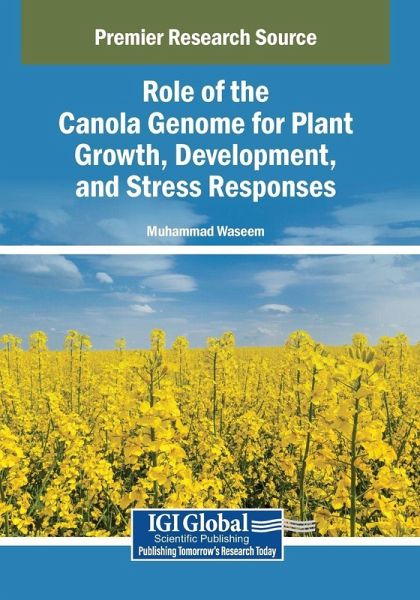
The canola genome plays a crucial role in regulating plant growth, development, and responses to environmental stress. Canola has a complex genome that contains valuable genetic information responsible for physiological processes. Understanding the canola genome allows researchers to identify key genes that control traits such as flowering time, seed yield, oil content, and nutrient uptake. The genome provides insights into the plant's ability to respond to abiotic stresses like drought, salinity, and extreme temperatures, as well as biotic stresses from pests and diseases. Advances in genomic research and molecular breeding enable the development of more resilient and high-performing canola varieties, essential for sustainable agriculture and global food security. Role of the Canola Genome for Plant Growth, Development, and Stress Responses explores the canola genome, emphasizing its structure, function, and implications for agricultural biotechnology. It examines recent advances in genomic sequencing technologies, bioinformatics tools used in canola genome research, and the integration of genomic data with phenotypic traits to enhance canola breeding programs. This book covers topics such as botany, genomics, and plant breeding, and is a useful resource for botanists, biologists, chemists, geneticists, academicians, researchers, and scientists.