
Andere Kunden interessierten sich auch für
 Crusaders24,99 €
 Byzantine Infantryman16,99 €
 Byzantine Ceramic Art21,99 €
 The Capture of Constantinople28,99 €
 Byzantine Gender14,99 €
 The History of Modern Europe, from the fall of Constantinople in 1453 to the war in the Crimea in 1857. Vol. III. - War College Series30,99 €
") The Hypotyposis of the Monastery of the Theotokos Evergetis, Constantinople (11th-12th Centuries)68,99 €
The Hypotyposis of the Monastery of the Theotokos Evergetis, Constantinople (11th-12th Centuries)68,99 €

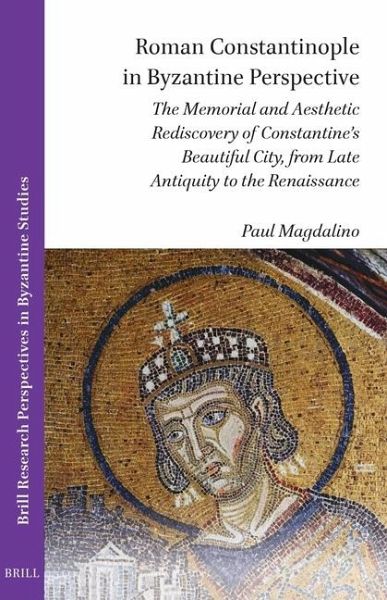
This book studies the research perspective in which the literary inhabitants of Late Antique and medieval Constantinople remembered its past and conceptualised its existence as a Greek city that was the political capital of a Christian Roman state. Initial reactions to Constantine's foundation noted its novel Christian orientation, but the memorial mode of writing about the city that developed from the sixth century recollected the traditional civic cultural heritage that Constantinople claimed both as the New Rome, and as the continuation of ancient Byzantion. This research culture increasingly became the preserve of the imperial bureaucracy, and focused on the city's sculptured monuments as bearers of eschatological meaning. Yet from the tenth century, writers progressively preferred to define the wonder and spectacle of Constantinople in the aesthetic mode of urban praise inherited from late antiquity, developing the notion of the city as a cosmic theatre of excellence.