
Andere Kunden interessierten sich auch für
 Romania at the Paris Peace Conference25,99 €
 Foreign Aid and State Building in Interwar Romania68,99 €
 Holocaust in Romania27,99 €
 The Holocaust in Romania34,99 €
 Ionel Bratianu: Romania19,99 €
 The History of the Holocaust in Romania48,99 €
 Cooperative networks in Transylvania belonging to Hungary and Romania41,99 €

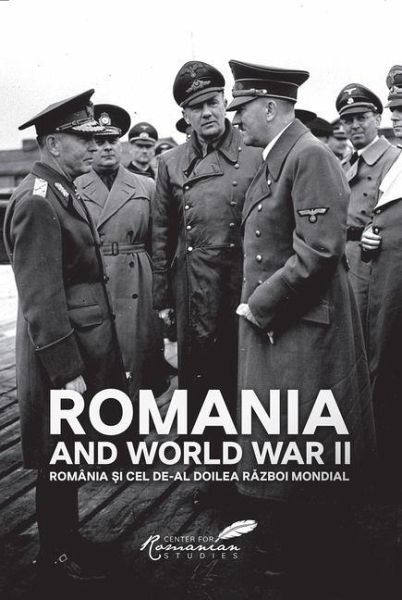
In commemoration of the 50th anniversary of the end of World War 2 in Europe, the Center for Romanian Studies organised an international conference on 'Romania and World War II' in Iasi from 25-26 May 1995. The conference was organised with help from the County Board of Iasi and the Romanian Foundation for Humanitarian Assistance 'Michael the Brave'. The conference, held at the historic Palace of Culture in Iasi, united scholars from Romania, the United States, England, and Holland. It provided an opportunity for these distinguished specialists in the history of Romania and World War 2 to present the latest results of their research, especially in light of the recent opening of many archives in the former communist bloc countries. This volume includes papers based on the communications delivered at the conference. As both Romanian and English were used at the conference, the articles are published in the language in which they were prepared by their author. Fifteen in Romanian and six in English.
Romania and World War II is a collection of studies, in English and Romanian, by distinguished American, European, and Romanian historians on the situation of Romania during World War II, presented at the First International Conference of the Center for Romanian Studies held in Iași on 25-26 May 1995, commemorating the fiftieth anniversary of the end of World War II in Europe. This book reveals the results of research by leading specialists from around the world addressing many important aspects of Romania’s involvement in World War II. The papers published in this volume include: * Charles King, The Moldovan ASSR on the Eve of the War: Cultural Policy in 1930s Transnistria * Kurt W. Treptow, Alegerile din decembrie 1937 si instaurarea dictaturii regale * Nicholas M. Nagy-Talavera, Reminiscences of Iorga’s Murderer: Traian Boeru * Florin Constantiniu, Un episod puțin cunoscut al relațiilor româno-sovietice (1941) * Larry L. Watts, Incompatible Alliances: Small States of Central Europe during World War II * Mihai Retegan, The End of the War in Europe: Consequences for the States of Central and Eastern Europe, A Comparative Study * Valeriu Florin Dobrinescu, Unele considerații privind intrarea României în razboiul națiunilor unite (1944-1945) * Gheorghe Onisoru, Uniunea Sovietica si România: de la 1944 la 1947 * Paul E. Michelson, Recent Historiography on Romania and the Second World War * …and many others. Edited by Kurt W. Treptow, Romania and World War II will be of interest to students and scholars of twentieth-century Romanian history, as well as World War II.
Romania and World War II is a collection of studies, in English and Romanian, by distinguished American, European, and Romanian historians on the situation of Romania during World War II, presented at the First International Conference of the Center for Romanian Studies held in Iași on 25-26 May 1995, commemorating the fiftieth anniversary of the end of World War II in Europe. This book reveals the results of research by leading specialists from around the world addressing many important aspects of Romania’s involvement in World War II. The papers published in this volume include: * Charles King, The Moldovan ASSR on the Eve of the War: Cultural Policy in 1930s Transnistria * Kurt W. Treptow, Alegerile din decembrie 1937 si instaurarea dictaturii regale * Nicholas M. Nagy-Talavera, Reminiscences of Iorga’s Murderer: Traian Boeru * Florin Constantiniu, Un episod puțin cunoscut al relațiilor româno-sovietice (1941) * Larry L. Watts, Incompatible Alliances: Small States of Central Europe during World War II * Mihai Retegan, The End of the War in Europe: Consequences for the States of Central and Eastern Europe, A Comparative Study * Valeriu Florin Dobrinescu, Unele considerații privind intrarea României în razboiul națiunilor unite (1944-1945) * Gheorghe Onisoru, Uniunea Sovietica si România: de la 1944 la 1947 * Paul E. Michelson, Recent Historiography on Romania and the Second World War * …and many others. Edited by Kurt W. Treptow, Romania and World War II will be of interest to students and scholars of twentieth-century Romanian history, as well as World War II.