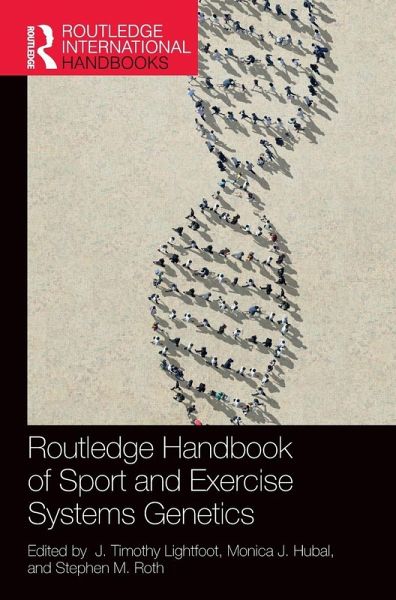
The Routledge Handbook of Sport and Exercise Systems Genetics takes an approach which covers single gene variations, through genomics, epigenetics and proteomics, to environmental and dietary influences on genetic mechanisms. It examines genetic methods, muscle strength and sports performance, and ethical considerations of genetic research.
The Routledge Handbook of Sport and Exercise Systems Genetics takes an approach which covers single gene variations, through genomics, epigenetics and proteomics, to environmental and dietary influences on genetic mechanisms. It examines genetic methods, muscle strength and sports performance, and ethical considerations of genetic research.
J. Timothy Lightfoot is the Omar Smith Endowed Chair in Kinesiology and the Director of the Sydney and JL Huffines Institute for Sports Medicine and Human Performance at Texas A&M University in College Station, Texas (USA), and holds the rank of Professor of joint appointments on the Texas A&M Genetics Faculty and the Texas A&M Institute for Genome Sciences and Society. His research focus has been the genetic factors that regulate daily physical activity. He is an Associate Editor of Medicine and Science in Sports and Exercise. He was a founding member of the National Exercise Clinical Trials Network and is a Fellow of the American College of Sports Medicine. Monica J. Hubal is an Associate Professor of Kinesiology at Indiana University-Purdue University Indianapolis, USA. She is also an Adjunct Associate Professor of Cellular and Integrative Physiology, a research scientist in the Diabetes Translational Research Center and is affiliated with the Indiana Center for Musculoskeletal Health at the Indiana University School of Medicine. Her research focuses on understanding the systems biology of emergent cardiometabolic disease and the mechanisms driving response to various interventions. She was a principal investigator in the Research Center for Genetic Medicine at the Children's National Medical Center. She is an Associate Editor for Medicine and Science in Sports and Exercise and Exercise and Sport Sciences Reviews and is a Fellow of the American College of Sports Medicine. Stephen M. Roth is a Professor of Kinesiology and Associate Dean at the University of Maryland in College Park, USA. He has researched the genetic aspects of exercise and sport for over 15 years. He is an author or co-author of over 90 peer-reviewed articles, book chapters, and books. He served as an Associate Editor for Medicine and Science in Sports and Exercise and Exercise and Sport Sciences Reviews. He is a Fellow of the National Academy of Kinesiology and the American College of Sports Medicine.
Inhaltsangabe
Section 1: General Systems Genetics 1. Why Study the Systems Genetics of Sport and Exercise? 2. Expansion of Knowledge and Advances in Genetics for Quantitative Analyses 3. Human Systems Genetic Modeling Used in Exercise 4. The Translation of Systems Genetics of Exercise to Everyday Life Section 2: Systems Genetics of Physical Activity 5. Is Physical Activity Regulated by Genetics? Evidence from Animal Models 6. Is Physical Activity Regulated by Genetics? Evidence from Studies in Humans 7. The Evolution of Genetic Mechanisms Controlling Physical Activity 8. Neurogenetics of Motivation for Physical Activity 9. Peripheral Mechanisms Arising from Genetics that Regulate Activity 10. Toxicant and Dietary Exposures as Unique Environmental Factors that Affect the Genetic Regulation of Activity Section 3: Systems Genetics of Exercise Endurance and Trainability 11. The Evolution of the Human Endurance Phenotype 12. Endurance Phenotype Primer 13. Heritability of Endurance Traits from Animal Research Models 14. Heritability of Endurance Traits from Human Research Models 15. Genetic Contributions to Cardiorespiratory Fitness 16. Genetic Contributions to Mitochondrial Traits 17. Angiotensin-Converting Enzyme and the Genomics of Endurance Performance Section 4: Systems Genetics of Muscle Mass, Strength, and Trainability 18. Heritability of Muscle Size and Strength Traits 19. Genetic Contributions to Muscle Strength 20. Genetic Contributions to Skeletal Muscle Size 21. Genetic Contributions to Neuroendocrine Response to Resistance Training 22. Myostatin's Role in Genetic Control of Muscle Size and Strength 23. Alpha-Actinin-3's Role in the Genetic Control of Muscle Strength and Performance Section 5: Systems Genetics of Sports Performance 24. Summary Findings on Genetics and Sport Performance 25. Using Elite Athletes as a Model for Genetic Research 26. Twin and Family Studies in Sport Performance 27. Sport Concussion Genetics 28. Systems Genetic Factors Underlying Soft Tissue Injury 29. Sex and Performance: Nature Versus Nurture Section 6: The Ethics of Systems Genetics in Exercise and Sport 30. Race and Sports Performance 31. The Scientific and Ethical Challenges of Using Genetic Information to Predict Sport Performance 32. Gene Doping: Ethical Perspectives 33. Enhancing Evolution: The Transhuman Case For Gene Doping 34. The Ethics of Sex Testing in Sport Section 7: Conclusions 35. Exercise Genomics, Epigenomics, and Transcriptomics: A Reality Check! 36. Afterword - Closing the Loop: Observations and Conclusions
Section 1: General Systems Genetics 1. Why Study the Systems Genetics of Sport and Exercise? 2. Expansion of Knowledge and Advances in Genetics for Quantitative Analyses 3. Human Systems Genetic Modeling Used in Exercise 4. The Translation of Systems Genetics of Exercise to Everyday Life Section 2: Systems Genetics of Physical Activity 5. Is Physical Activity Regulated by Genetics? Evidence from Animal Models 6. Is Physical Activity Regulated by Genetics? Evidence from Studies in Humans 7. The Evolution of Genetic Mechanisms Controlling Physical Activity 8. Neurogenetics of Motivation for Physical Activity 9. Peripheral Mechanisms Arising from Genetics that Regulate Activity 10. Toxicant and Dietary Exposures as Unique Environmental Factors that Affect the Genetic Regulation of Activity Section 3: Systems Genetics of Exercise Endurance and Trainability 11. The Evolution of the Human Endurance Phenotype 12. Endurance Phenotype Primer 13. Heritability of Endurance Traits from Animal Research Models 14. Heritability of Endurance Traits from Human Research Models 15. Genetic Contributions to Cardiorespiratory Fitness 16. Genetic Contributions to Mitochondrial Traits 17. Angiotensin-Converting Enzyme and the Genomics of Endurance Performance Section 4: Systems Genetics of Muscle Mass, Strength, and Trainability 18. Heritability of Muscle Size and Strength Traits 19. Genetic Contributions to Muscle Strength 20. Genetic Contributions to Skeletal Muscle Size 21. Genetic Contributions to Neuroendocrine Response to Resistance Training 22. Myostatin's Role in Genetic Control of Muscle Size and Strength 23. Alpha-Actinin-3's Role in the Genetic Control of Muscle Strength and Performance Section 5: Systems Genetics of Sports Performance 24. Summary Findings on Genetics and Sport Performance 25. Using Elite Athletes as a Model for Genetic Research 26. Twin and Family Studies in Sport Performance 27. Sport Concussion Genetics 28. Systems Genetic Factors Underlying Soft Tissue Injury 29. Sex and Performance: Nature Versus Nurture Section 6: The Ethics of Systems Genetics in Exercise and Sport 30. Race and Sports Performance 31. The Scientific and Ethical Challenges of Using Genetic Information to Predict Sport Performance 32. Gene Doping: Ethical Perspectives 33. Enhancing Evolution: The Transhuman Case For Gene Doping 34. The Ethics of Sex Testing in Sport Section 7: Conclusions 35. Exercise Genomics, Epigenomics, and Transcriptomics: A Reality Check! 36. Afterword - Closing the Loop: Observations and Conclusions
Es gelten unsere Allgemeinen Geschäftsbedingungen: www.buecher.de/agb
Impressum
www.buecher.de ist ein Internetauftritt der buecher.de internetstores GmbH
Geschäftsführung: Monica Sawhney | Roland Kölbl | Günter Hilger
Sitz der Gesellschaft: Batheyer Straße 115 - 117, 58099 Hagen
Postanschrift: Bürgermeister-Wegele-Str. 12, 86167 Augsburg
Amtsgericht Hagen HRB 13257
Steuernummer: 321/5800/1497
USt-IdNr: DE450055826