
Andere Kunden interessierten sich auch für
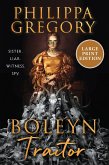
 Boleyn Traitor26,99 €
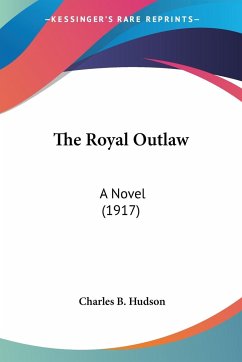
 The Royal Outlaw33,99 €
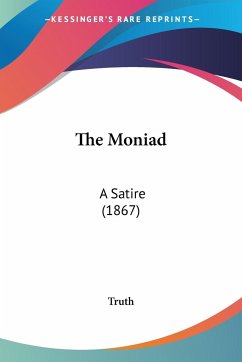
 The Moniad21,99 €
") A Royal Ward (1909)32,99 €
A Royal Ward (1909)32,99 € Only George V129,99 €
") The King Of Andorra (1899)29,99 €
The King Of Andorra (1899)29,99 €") The King Behind The King (1914)32,99 €
The King Behind The King (1914)32,99 €




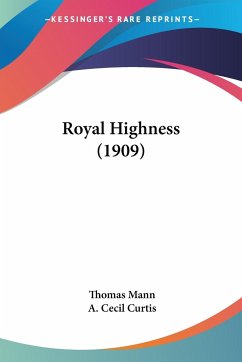
Royal Highness is a novel written by Thomas Mann and published in 1909. The story is set in the fictional kingdom of Grimmburg, where the young prince Klaus Heinrich is preparing to ascend the throne. Klaus is a sensitive and intelligent young man, but he is also somewhat naive and sheltered, having been raised in a strict and traditional environment. As he begins to take on more responsibilities and interact with the wider world, he is forced to confront a variety of challenges and dilemmas. He falls in love with a commoner named Imma Spoelmann, but their relationship is complicated by social and political pressures. He also struggles to navigate the complex web of alliances and rivalries among the various factions at court. Throughout the novel, Mann explores themes of duty, love, power, and morality, as well as the tensions between tradition and modernity. The book is notable for its vivid descriptions of court life and its psychological insights into the characters' motivations and emotions. Overall, Royal Highness is a thought-provoking and engaging work of fiction that offers a fascinating glimpse into the world of European royalty at the turn of the 20th century.This scarce antiquarian book is a facsimile reprint of the old original and may contain some imperfections such as library marks and notations. Because we believe this work is culturally important, we have made it available as part of our commitment for protecting, preserving, and promoting the world's literature in affordable, high quality, modern editions, that are true to their original work.
German novelist, short story author, social commentator, philanthropist, essayist, and 1929 Nobel Prize in Literature winner Paul Thomas Mann lived from 6 June 1875 to 12 August 1955. His sardonic and highly symbolic epic novels and novellas are renowned for their understanding of the minds of artists and intellectuals. He incorporated modernized versions of German and Biblical tales, as well as concepts from Friedrich Nietzsche, Arthur Schopenhauer, and Johann Wolfgang von Goethe, in his analysis and critique of the European and German spirit. In his first book, Buddenbrooks, Mann-a member of the Hanseatic Mann family-depicted his clan and social status. Three of Heinrich Mann's six children, Erika Mann, Klaus Mann, and Golo Mann, all went on to become well-known German writers, as did his older brother Heinrich Mann, a radical writer. Mann escaped to Switzerland in 1933, the year Adolf Hitler took office. He relocated to the United States in 1939 when World War II began, then went back to Switzerland in 1952. One of the most well-known authors of the so-called Exilliteratur, German writing produced in exile by individuals opposed to the Hitler government, is Mann.
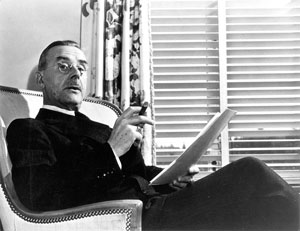
Thomas Mann 1944.© S.Fischer Verlag