
Andere Kunden interessierten sich auch für
 Rosja w lustrze zachodniego ekranu51,99 €
 Pandora's Box8,99 €
 Visual Effects for Film and Television18,99 €
 Russland im Spiegel des westlichen Bildschirms79,00 €
 Culture on the television screen36,99 €
 Silencing Cinema38,99 €
 The Man in the Mirror William Marion Reedy34,99 €





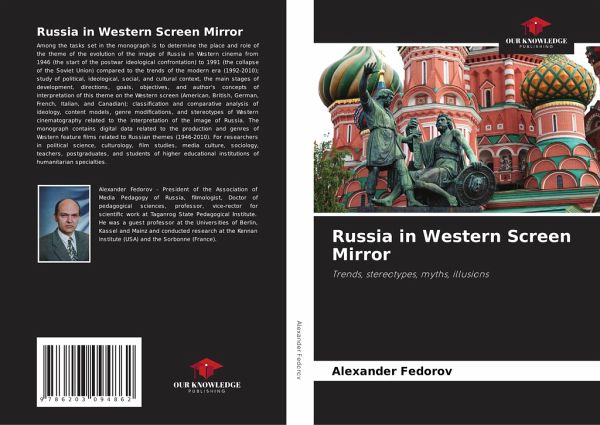
Among the tasks set in the monograph is to determine the place and role of the theme of the evolution of the image of Russia in Western cinema from 1946 (the start of the postwar ideological confrontation) to 1991 (the collapse of the Soviet Union) compared to the trends of the modern era (1992-2010); study of political, ideological, social, and cultural context, the main stages of development, directions, goals, objectives, and author's concepts of interpretation of this theme on the Western screen (American, British, German, French, Italian, and Canadian); classification and comparative analysis of ideology, content models, genre modifications, and stereotypes of Western cinematography related to the interpretation of the image of Russia. The monograph contains digital data related to the production and genres of Western feature films related to Russian themes (1946-2010). For researchers in political science, culturology, film studies, media culture, sociology, teachers, postgraduates, and students of higher educational institutions of humanitarian specialties.