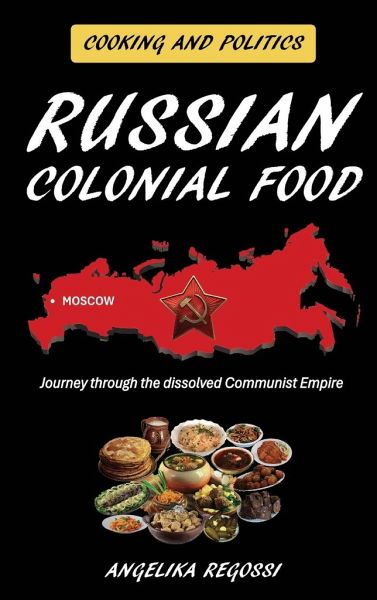
What does an empire taste like? Russian Colonial Food is a journey through the dissolved Communist Empire, seen not through ideology or power, but through everyday life, memory, and food. Drawing on lived experience and historical research, Angelika Regossi explores how people across the Soviet world survived, adapted, and preserved their identities under a political system that shaped both private kitchens and public history. Through fifteen stories set across the former Soviet territories - from Eastern Europe to Central Asia and the Caucasus - the book reveals the cultural diversity hidden…mehr
What does an empire taste like? Russian Colonial Food is a journey through the dissolved Communist Empire, seen not through ideology or power, but through everyday life, memory, and food. Drawing on lived experience and historical research, Angelika Regossi explores how people across the Soviet world survived, adapted, and preserved their identities under a political system that shaped both private kitchens and public history. Through fifteen stories set across the former Soviet territories - from Eastern Europe to Central Asia and the Caucasus - the book reveals the cultural diversity hidden behind the simplified image of a region often perceived as "only Russia." Some regions may be familiar, others surprising, yet each story shows how history entered homes, habits, and meals across a vast and diverse part of the world. The book was written with young adults in mind, particularly readers who know little about the "left side of the map" shaped by communism, while remaining equally engaging for adult readers. Complex historical realities are explained in a clear, accessible way, without academic language or political rhetoric, making the stories easy to follow for readers of different ages and backgrounds. Food appears not as decoration, but as a cultural archive - a way to understand scarcity, adaptation, tradition, and resilience. The final section includes a curated selection of authentic recipes, presented so that young adults and adults alike can easily cook them, turning history into a shared, practical experience. Russian Colonial Food is both a cultural history and a literary journey - a book for young adults and adults interested in the Soviet era, post-communist societies, and the everyday lives that existed beyond official narratives.
English version: Angelika Regossi is a former BBC Eastern Europe correspondent who reported from the heart of the collapsing Communist world during the fall of the Iron Curtain and the transition from communism to capitalism. She worked for BBC Radio and later freelanced for Radio France Internationale (RFI) and Deutsche Welle, and served as a television producer for Belgium's VRT, Der Spiegel (Germany), NOS (Netherlands), and Voice of America (USA), publishing at the time under the names Agnes R. Bos and ¿¿¿¿¿ ¿¿¿.Alongside her journalistic career, Regossi independently mastered several structurally complex languages, including English, Hungarian, and Dutch. Her personal experience of learning languages through immersion, sound recognition, and real-life usage - rather than mechanical memorization - became the foundation of her comparative bilingual approach.Living and working in different countries allowed her to observe how languages influence one another in everyday speech. These observations inspired the My Thousand Words series: practical, two-directional vocabulary books designed to help learners quickly recognize familiar words, avoid false friends, and build functional language confidence from the very first steps.Titles from the My Thousand Words series are held by major European libraries, including the Berlin State Library. Regossi is also the author of the historical novel Love in Communism and the historical fiction and culinary collection Russian Colonial Food. ¿¿¿¿¿¿¿ ¿¿¿¿¿¿: ¿¿¿¿¿¿¿¿ ¿¿¿¿¿¿¿ - ¿¿¿¿¿¿ ¿¿¿¿¿¿¿¿¿¿¿¿¿ BBC ¿¿ ¿¿¿¿¿¿¿¿¿ ¿¿¿¿¿¿, ¿¿¿¿¿¿¿¿¿¿ ¿ ¿¿¿¿¿¿ ¿¿¿¿¿¿¿ ¿¿¿¿¿¿¿¿¿¿¿¿¿¿¿¿¿ ¿¿¿¿, ¿¿¿¿¿¿¿ ¿¿¿¿¿¿¿¿¿ ¿¿¿¿¿¿¿¿ ¿ ¿¿¿¿¿¿¿¿ ¿¿ ¿¿¿¿¿¿¿¿¿¿ ¿ ¿¿¿¿¿¿¿¿¿¿¿. ¿¿¿ ¿¿¿¿¿¿¿¿¿¿¿¿ ¿ BBC Radio, Radio France Internationale (RFI) ¿ Deutsche Welle, ¿ ¿¿¿¿¿ ¿¿¿¿¿¿¿¿ ¿¿¿¿¿¿¿¿¿¿¿¿¿ ¿¿¿¿¿¿¿¿¿¿ ¿¿¿ VRT (¿¿¿¿¿¿¿), Der Spiegel (¿¿¿¿¿¿¿¿), NOS (¿¿¿¿¿¿¿¿¿¿) ¿ Voice of America (¿¿¿), ¿¿¿¿¿¿¿¿¿¿ ¿ ¿¿¿ ¿¿¿¿¿¿ ¿¿¿ ¿¿¿¿¿¿¿ Agnes R. Bos ¿ ¿¿¿¿¿ ¿¿¿.¿¿¿¿¿¿¿¿¿¿¿ ¿ ¿¿¿¿¿¿¿¿¿¿¿¿¿ ¿¿¿¿¿¿¿¿¿¿¿¿¿ ¿¿¿¿¿¿¿ ¿¿¿¿¿¿¿¿¿¿¿¿¿¿ ¿¿¿¿¿¿¿ ¿¿¿¿¿¿¿¿¿ ¿¿¿¿¿¿¿¿¿¿ ¿¿¿¿¿¿¿ ¿¿¿¿¿¿, ¿¿¿¿¿¿¿ ¿¿¿¿¿¿¿¿¿¿, ¿¿¿¿¿¿¿¿¿¿ ¿ ¿¿¿¿¿¿¿¿¿¿¿¿¿. ¿¿¿¿¿¿ ¿¿¿¿ ¿¿¿¿¿¿¿¿ ¿¿¿¿¿¿ ¿¿¿¿¿ ¿¿¿¿¿¿¿¿¿¿, ¿¿¿¿¿¿¿¿ ¿¿¿¿¿¿¿¿¿¿ ¿ ¿¿¿¿¿ ¿¿¿¿ - ¿ ¿¿ ¿¿¿¿¿¿¿¿¿¿¿¿ ¿¿¿¿¿¿¿¿¿¿ - ¿¿¿ ¿ ¿¿¿¿¿¿ ¿¿ ¿¿¿¿¿¿¿¿¿¿¿¿¿¿ ¿¿¿¿¿¿¿¿¿¿¿¿¿¿ ¿¿¿¿¿¿¿.¿¿¿¿ ¿ ¿¿¿¿¿¿¿ ¿ ¿¿¿¿¿¿ ¿¿¿¿¿¿¿, ¿¿¿¿¿ ¿¿¿¿¿¿¿¿¿, ¿¿¿ ¿¿¿¿¿ ¿¿¿¿¿¿¿ ¿¿¿¿¿¿ ¿¿¿¿ ¿¿ ¿¿¿¿¿ ¿ ¿¿¿¿¿¿¿¿¿¿¿¿ ¿¿¿¿¿¿¿¿¿¿¿¿. ¿¿¿ ¿¿¿¿¿¿¿¿¿¿ ¿¿¿¿¿ ¿¿¿¿¿¿¿¿¿ ¿¿¿¿¿¿ ¿¿¿ ¿¿¿¿¿ My Thousand Words - ¿¿¿¿¿¿¿¿¿¿¿¿ ¿¿¿¿¿¿¿¿¿¿¿¿¿¿¿ ¿¿¿¿¿¿¿¿, ¿¿¿¿¿¿¿¿¿¿ ¿¿¿¿¿¿¿¿ ¿¿¿¿¿¿ ¿¿¿¿¿¿¿¿ ¿¿¿¿¿¿¿¿ ¿¿¿¿¿, ¿¿¿¿¿¿¿¿ ¿¿¿¿¿¿ ¿¿¿¿¿¿ ¿ ¿¿¿¿¿¿¿¿ ¿¿¿¿¿¿¿¿¿ ¿¿¿¿ ¿ ¿¿¿¿¿¿ ¿¿¿¿¿.¿¿¿¿¿ ¿¿¿¿¿ My Thousand Words ¿¿¿¿¿¿¿¿¿¿¿¿ ¿ ¿¿¿¿¿¿ ¿¿¿¿¿¿¿ ¿¿¿¿¿¿¿¿¿¿¿ ¿¿¿¿¿¿¿¿¿, ¿¿¿¿¿¿¿ ¿¿¿¿¿¿¿¿¿¿¿¿¿¿¿ ¿¿¿¿¿¿¿¿¿¿ ¿ ¿¿¿¿¿¿¿. ¿¿¿¿¿¿¿¿ ¿¿¿¿¿¿¿ ¿¿¿¿¿ ¿¿¿¿¿¿¿¿ ¿¿¿¿¿¿¿ ¿¿¿¿¿¿¿¿¿¿¿¿¿ ¿¿¿¿¿¿ Love in Communism ¿ ¿¿¿¿¿¿¿¿ ¿¿¿¿¿¿¿¿¿¿¿¿ ¿¿¿¿¿ ¿ ¿¿¿¿¿¿¿¿¿¿¿ ¿¿¿¿¿¿¿¿ Russian Colonial Food.
Es gelten unsere Allgemeinen Geschäftsbedingungen: www.buecher.de/agb
Impressum
www.buecher.de ist ein Internetauftritt der buecher.de internetstores GmbH
Geschäftsführung: Monica Sawhney | Roland Kölbl | Günter Hilger
Sitz der Gesellschaft: Batheyer Straße 115 - 117, 58099 Hagen
Postanschrift: Bürgermeister-Wegele-Str. 12, 86167 Augsburg
Amtsgericht Hagen HRB 13257
Steuernummer: 321/5800/1497
USt-IdNr: DE450055826