

Andere Kunden interessierten sich auch für
 Safe Haven29,99 €
 No Safe Haven25,99 €
 A Safe Haven on Beamer Street26,99 €
 The Omega's Safe Haven15,99 €
 The Salvation of Safe Haven11,99 €
 Safe Haven11,99 €
 Safe Haven Again15,99 €







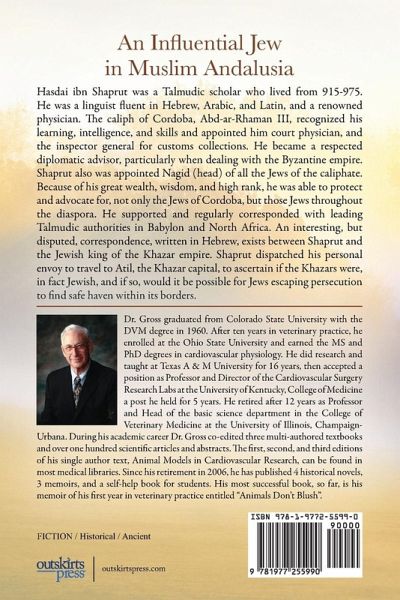
Hasdai ibn Shaprut was a Talmudic scholar who lived from 915-975. He was a linguist fluent in Hebrew, Arabic, and Latin, and a renowned physician. The caliph of Cordoba, Abd-ar-Rhaman III, recognized his learning, intelligence, and skills and appointed him court physician, and the inspector general for customs collections. He became a respected diplomatic advisor, particularly when dealing with the Byzantine empire. Shaprut also was appointed Nagid (head) of all the Jews of the caliphate. Because of his great wealth, wisdom, and high rank, he was able to protect and advocate for, not only the Jews of Cordoba, but those Jews throughout the diaspora. He supported and regularly corresponded with leading Talmudic authorities in Babylon and North Africa. An interesting, but disputed, correspondence, written in Hebrew, exists between Shaprut and the Jewish king of the Khazar empire. Shaprut dispatched his personal envoy to travel to Atil, the Khazar capital, to ascertain if the Khazars were, in fact Jewish, and if so, would it be possible for Jews escaping persecution to find safe haven within its borders.