24,99 €
inkl. MwSt.
Versandkostenfrei*
Versandfertig in 1-2 Wochen
payback
12 °P sammeln
  • Broschiertes Buch

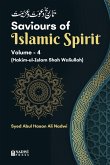
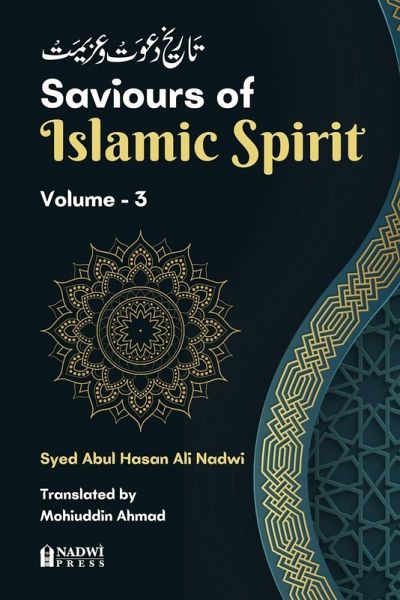
In a century marked by confusion, syncretism, and shifting allegiances, this volume sheds light on a figure whose quiet determination and deep spiritual insight became a turning point for the preservation and renewal of Islamic tradition. It tells the story of Mujaddid Alf Thani, not as a distant mystic or political actor, but as someone whose efforts revived clarity of belief, defended the Prophetic path, and reshaped the soul of a society drifting from its roots. Far from being a simple biography, the book brings together historical research and spiritual analysis, grounded in primary texts…mehr

Produktbeschreibung
In a century marked by confusion, syncretism, and shifting allegiances, this volume sheds light on a figure whose quiet determination and deep spiritual insight became a turning point for the preservation and renewal of Islamic tradition. It tells the story of Mujaddid Alf Thani, not as a distant mystic or political actor, but as someone whose efforts revived clarity of belief, defended the Prophetic path, and reshaped the soul of a society drifting from its roots. Far from being a simple biography, the book brings together historical research and spiritual analysis, grounded in primary texts and unbiased sources-including those who disagreed with or misunderstood the Mujaddid. It explores his approach to contentious ideas like Unity of Being, his responses to the intellectual challenges of Akbar's reign, and the development of the Mujaddidyah order whose influence spread far beyond India. This work will resonate with those seeking to understand how revival is possible without rebellion, reform without chaos, and how sincere guidance can alter the trajectory of an entire generation. Ideal for students, educators, seekers of truth, and anyone grappling with questions of spiritual authenticity in complex times. A timely portrayal of revival that came not with noise, but with precision, faith, and moral strength. Table of Contents Foreword Islamic world in the tenth century The greatest tumult of the tenth century Akbar's rule - the contrasting climaxes Mujaddid Alf Thani Mujaddid as a spiritual guide The core of the Mujaddid's movement Unity of being versus Unity of Manifestation From Akbar to Jahangir Notable adversaries of Shaikh Ahmad Growth and development of Mujaddidyah order The works of Shaikh Ahmad Mujaddid Sirhindi
Autorenporträt
Sayyid Abul Hasan Ali Hasani Nadwi (19141999), known in the Arab world as Ali al-Hasani al-Nadwi or Abu al-Hasan al-Nadwi, was one of the twentieth century's most significant Islamic scholars, reformers, and spiritual guides. Born into an illustrious scholarly family in Rae Bareli, India, his lineage combined Prophetic descent with centuries of distinguished scholarship.


Nadwi's intellectual formation united traditional Islamic sciences with modern educational exposure. At Nadwatul Ulama in Lucknow he mastered Arabic, Persian, Urdu, and English, along with Qur'anic exegesis, Hadith, jurisprudence, theology, and Sufism. His mastery of Arabic was so exceptional that Arab scholars classed him among their finest stylists, and his Arabic writings earned admiration across the Middle East.


As Rector of Nadwatul Ulama for several decades, he transformed the institution into a bridge between classical Islamic learning and contemporary challenges. He championed interfaith dialogue, serious intellectual engagement, and the nurturing of Muslim leadership rooted in tradition yet responsive to modern realities.


Nadwi authored over fifty books in multiple languages, many of them translated globally. His acclaimed series Saviors of Islamic Spirit presents rich biographies of Islam's great reformers, from Hasan al-Basri to Shah Waliullah, showcasing Islam's continuous history of revival and renewal. These volumes remain foundational for understanding Islamic intellectual and spiritual resurgence.


Internationally, Nadwi served as a founding member of the Muslim World League, held senior roles in the Islamic Fiqh Academy, and participated in major scholarly councils worldwide. His travels spanned Asia, Africa, Europe, and the Middle East, where he lectured widely and helped build intellectual bridges between Islamic scholarship and Western academia.


He received numerous global honors, including the King Faisal International Prize for Service to Islam (1980), the Sultan Brunei Award (1999), and distinctions from Al-Azhar University and other leading Islamic institutions. His leadership also shaped the All India Muslim Personal Law Board and inspired countless educational initiatives.


Nadwi's passing in 1999 marked the end of an era, yet his writings continue to inspire scholars, activists, and spiritual seekers worldwide. His ability to interpret contemporary crises through the lens of Islamic history, spirituality, and civilizational insight makes his work enduringly relevant. This volume of Saviors of Islamic Spirit, focusing on Imam Rabbani Ahmad Sirhindi, exemplifies his synthesis of scholarly rigor, spiritual depth, and commitment to Islamic revival.