
Andere Kunden interessierten sich auch für
 Saviours of Islamic Spirit - Volume 324,99 €
 Saviours of Islamic Spirit- Volume 125,99 €
 Islamic Africa, Volume 5: Issue 137,99 €
 PUNK'D in Pakistan; I.W.W. the Islamic World War - The Series Volume 1 - The Start of the Staged 2009 Pakistani Civil War; January 200947,99 €
 South Arabia Ancient to Islamic22,99 €
 Studies in Islamic Mysticism22,99 €
 History of Modern Islamic Civilization15,99 €


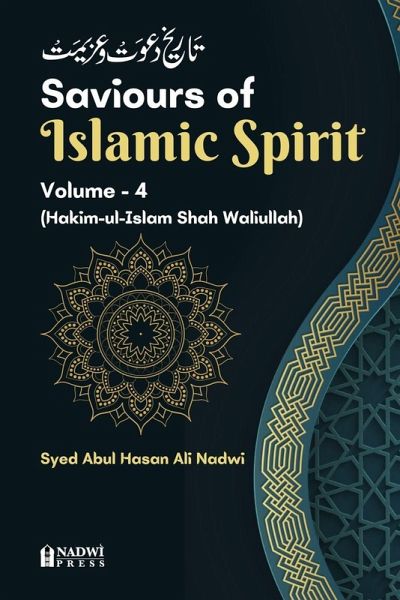
This volume presents one of the most influential yet often misunderstood figures in Islamic thought-Shah Waliullah of Delhi. Through a careful and detailed narrative, it shows how he worked to bridge tradition and reason, text and context, while navigating the complex political and social conditions of twelfth-century India. Shah Waliullah's role was not limited to scholarship. His efforts included reviving hadith sciences, reconciling legal schools, and explaining the wisdom behind the Shari'ah-all with the aim of guiding Muslims through a time of fragmentation. His writings and teachings emphasized the interconnectedness of transmitted knowledge and rational inquiry, an approach that continues to hold relevance for today's readers. With attention to his political insight and social awareness, this book also explores his attempts to preserve the Muslim identity during a period of intense upheaval. The volume examines not only Shah Waliullah himself but also his family, students, and their lasting contributions. For readers interested in Islamic reform, Indo-Islamic history, and the enduring balance between scholarship and activism, this work offers a grounded and engaging study of a legacy that still shapes the religious landscape of the subcontinent. Essential reading for scholars, educators, and anyone concerned with the evolution of Islamic thought and guidance in turbulent times. Table of Contents Foreword Islamic World in the Twelfth Century India Ancestors of Shah Waliullah A Biographical Sketch Reformative Endeavour of Shah Waliullah Propagation of Hadith and Co-ordination of Hadith & Fiqh Exposition of the Rationale of Shari'ah and Hadith Right Guided Caliphate Izalat al-Khafa 'an Khilafat al-Khulfa Statesmanship of Shah Waliullah during the period of Political Instability Reformatory Endeavours a Distinctive Feature of the Shah Sons, Disciples and Eminent Contemporaries of Shah Waliullah Writings of Shah Waliullah Bibliography