Edward B Barbier
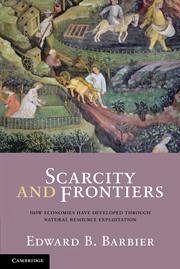
Scarcity and Frontiers
How Economies Have Developed Through Natural Resource Exploitation
Edward B Barbier
Scarcity and Frontiers
How Economies Have Developed Through Natural Resource Exploitation
- Broschiertes Buch
- Merkliste
- Auf die Merkliste
- Bewerten Bewerten
- Teilen
- Produkt teilen
- Produkterinnerung
- Produkterinnerung
A fascinating account of the contribution that natural resource exploitation has made to economic development in world history.
Andere Kunden interessierten sich auch für
Edward B BarbierNatural Resources and Economic Development50,99 €
Michael Szenberg / Lall Ramrattan (eds.)New Frontiers in Economics36,99 €
Marion ClawsonThe Land System of the United States: An Introduction to the History and Practice of Land Use and Land Tenure32,99 €
Guglielmo CarchediFrontiers of Political Economy27,99 €
Jewett C Gilson (Jewett Castello)Wealth of the World's Waste Places and Oceania22,99 €
Beyond Scarcity40,99 €
Vincent RoquetUrban Land Acquisition and Involuntary Resettlement35,99 €-
-
-
A fascinating account of the contribution that natural resource exploitation has made to economic development in world history.
Produktdetails
- Produktdetails
- Verlag: Cambridge University Press
- Seitenzahl: 768
- Erscheinungstermin: 23. Dezember 2010
- Englisch
- Abmessung: 226mm x 163mm x 36mm
- Gewicht: 1197g
- ISBN-13: 9780521701655
- ISBN-10: 0521701651
- Artikelnr.: 31192141
- Herstellerkennzeichnung
- Libri GmbH
- Europaallee 1
- 36244 Bad Hersfeld
- gpsr@libri.de
- Verlag: Cambridge University Press
- Seitenzahl: 768
- Erscheinungstermin: 23. Dezember 2010
- Englisch
- Abmessung: 226mm x 163mm x 36mm
- Gewicht: 1197g
- ISBN-13: 9780521701655
- ISBN-10: 0521701651
- Artikelnr.: 31192141
- Herstellerkennzeichnung
- Libri GmbH
- Europaallee 1
- 36244 Bad Hersfeld
- gpsr@libri.de
Edward B. Barbier is the John S. Bugas Professor of Economics in the Department of Economics and Finance, University of Wyoming. He has over twenty-five years' experience as an environmental and resource economist, working mainly on the economics of environment and development issues. He is the author of many books on environmental policy, including Natural Resources and Economic Development (Cambridge University Press, 2005) and, with David Pearce, Blueprint for a Sustainable Economy (2000).
List of figures
List of tables
List of boxes
Preface
Acknowledgements
1. Introduction: scarcity and frontiers
2. The agricultural transition (from 10,000 BC to 3000 BC)
3. The rise of cities (from 3000 BC to 1000 AD)
4. The emergence of the world economy (from 1000 to 1500)
5. Global frontiers and the rise of Western Europe (from 1500 to 1914)
6. The Atlantic economy triangular trade (from 1500 to 1860)
7. The golden age of resource-based development (from 1870 to 1914)
8. The age of dislocation (from 1914 to 1950)
9. The contemporary era (from 1950 to present)
10. Epilogue: the age of ecological scarcity?
Index.
List of tables
List of boxes
Preface
Acknowledgements
1. Introduction: scarcity and frontiers
2. The agricultural transition (from 10,000 BC to 3000 BC)
3. The rise of cities (from 3000 BC to 1000 AD)
4. The emergence of the world economy (from 1000 to 1500)
5. Global frontiers and the rise of Western Europe (from 1500 to 1914)
6. The Atlantic economy triangular trade (from 1500 to 1860)
7. The golden age of resource-based development (from 1870 to 1914)
8. The age of dislocation (from 1914 to 1950)
9. The contemporary era (from 1950 to present)
10. Epilogue: the age of ecological scarcity?
Index.
List of figures
List of tables
List of boxes
Preface
Acknowledgements
1. Introduction: scarcity and frontiers
2. The agricultural transition (from 10,000 BC to 3000 BC)
3. The rise of cities (from 3000 BC to 1000 AD)
4. The emergence of the world economy (from 1000 to 1500)
5. Global frontiers and the rise of Western Europe (from 1500 to 1914)
6. The Atlantic economy triangular trade (from 1500 to 1860)
7. The golden age of resource-based development (from 1870 to 1914)
8. The age of dislocation (from 1914 to 1950)
9. The contemporary era (from 1950 to present)
10. Epilogue: the age of ecological scarcity?
Index.
List of tables
List of boxes
Preface
Acknowledgements
1. Introduction: scarcity and frontiers
2. The agricultural transition (from 10,000 BC to 3000 BC)
3. The rise of cities (from 3000 BC to 1000 AD)
4. The emergence of the world economy (from 1000 to 1500)
5. Global frontiers and the rise of Western Europe (from 1500 to 1914)
6. The Atlantic economy triangular trade (from 1500 to 1860)
7. The golden age of resource-based development (from 1870 to 1914)
8. The age of dislocation (from 1914 to 1950)
9. The contemporary era (from 1950 to present)
10. Epilogue: the age of ecological scarcity?
Index.