- Gebundenes Buch
- Merkliste
- Auf die Merkliste
- Bewerten Bewerten
- Teilen
- Produkt teilen
- Produkterinnerung
- Produkterinnerung
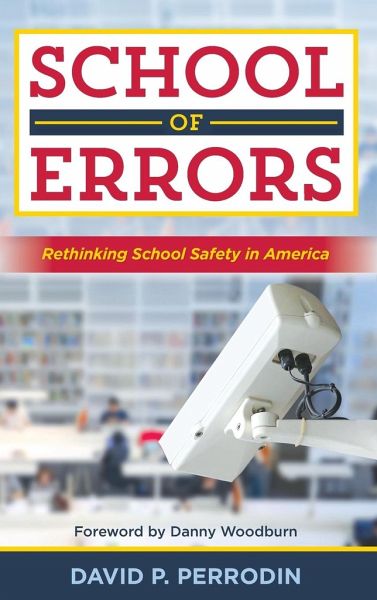
This is a book about school safety and disaster readiness.
Andere Kunden interessierten sich auch für
David P. PerrodinSchool of Errors25,99 €
Jeffrey D. YarbroughRedefining School Safety and Policing170,99 €
Avishan KeshavarzThe Impact of Instructional Programs27,99 €
Daniel Amoah-OppongAvoiding Errors for Better Writing29,99 €
Teresa NeidorfStudent Misconceptions and Errors in Physics and Mathematics38,99 €
Frank BurtnettCareer Errors37,99 €
Teresa NeidorfStudent Misconceptions and Errors in Physics and Mathematics38,99 €-
-
-
Produktdetails
- Produktdetails
- Verlag: Rowman & Littlefield Publishers
- Seitenzahl: 204
- Erscheinungstermin: 7. August 2019
- Englisch
- Abmessung: 235mm x 157mm x 17mm
- Gewicht: 489g
- ISBN-13: 9781475837445
- ISBN-10: 1475837445
- Artikelnr.: 55489586
- Herstellerkennzeichnung
- Libri GmbH
- Europaallee 1
- 36244 Bad Hersfeld
- gpsr@libri.de
- Verlag: Rowman & Littlefield Publishers
- Seitenzahl: 204
- Erscheinungstermin: 7. August 2019
- Englisch
- Abmessung: 235mm x 157mm x 17mm
- Gewicht: 489g
- ISBN-13: 9781475837445
- ISBN-10: 1475837445
- Artikelnr.: 55489586
- Herstellerkennzeichnung
- Libri GmbH
- Europaallee 1
- 36244 Bad Hersfeld
- gpsr@libri.de
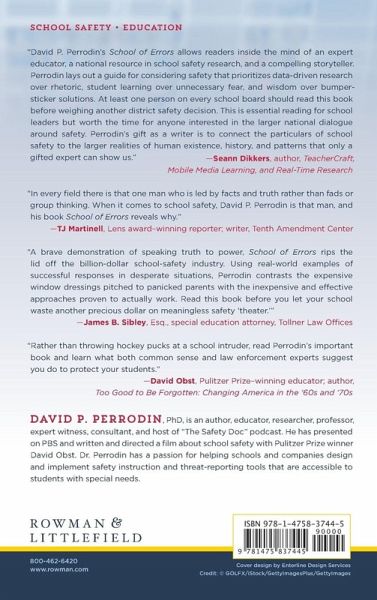
David Perrodin, PhD, promotes a safety initiative of taking action before a disaster strikes. He is an author, educator, researcher, professor, expert witness, consultant, host of The Safety Doc Podcast, and bicyclist. David received his Doctorate of Philosophy in Educational Leadership and Policy Analysis at University of Wisconsin-Madison where he researched high stakes safety decisions in education, health care and military. He has presented on PBS and wrote and directed a film about school safety with Pulitzer Prize winner David Obst. Dr. Perrodin has a passion for helping schools and companies design and implement safety instruction and threat reporting tools that are accessible to students with special needs. Visit his website at: http://safetyphd.com/.
Foreword by Danny Woodburn
Preface
Acknowledgements
Introduction
Part One: The Torus
Chapter One: How Thinking About a Bagel Can Get You Through the Worst Day
of Your Life
Chapter Two: Exploration Is a Kind of Safety Drill
Chapter Three: Situational Awareness via Sensemaking, Your Sword and Shield
Chapter Four: Legacy Knowledge
Part Two: The Foolishness of Benchmarking
Chapter Five: Disasters Are the Real Snowflakes
Chapter Six: Another New Latin Word: Psychological Transference
Chapter Seven: So, What's Wrong with Benchmarking? Critical Decision-Making
in a Nonlinear World
Chapter Eight: Why Comparing Disasters Feels Too Good to Be True
Chapter Nine: One Variable, One Very Big Difference: the Internet
Chapter Ten: A Final Word on Schools and Benchmarking
Part Three: Drill Fidelity
Chapter Eleven: Fancy Drills Are Worse Than Useless
Chapter Twelve: The Right Way to Conduct a Drill: Critical Decision Making
in a Nonlinear World
Chapter Thirteen: Other Options: Tabletop Exercises and Focus Groups
Chapter Fourteen: What is a Tabletop Exercise?
Chapter Fifteen: Video Boondoggle
Chapter Sixteen: One More Don't: Professional Standards for Educational
Leaders (PSEL)
Part Four: Systems Will Develop, So Let Them
Chapter Seventeen: The Zen of Safety
Chapter Eighteen: Incident Command Structure
Chapter Nineteen: Tornadoes, Hurricanes, and the Fabulous Cajun Navy Relief
Chapter Twenty: Seeing Faces on the Moon: How Pareidolia Helped the Rescue
System on 9/11 Develop
Chapter Twenty-One: Transitioning into Chaos - How Increasing the "Noise"
Increases Options. Up to a Point
Chapter Twenty-Two: Hobbes's Leviathan Meets the Twin Towers
Part Five: How We Know What We Know. So Why Do These Systems Develop?
Chapter Twenty-Three: Simulated Annealing, or SA: How the Human Brain is
Specialized for Improvisation
Chapter Twenty-Four: Leadership Theories AH (After Hobbes)
Chapter Twenty-Five: Legacy Knowledge, Distributed Leadership, and Rookie
Teachers vs. Admiral Loy
Chapter Twenty-Six: Summary of What We Know
Part Six: The Future
Chapter Twenty-Seven: How Will Decisions Made in the Moment Be Studied? And
How Will Future Decisions Be Directed?
Chapter Twenty-Eight: Bollards and Planters: The Terrible Ideas That Are
Coming to a School Near You
Chapter Twenty-Nine: A Mile Wide and an Inch Deep
Chapter Thirty: Final Implications for School Leaders
Epilogue: Nothing Means Anything To Anyone Until It Means Everything To You
References
Index
Meet the Author

Preface
Acknowledgements
Introduction
Part One: The Torus
Chapter One: How Thinking About a Bagel Can Get You Through the Worst Day
of Your Life
Chapter Two: Exploration Is a Kind of Safety Drill
Chapter Three: Situational Awareness via Sensemaking, Your Sword and Shield
Chapter Four: Legacy Knowledge
Part Two: The Foolishness of Benchmarking
Chapter Five: Disasters Are the Real Snowflakes
Chapter Six: Another New Latin Word: Psychological Transference
Chapter Seven: So, What's Wrong with Benchmarking? Critical Decision-Making
in a Nonlinear World
Chapter Eight: Why Comparing Disasters Feels Too Good to Be True
Chapter Nine: One Variable, One Very Big Difference: the Internet
Chapter Ten: A Final Word on Schools and Benchmarking
Part Three: Drill Fidelity
Chapter Eleven: Fancy Drills Are Worse Than Useless
Chapter Twelve: The Right Way to Conduct a Drill: Critical Decision Making
in a Nonlinear World
Chapter Thirteen: Other Options: Tabletop Exercises and Focus Groups
Chapter Fourteen: What is a Tabletop Exercise?
Chapter Fifteen: Video Boondoggle
Chapter Sixteen: One More Don't: Professional Standards for Educational
Leaders (PSEL)
Part Four: Systems Will Develop, So Let Them
Chapter Seventeen: The Zen of Safety
Chapter Eighteen: Incident Command Structure
Chapter Nineteen: Tornadoes, Hurricanes, and the Fabulous Cajun Navy Relief
Chapter Twenty: Seeing Faces on the Moon: How Pareidolia Helped the Rescue
System on 9/11 Develop
Chapter Twenty-One: Transitioning into Chaos - How Increasing the "Noise"
Increases Options. Up to a Point
Chapter Twenty-Two: Hobbes's Leviathan Meets the Twin Towers
Part Five: How We Know What We Know. So Why Do These Systems Develop?
Chapter Twenty-Three: Simulated Annealing, or SA: How the Human Brain is
Specialized for Improvisation
Chapter Twenty-Four: Leadership Theories AH (After Hobbes)
Chapter Twenty-Five: Legacy Knowledge, Distributed Leadership, and Rookie
Teachers vs. Admiral Loy
Chapter Twenty-Six: Summary of What We Know
Part Six: The Future
Chapter Twenty-Seven: How Will Decisions Made in the Moment Be Studied? And
How Will Future Decisions Be Directed?
Chapter Twenty-Eight: Bollards and Planters: The Terrible Ideas That Are
Coming to a School Near You
Chapter Twenty-Nine: A Mile Wide and an Inch Deep
Chapter Thirty: Final Implications for School Leaders
Epilogue: Nothing Means Anything To Anyone Until It Means Everything To You
References
Index
Meet the Author
Foreword by Danny Woodburn
Preface
Acknowledgements
Introduction
Part One: The Torus
Chapter One: How Thinking About a Bagel Can Get You Through the Worst Day
of Your Life
Chapter Two: Exploration Is a Kind of Safety Drill
Chapter Three: Situational Awareness via Sensemaking, Your Sword and Shield
Chapter Four: Legacy Knowledge
Part Two: The Foolishness of Benchmarking
Chapter Five: Disasters Are the Real Snowflakes
Chapter Six: Another New Latin Word: Psychological Transference
Chapter Seven: So, What's Wrong with Benchmarking? Critical Decision-Making
in a Nonlinear World
Chapter Eight: Why Comparing Disasters Feels Too Good to Be True
Chapter Nine: One Variable, One Very Big Difference: the Internet
Chapter Ten: A Final Word on Schools and Benchmarking
Part Three: Drill Fidelity
Chapter Eleven: Fancy Drills Are Worse Than Useless
Chapter Twelve: The Right Way to Conduct a Drill: Critical Decision Making
in a Nonlinear World
Chapter Thirteen: Other Options: Tabletop Exercises and Focus Groups
Chapter Fourteen: What is a Tabletop Exercise?
Chapter Fifteen: Video Boondoggle
Chapter Sixteen: One More Don't: Professional Standards for Educational
Leaders (PSEL)
Part Four: Systems Will Develop, So Let Them
Chapter Seventeen: The Zen of Safety
Chapter Eighteen: Incident Command Structure
Chapter Nineteen: Tornadoes, Hurricanes, and the Fabulous Cajun Navy Relief
Chapter Twenty: Seeing Faces on the Moon: How Pareidolia Helped the Rescue
System on 9/11 Develop
Chapter Twenty-One: Transitioning into Chaos - How Increasing the "Noise"
Increases Options. Up to a Point
Chapter Twenty-Two: Hobbes's Leviathan Meets the Twin Towers
Part Five: How We Know What We Know. So Why Do These Systems Develop?
Chapter Twenty-Three: Simulated Annealing, or SA: How the Human Brain is
Specialized for Improvisation
Chapter Twenty-Four: Leadership Theories AH (After Hobbes)
Chapter Twenty-Five: Legacy Knowledge, Distributed Leadership, and Rookie
Teachers vs. Admiral Loy
Chapter Twenty-Six: Summary of What We Know
Part Six: The Future
Chapter Twenty-Seven: How Will Decisions Made in the Moment Be Studied? And
How Will Future Decisions Be Directed?
Chapter Twenty-Eight: Bollards and Planters: The Terrible Ideas That Are
Coming to a School Near You
Chapter Twenty-Nine: A Mile Wide and an Inch Deep
Chapter Thirty: Final Implications for School Leaders
Epilogue: Nothing Means Anything To Anyone Until It Means Everything To You
References
Index
Meet the Author
Preface
Acknowledgements
Introduction
Part One: The Torus
Chapter One: How Thinking About a Bagel Can Get You Through the Worst Day
of Your Life
Chapter Two: Exploration Is a Kind of Safety Drill
Chapter Three: Situational Awareness via Sensemaking, Your Sword and Shield
Chapter Four: Legacy Knowledge
Part Two: The Foolishness of Benchmarking
Chapter Five: Disasters Are the Real Snowflakes
Chapter Six: Another New Latin Word: Psychological Transference
Chapter Seven: So, What's Wrong with Benchmarking? Critical Decision-Making
in a Nonlinear World
Chapter Eight: Why Comparing Disasters Feels Too Good to Be True
Chapter Nine: One Variable, One Very Big Difference: the Internet
Chapter Ten: A Final Word on Schools and Benchmarking
Part Three: Drill Fidelity
Chapter Eleven: Fancy Drills Are Worse Than Useless
Chapter Twelve: The Right Way to Conduct a Drill: Critical Decision Making
in a Nonlinear World
Chapter Thirteen: Other Options: Tabletop Exercises and Focus Groups
Chapter Fourteen: What is a Tabletop Exercise?
Chapter Fifteen: Video Boondoggle
Chapter Sixteen: One More Don't: Professional Standards for Educational
Leaders (PSEL)
Part Four: Systems Will Develop, So Let Them
Chapter Seventeen: The Zen of Safety
Chapter Eighteen: Incident Command Structure
Chapter Nineteen: Tornadoes, Hurricanes, and the Fabulous Cajun Navy Relief
Chapter Twenty: Seeing Faces on the Moon: How Pareidolia Helped the Rescue
System on 9/11 Develop
Chapter Twenty-One: Transitioning into Chaos - How Increasing the "Noise"
Increases Options. Up to a Point
Chapter Twenty-Two: Hobbes's Leviathan Meets the Twin Towers
Part Five: How We Know What We Know. So Why Do These Systems Develop?
Chapter Twenty-Three: Simulated Annealing, or SA: How the Human Brain is
Specialized for Improvisation
Chapter Twenty-Four: Leadership Theories AH (After Hobbes)
Chapter Twenty-Five: Legacy Knowledge, Distributed Leadership, and Rookie
Teachers vs. Admiral Loy
Chapter Twenty-Six: Summary of What We Know
Part Six: The Future
Chapter Twenty-Seven: How Will Decisions Made in the Moment Be Studied? And
How Will Future Decisions Be Directed?
Chapter Twenty-Eight: Bollards and Planters: The Terrible Ideas That Are
Coming to a School Near You
Chapter Twenty-Nine: A Mile Wide and an Inch Deep
Chapter Thirty: Final Implications for School Leaders
Epilogue: Nothing Means Anything To Anyone Until It Means Everything To You
References
Index
Meet the Author