
Andere Kunden interessierten sich auch für
 Science and technology of cashew agro-industrial processing40,99 €
 Science et technologie de la transformation agro-industrielle du café39,99 €
 Cashew nut agro-industrial pilot plant40,99 €
 Technology for agro-industrial production pilot plant27,99 €
 PRODUCTION OF ACTIVATED CARBON FROM COFFEE WASTE24,99 €
 Utilization of agro-industrial waste residues for amylase production33,99 €
 Refermentation of Coffee Beans and utilization of Spent Coffee Ground47,99 €


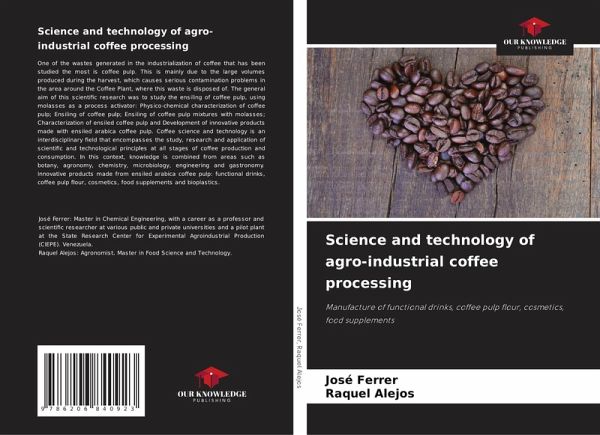
One of the wastes generated in the industrialization of coffee that has been studied the most is coffee pulp. This is mainly due to the large volumes produced during the harvest, which causes serious contamination problems in the area around the Coffee Plant, where this waste is disposed of. The general aim of this scientific research was to study the ensiling of coffee pulp, using molasses as a process activator: Physico-chemical characterization of coffee pulp; Ensiling of coffee pulp; Ensiling of coffee pulp mixtures with molasses; Characterization of ensiled coffee pulp and Development of innovative products made with ensiled arabica coffee pulp. Coffee science and technology is an interdisciplinary field that encompasses the study, research and application of scientific and technological principles at all stages of coffee production and consumption. In this context, knowledge is combined from areas such as botany, agronomy, chemistry, microbiology, engineering and gastronomy. Innovative products made from ensiled arabica coffee pulp: functional drinks, coffee pulp flour, cosmetics, food supplements and bioplastics.