
Andere Kunden interessierten sich auch für
 Understanding The Earth39,99 €
 Good Pastures31,99 €
 Mathematics67,99 €
 The Dawn of Animal Life52,99 €
 Unstoppable Global Warming21,99 €
 Phanerozoic Paleocontinental World Maps45,99 €
 Investigation of Virus Diseases of Brassica Crops31,99 €


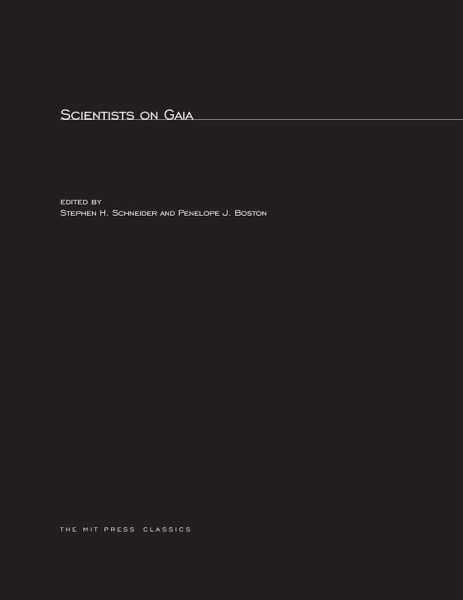
The Gaia hypothesis suggests that life is an active participant in shaping the physical and chemical environment on which it depends. Scientists on Gaia is a multidisciplinary exploration of this controversial hypothesis, which was introduced by James Lovelock and Lynn Margulis in the early 1970s. Forty-four contributions detail the philosophical, empirical, and theoretical foundations of Gaia, mechanisms through which planet-wide homeostasis could occur, applicability of the hypothesis to planets other than Earth, possible destabilization by outside forces, and public policy implications. Stephen H. Schneider, a climatologist, is Senior Scientist at the National Center for Atmospheric Research, Boulder, Colorado. Penelope J. Boston, a biologist, is a founder of Complex Systems Research, Lafayette, Colorado.