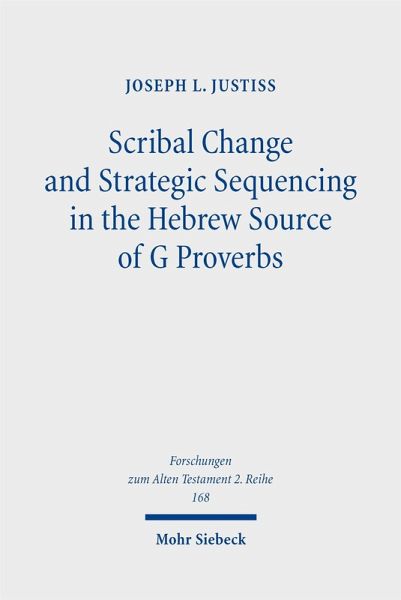
Verwendete Vorlage oder doch der Übersetzer? Wie ist die abweichende Abfolge großer Textblöcke zwischen der masoretischen und der griechischen Version (G) des Proverbienbuches zu erklären? Joseph L. Justiss versucht diese Frage zu beantworten und zeigt dabei, wie antike Schreiber literarisches Material interpretierten, indem sie es auf kreative Weise überarbeiteten und neu anordneten
Verwendete Vorlage oder doch der Übersetzer? Wie ist die abweichende Abfolge großer Textblöcke zwischen der masoretischen und der griechischen Version (G) des Proverbienbuches zu erklären? Joseph L. Justiss versucht diese Frage zu beantworten und zeigt dabei, wie antike Schreiber literarisches Material interpretierten, indem sie es auf kreative Weise überarbeiteten und neu anordneten
Born 1979; 2002 BA Biblical Studies; 2008 MDiv Biblical Theology; 2018 MA Ancient Philology; 2024 DPhil Hebrew Bible (Oxon); Lead Instructor for Biblical Languages at Biblingo.
Inhaltsangabe
Introduction Chapter 1. Review of Literature 1. 18th- and 19th-Century Monographs on G Proverbs 2. 20th-Century Monograph on G Proverbs 3. 21st Century Monographs on G Proverbs 4. Summary and Conclusion Chapter 2. Methodologies Employed 1. Diachronic Methodologies 2. Synchronic Methodologies 3. Conclusions Chapter 3. A Diachronic Analysis of G's Source in Proverbs 24:21-22 and 30:1-6 65 1. Delimiting the Passages for Diachronic Analysis 2. Reconstructing G's Source in 24:21-22 3. Reconstructing G's Plus in Proverbs 24:22[a-e]: Translational or Recensional? 4. Reconstructing G's Source in Proverbs 30:1-6 5. Evidence of Textual Divination in the Plus at Proverbs 24:22[a-e] 6. A Tentative Retroversion of the Plus 7. The Reconstructed Form of G's Hebrew Source in Proverbs 24:21-30:6 8. Summary and Conclusions Chapter 4. A Synchronic Analysis of G's Sequencing of 24:21-22[e] with 30:1-6 1. Topic Analysis 2. Dialogic Analysis 3. Interpretive Effects of the Corroborating Dialogue 4. Interpretive Effects of the Question-and-Answer Dialogue 5. Interpretive Effects of the onim and Knowledge-Language from 24:21-22[e] and 30:1-6 on 24:1-6 6. Summary and Conclusions Chapter 5. A Diachronic Analysis of G's Source in Proverbs 29:22-27 and 31:10-31 1. Delimiting the Passages for Diachronic Analysis 2. Establishing The OG of Proverbs 29:22-27 3. Reconstructing the Hebrew Source of G Proverbs 29:22-27 4. Establishing the OG of Proverbs 31:10-31 5. Reconstructing the Hebrew Source of G Proverbs 31:10-31 6. Summary and Conclusions Chapter 6. A Synchronic Analysis of G's Sequencing of Proverbs 29:22-27 with 31:10-31 1. Topic Analysis 2. Dialogic Analysis 3. Interpretive Effects of the Corroborating Foil Juxtaposition 4. Interpretive Effect of the Chapter 3 and 31 Linkage 5. Summary and Conclusions Chapter 7. Summary and Conclusion 1. The Research Problem 2. Reflections on Key Results 3. Recommendations for Further Research 4. Contributions to the Field 5. Summary and Conclusion
Introduction Chapter 1. Review of Literature 1. 18th- and 19th-Century Monographs on G Proverbs 2. 20th-Century Monograph on G Proverbs 3. 21st Century Monographs on G Proverbs 4. Summary and Conclusion Chapter 2. Methodologies Employed 1. Diachronic Methodologies 2. Synchronic Methodologies 3. Conclusions Chapter 3. A Diachronic Analysis of G's Source in Proverbs 24:21-22 and 30:1-6 65 1. Delimiting the Passages for Diachronic Analysis 2. Reconstructing G's Source in 24:21-22 3. Reconstructing G's Plus in Proverbs 24:22[a-e]: Translational or Recensional? 4. Reconstructing G's Source in Proverbs 30:1-6 5. Evidence of Textual Divination in the Plus at Proverbs 24:22[a-e] 6. A Tentative Retroversion of the Plus 7. The Reconstructed Form of G's Hebrew Source in Proverbs 24:21-30:6 8. Summary and Conclusions Chapter 4. A Synchronic Analysis of G's Sequencing of 24:21-22[e] with 30:1-6 1. Topic Analysis 2. Dialogic Analysis 3. Interpretive Effects of the Corroborating Dialogue 4. Interpretive Effects of the Question-and-Answer Dialogue 5. Interpretive Effects of the onim and Knowledge-Language from 24:21-22[e] and 30:1-6 on 24:1-6 6. Summary and Conclusions Chapter 5. A Diachronic Analysis of G's Source in Proverbs 29:22-27 and 31:10-31 1. Delimiting the Passages for Diachronic Analysis 2. Establishing The OG of Proverbs 29:22-27 3. Reconstructing the Hebrew Source of G Proverbs 29:22-27 4. Establishing the OG of Proverbs 31:10-31 5. Reconstructing the Hebrew Source of G Proverbs 31:10-31 6. Summary and Conclusions Chapter 6. A Synchronic Analysis of G's Sequencing of Proverbs 29:22-27 with 31:10-31 1. Topic Analysis 2. Dialogic Analysis 3. Interpretive Effects of the Corroborating Foil Juxtaposition 4. Interpretive Effect of the Chapter 3 and 31 Linkage 5. Summary and Conclusions Chapter 7. Summary and Conclusion 1. The Research Problem 2. Reflections on Key Results 3. Recommendations for Further Research 4. Contributions to the Field 5. Summary and Conclusion
Es gelten unsere Allgemeinen Geschäftsbedingungen: www.buecher.de/agb
Impressum
www.buecher.de ist ein Internetauftritt der buecher.de internetstores GmbH
Geschäftsführung: Monica Sawhney | Roland Kölbl | Günter Hilger
Sitz der Gesellschaft: Batheyer Straße 115 - 117, 58099 Hagen
Postanschrift: Bürgermeister-Wegele-Str. 12, 86167 Augsburg
Amtsgericht Hagen HRB 13257
Steuernummer: 321/5800/1497
USt-IdNr: DE450055826