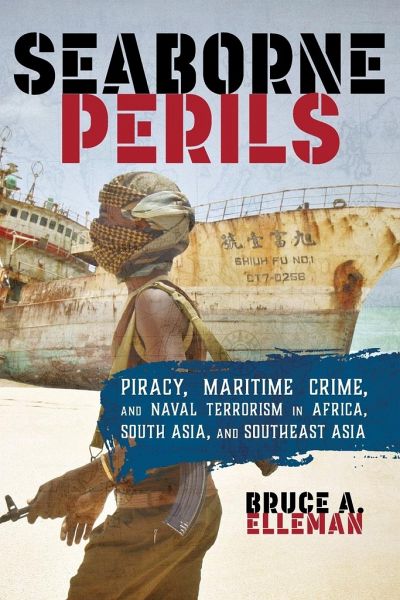
Bruce A. Elleman
Seaborne Perils
Piracy, Maritime Crime, and Naval Terrorism in Africa, South Asia, and Southeast Asia
Bruce A. Elleman
Seaborne Perils
Piracy, Maritime Crime, and Naval Terrorism in Africa, South Asia, and Southeast Asia
- Broschiertes Buch
- Merkliste
- Auf die Merkliste
- Bewerten Bewerten
- Teilen
- Produkt teilen
- Produkterinnerung
- Produkterinnerung
This book integrates a number of multinational, multiregional, and historical cases of piracy, maritime crime, and seaborne terrorism.
Andere Kunden interessierten sich auch für
Bruce A. EllemanSeaborne Perils99,99 €
Lucia QuagliaThe Perils of International Regime Complexity in Shadow Banking98,99 €
Brendan TolesOn the Perils of Using Reference Cases for Intergovernmental Affairs and Conflict Resolution in Canada17,95 €
Jason van TatenhoveThe Perils of Extremism20,99 €
Benjamin StachurskyThe Promise and Perils of Transnationalization186,99 €
Paul Douglas FootePerils of Posting39,99 €
Paul Douglas FootePerils of Posting91,99 €-
-
-
This book integrates a number of multinational, multiregional, and historical cases of piracy, maritime crime, and seaborne terrorism.
Produktdetails
- Produktdetails
- Verlag: Rowman & Littlefield Publishers
- Seitenzahl: 272
- Erscheinungstermin: 19. Februar 2018
- Englisch
- Abmessung: 229mm x 152mm x 16mm
- Gewicht: 446g
- ISBN-13: 9781442260191
- ISBN-10: 144226019X
- Artikelnr.: 49446191
- Herstellerkennzeichnung
- Libri GmbH
- Europaallee 1
- 36244 Bad Hersfeld
- gpsr@libri.de
- Verlag: Rowman & Littlefield Publishers
- Seitenzahl: 272
- Erscheinungstermin: 19. Februar 2018
- Englisch
- Abmessung: 229mm x 152mm x 16mm
- Gewicht: 446g
- ISBN-13: 9781442260191
- ISBN-10: 144226019X
- Artikelnr.: 49446191
- Herstellerkennzeichnung
- Libri GmbH
- Europaallee 1
- 36244 Bad Hersfeld
- gpsr@libri.de
Bruce A. Elleman is a William V. Pratt Professor of International History a full professor at the U.S. Naval War College in Newport, RI
Introduction: Defining Piracy, Maritime Crime, and Seaborne Terrorism
1. Historical Piracy and its Impact
2. Early Attempts to Halt Piracy
3. The Taiping Rebellion and the Arrow War
4. Post-War Piracy in Southeast and East Asia
5. The Looting and Rape of Vietnamese Boat People
6. Confronting Maritime Crime in Australian Waters
7. Twenty-First Century High Seas Piracy off of Somalia
8. Maritime Crime and Piracy in the Malacca Strait
9. Contemporary Piracy and Armed Robbery against Ships
10. Success and Failures of Counter-Piracy Operations
11. The Threat of Seaborne Terrorism
12. Conclusions: International Piracy in the Era of Maritime Domain
Awareness
Bibliography
Chapter Summaries
Following the Introduction, Chapter 1 examines historical piracy and its
impact on global trade, in particular in the Mediterranean, Atlantic, and
Caribbean. Chapter 2 then focuses on early European and American attempts
to halt piracy. These policies were so successful that it was once thought
global piracy could be completely eliminated.
Chapter 3 turns to Asia, which has seen a huge rise in piracy and maritime
crime over the past few decades. A historical examination of the Taiping
Rebellion and the Arrow War shows how European intervention during the 19th
century attempted to curtail piracy off the China coast. Chapter 4 takes
the story up through World War II by examining the post-war resurgence of
piracy in Southeast and East Asia, in particular as a consequence of
European decolonization. Chapter 5 focuses on one of the most horrific of
the Southeast Asian cases, the looting and rape of Vietnamese boat people.
Pirates preyed on fleeing Vietnamese not only for their money, but in an
effort-often state-supported or at the very least ignored by local
governments-to dissuade refugees from coming to their shores. Chapter 6
moves further south and evaluates Australian efforts to confront maritime
crime in its waters.
After summarizing historical cases, Chapter 7 turns to twenty-first century
high seas piracy off of Somalia, while Chapter 8 examines maritime crime
and piracy in the Malacca Strait. This leads to Chapter 9's discussion of
contemporary piracy and armed robbery against ships and to Chapter 10's
discussion of the success and failures of counter-piracy operations.
To date, there have been few documented cases of maritime terrorism, but
the possibility of such attacks exists. Chapter 11 examines the threat of
seaborne terrorism, focusing on possible locations, terrorist groups that
might be capable of turning to the sea to carry out attacks, and what
global navies are currently doing to counter these possibilities. Rebel
groups often smuggle high-value goods, such as drugs or diamonds, to fund
their operations. This chapter therefore also discusses cases where
insurgencies have turned to the sea to raise funds, and how this trend
might lead to future cases of seaborne terrorism.
Chapter 12 summarizes the book's findings, plus discusses in greater detail
how the international community is dealing with the threat of piracy
through the adoption of even greater Maritime Domain Awareness, as
indicated by the widespread adoption of the ISPS Code, SUA Convention, and
long-range identification and tracking (LRIT) of ships.
1. Historical Piracy and its Impact
2. Early Attempts to Halt Piracy
3. The Taiping Rebellion and the Arrow War
4. Post-War Piracy in Southeast and East Asia
5. The Looting and Rape of Vietnamese Boat People
6. Confronting Maritime Crime in Australian Waters
7. Twenty-First Century High Seas Piracy off of Somalia
8. Maritime Crime and Piracy in the Malacca Strait
9. Contemporary Piracy and Armed Robbery against Ships
10. Success and Failures of Counter-Piracy Operations
11. The Threat of Seaborne Terrorism
12. Conclusions: International Piracy in the Era of Maritime Domain
Awareness
Bibliography
Chapter Summaries
Following the Introduction, Chapter 1 examines historical piracy and its
impact on global trade, in particular in the Mediterranean, Atlantic, and
Caribbean. Chapter 2 then focuses on early European and American attempts
to halt piracy. These policies were so successful that it was once thought
global piracy could be completely eliminated.
Chapter 3 turns to Asia, which has seen a huge rise in piracy and maritime
crime over the past few decades. A historical examination of the Taiping
Rebellion and the Arrow War shows how European intervention during the 19th
century attempted to curtail piracy off the China coast. Chapter 4 takes
the story up through World War II by examining the post-war resurgence of
piracy in Southeast and East Asia, in particular as a consequence of
European decolonization. Chapter 5 focuses on one of the most horrific of
the Southeast Asian cases, the looting and rape of Vietnamese boat people.
Pirates preyed on fleeing Vietnamese not only for their money, but in an
effort-often state-supported or at the very least ignored by local
governments-to dissuade refugees from coming to their shores. Chapter 6
moves further south and evaluates Australian efforts to confront maritime
crime in its waters.
After summarizing historical cases, Chapter 7 turns to twenty-first century
high seas piracy off of Somalia, while Chapter 8 examines maritime crime
and piracy in the Malacca Strait. This leads to Chapter 9's discussion of
contemporary piracy and armed robbery against ships and to Chapter 10's
discussion of the success and failures of counter-piracy operations.
To date, there have been few documented cases of maritime terrorism, but
the possibility of such attacks exists. Chapter 11 examines the threat of
seaborne terrorism, focusing on possible locations, terrorist groups that
might be capable of turning to the sea to carry out attacks, and what
global navies are currently doing to counter these possibilities. Rebel
groups often smuggle high-value goods, such as drugs or diamonds, to fund
their operations. This chapter therefore also discusses cases where
insurgencies have turned to the sea to raise funds, and how this trend
might lead to future cases of seaborne terrorism.
Chapter 12 summarizes the book's findings, plus discusses in greater detail
how the international community is dealing with the threat of piracy
through the adoption of even greater Maritime Domain Awareness, as
indicated by the widespread adoption of the ISPS Code, SUA Convention, and
long-range identification and tracking (LRIT) of ships.
Introduction: Defining Piracy, Maritime Crime, and Seaborne Terrorism
1. Historical Piracy and its Impact
2. Early Attempts to Halt Piracy
3. The Taiping Rebellion and the Arrow War
4. Post-War Piracy in Southeast and East Asia
5. The Looting and Rape of Vietnamese Boat People
6. Confronting Maritime Crime in Australian Waters
7. Twenty-First Century High Seas Piracy off of Somalia
8. Maritime Crime and Piracy in the Malacca Strait
9. Contemporary Piracy and Armed Robbery against Ships
10. Success and Failures of Counter-Piracy Operations
11. The Threat of Seaborne Terrorism
12. Conclusions: International Piracy in the Era of Maritime Domain
Awareness
Bibliography
Chapter Summaries
Following the Introduction, Chapter 1 examines historical piracy and its
impact on global trade, in particular in the Mediterranean, Atlantic, and
Caribbean. Chapter 2 then focuses on early European and American attempts
to halt piracy. These policies were so successful that it was once thought
global piracy could be completely eliminated.
Chapter 3 turns to Asia, which has seen a huge rise in piracy and maritime
crime over the past few decades. A historical examination of the Taiping
Rebellion and the Arrow War shows how European intervention during the 19th
century attempted to curtail piracy off the China coast. Chapter 4 takes
the story up through World War II by examining the post-war resurgence of
piracy in Southeast and East Asia, in particular as a consequence of
European decolonization. Chapter 5 focuses on one of the most horrific of
the Southeast Asian cases, the looting and rape of Vietnamese boat people.
Pirates preyed on fleeing Vietnamese not only for their money, but in an
effort-often state-supported or at the very least ignored by local
governments-to dissuade refugees from coming to their shores. Chapter 6
moves further south and evaluates Australian efforts to confront maritime
crime in its waters.
After summarizing historical cases, Chapter 7 turns to twenty-first century
high seas piracy off of Somalia, while Chapter 8 examines maritime crime
and piracy in the Malacca Strait. This leads to Chapter 9's discussion of
contemporary piracy and armed robbery against ships and to Chapter 10's
discussion of the success and failures of counter-piracy operations.
To date, there have been few documented cases of maritime terrorism, but
the possibility of such attacks exists. Chapter 11 examines the threat of
seaborne terrorism, focusing on possible locations, terrorist groups that
might be capable of turning to the sea to carry out attacks, and what
global navies are currently doing to counter these possibilities. Rebel
groups often smuggle high-value goods, such as drugs or diamonds, to fund
their operations. This chapter therefore also discusses cases where
insurgencies have turned to the sea to raise funds, and how this trend
might lead to future cases of seaborne terrorism.
Chapter 12 summarizes the book's findings, plus discusses in greater detail
how the international community is dealing with the threat of piracy
through the adoption of even greater Maritime Domain Awareness, as
indicated by the widespread adoption of the ISPS Code, SUA Convention, and
long-range identification and tracking (LRIT) of ships.
1. Historical Piracy and its Impact
2. Early Attempts to Halt Piracy
3. The Taiping Rebellion and the Arrow War
4. Post-War Piracy in Southeast and East Asia
5. The Looting and Rape of Vietnamese Boat People
6. Confronting Maritime Crime in Australian Waters
7. Twenty-First Century High Seas Piracy off of Somalia
8. Maritime Crime and Piracy in the Malacca Strait
9. Contemporary Piracy and Armed Robbery against Ships
10. Success and Failures of Counter-Piracy Operations
11. The Threat of Seaborne Terrorism
12. Conclusions: International Piracy in the Era of Maritime Domain
Awareness
Bibliography
Chapter Summaries
Following the Introduction, Chapter 1 examines historical piracy and its
impact on global trade, in particular in the Mediterranean, Atlantic, and
Caribbean. Chapter 2 then focuses on early European and American attempts
to halt piracy. These policies were so successful that it was once thought
global piracy could be completely eliminated.
Chapter 3 turns to Asia, which has seen a huge rise in piracy and maritime
crime over the past few decades. A historical examination of the Taiping
Rebellion and the Arrow War shows how European intervention during the 19th
century attempted to curtail piracy off the China coast. Chapter 4 takes
the story up through World War II by examining the post-war resurgence of
piracy in Southeast and East Asia, in particular as a consequence of
European decolonization. Chapter 5 focuses on one of the most horrific of
the Southeast Asian cases, the looting and rape of Vietnamese boat people.
Pirates preyed on fleeing Vietnamese not only for their money, but in an
effort-often state-supported or at the very least ignored by local
governments-to dissuade refugees from coming to their shores. Chapter 6
moves further south and evaluates Australian efforts to confront maritime
crime in its waters.
After summarizing historical cases, Chapter 7 turns to twenty-first century
high seas piracy off of Somalia, while Chapter 8 examines maritime crime
and piracy in the Malacca Strait. This leads to Chapter 9's discussion of
contemporary piracy and armed robbery against ships and to Chapter 10's
discussion of the success and failures of counter-piracy operations.
To date, there have been few documented cases of maritime terrorism, but
the possibility of such attacks exists. Chapter 11 examines the threat of
seaborne terrorism, focusing on possible locations, terrorist groups that
might be capable of turning to the sea to carry out attacks, and what
global navies are currently doing to counter these possibilities. Rebel
groups often smuggle high-value goods, such as drugs or diamonds, to fund
their operations. This chapter therefore also discusses cases where
insurgencies have turned to the sea to raise funds, and how this trend
might lead to future cases of seaborne terrorism.
Chapter 12 summarizes the book's findings, plus discusses in greater detail
how the international community is dealing with the threat of piracy
through the adoption of even greater Maritime Domain Awareness, as
indicated by the widespread adoption of the ISPS Code, SUA Convention, and
long-range identification and tracking (LRIT) of ships.