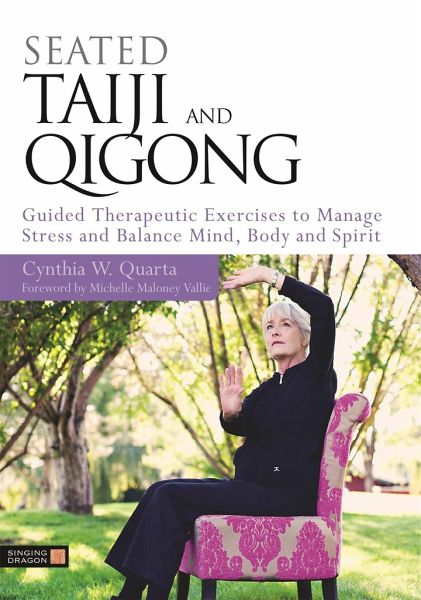
Explains how to implement a tai chi or qigong exercise program for patients with limited mobility, featuring exercises for every part of the body and variations that can be tailored to a patient's needs.
Explains how to implement a tai chi or qigong exercise program for patients with limited mobility, featuring exercises for every part of the body and variations that can be tailored to a patient's needs.
Cynthia W. Quarta has taught martial arts for over twenty five years and was the activities director at an assisted living facility. She continues to teach seated Taiji classes in a number of locations to a range of ages and levels of physical fitness. These include classes for older people, people with physical disabilities, college students, middle-aged adults, and adults with profound intellectual disabilities at a local mental health center. She lives in Great Falls, Montana.
Inhaltsangabe
Foreword. 1. Introduction . 2. Chinese Medicine. 2.1. The Ch'i of Tai Chi and Qigong. 2.2. The Five Elements. 2.3. The Eight Meridians. 2.4. The Junction Points. 2.5. The Three Treasures. 2.6. The Three Dan Tiens. 2.7. Before You Begin. 3. Seated Qigong Quick Picker-Uppers. 3.1. History of Qigong. 3.2. Sample Lesson for Beginners. 3.3. Introduction to Qigong Exercises. 3.4. Level One Exercises. 3.5. Level Two Exercises. 3.6. Level Three Exercises. 3.7. Acupressure Points for Qigong Exercises. 4. Seated T'ai Chi Chuan: Exercises for Health and Fitness. 4.1. The Beginnings of T'ai Chi. 4.2. The T'ai Chi Diagram. 4.3. Exercises for Emotional Exhaustion. 4.4. Exercises for Mental Stress. 4.5. Exercises for Physical Fatigue. 4.6. Exercises for Total Relaxation. 5. The Role of Stress in Disease. 5.1. Stress and Your Environment. 5.2. Reducing Fatigue and Tension with Water. 5.3. Final Reminders and Suggestions. 5.4. Music and Readings. 6. Appendices. 6.1. Abbreviations of Meridians. 6.2. Locations of Acupressure Points. 6.3. Bibliography.
Foreword. 1. Introduction . 2. Chinese Medicine. 2.1. The Ch'i of Tai Chi and Qigong. 2.2. The Five Elements. 2.3. The Eight Meridians. 2.4. The Junction Points. 2.5. The Three Treasures. 2.6. The Three Dan Tiens. 2.7. Before You Begin. 3. Seated Qigong Quick Picker-Uppers. 3.1. History of Qigong. 3.2. Sample Lesson for Beginners. 3.3. Introduction to Qigong Exercises. 3.4. Level One Exercises. 3.5. Level Two Exercises. 3.6. Level Three Exercises. 3.7. Acupressure Points for Qigong Exercises. 4. Seated T'ai Chi Chuan: Exercises for Health and Fitness. 4.1. The Beginnings of T'ai Chi. 4.2. The T'ai Chi Diagram. 4.3. Exercises for Emotional Exhaustion. 4.4. Exercises for Mental Stress. 4.5. Exercises for Physical Fatigue. 4.6. Exercises for Total Relaxation. 5. The Role of Stress in Disease. 5.1. Stress and Your Environment. 5.2. Reducing Fatigue and Tension with Water. 5.3. Final Reminders and Suggestions. 5.4. Music and Readings. 6. Appendices. 6.1. Abbreviations of Meridians. 6.2. Locations of Acupressure Points. 6.3. Bibliography.
Es gelten unsere Allgemeinen Geschäftsbedingungen: www.buecher.de/agb
Impressum
www.buecher.de ist ein Internetauftritt der buecher.de internetstores GmbH
Geschäftsführung: Monica Sawhney | Roland Kölbl | Günter Hilger
Sitz der Gesellschaft: Batheyer Straße 115 - 117, 58099 Hagen
Postanschrift: Bürgermeister-Wegele-Str. 12, 86167 Augsburg
Amtsgericht Hagen HRB 13257
Steuernummer: 321/5800/1497
USt-IdNr: DE450055826