
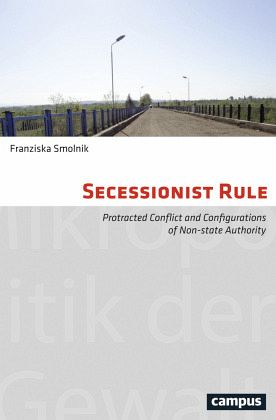
- Broschiertes Buch
- Merkliste
- Auf die Merkliste
- Bewerten Bewerten
- Teilen
- Produkt teilen
- Produkterinnerung
- Produkterinnerung
Franziska Smolniks Untersuchung stützt sich auf die südkaukasischen international nicht beziehungsweise nur zum Teil anerkannten De-facto-Staaten, die sich weiterhin im Konflikt mit ihren einstigen Metropolstaaten befinden. Sie zeigt, wie auch sogenannte Gewaltkonflikte niedriger Intensität die Form und Funktion von politischer Herrschaft entscheidend prägen können.
Andere Kunden interessierten sich auch für
 Ali MuhammadWest Papuan Secessionist Movement41,99 €
 Klaus SchlichteIn the Shadow of Violence46,00 €
 Asif MasimovDie Konflikte in der zentralen Kaukasusregion15,95 €
 Maria MitaevManaging Secessionist Conflicts along Russia's Periphery32,99 €
 Bonn International CentreFriedensgutachten 202115,00 €
 Charisma und Herrschaft29,90 €
 Mehran ZolfaghariehIslamische Republik Iran - Reformen oder Stärkung des autoritären Regimes?16,95 €
-
-
-


Franziska Smolniks Untersuchung stützt sich auf die südkaukasischen international nicht beziehungsweise nur zum Teil anerkannten De-facto-Staaten, die sich weiterhin im Konflikt mit ihren einstigen Metropolstaaten befinden. Sie zeigt, wie auch sogenannte Gewaltkonflikte niedriger Intensität die Form und Funktion von politischer Herrschaft entscheidend prägen können.
Hinweis: Dieser Artikel kann nur an eine deutsche Lieferadresse ausgeliefert werden.
Hinweis: Dieser Artikel kann nur an eine deutsche Lieferadresse ausgeliefert werden.
Produktdetails
- Produktdetails
- Mikropolitik der Gewalt 12
- Verlag: Campus Verlag / University of Chicago Press
- Artikelnr. des Verlages: 50629
- Seitenzahl: 425
- Erscheinungstermin: 5. August 2016
- Englisch
- Abmessung: 214mm x 142mm x 26mm
- Gewicht: 537g
- ISBN-13: 9783593506296
- ISBN-10: 3593506297
- Artikelnr.: 45003171
- Herstellerkennzeichnung Die Herstellerinformationen sind derzeit nicht verfügbar.
- Mikropolitik der Gewalt 12
- Verlag: Campus Verlag / University of Chicago Press
- Artikelnr. des Verlages: 50629
- Seitenzahl: 425
- Erscheinungstermin: 5. August 2016
- Englisch
- Abmessung: 214mm x 142mm x 26mm
- Gewicht: 537g
- ISBN-13: 9783593506296
- ISBN-10: 3593506297
- Artikelnr.: 45003171
- Herstellerkennzeichnung Die Herstellerinformationen sind derzeit nicht verfügbar.
Franziska Smolnik ist Wissenschaftlerin in der Forschungsgruppe Osteuropa und Eurasien der Stiftung Wissenschaft und Politik, Berlin.
Contents
1 Introduction 9
1.1 De facto state or rebel region? 9
1.2 Unresolved conflict 12
1.3 Research interest 13
1.4 Composition 14
1.5 On terminology 17
2 Protracted conflict and political authority: state of research 20
2.1 Violent conflict and political order 20
2.2 The South Caucasus de facto states 27
2.3 Research question 30
3 The conflicts on Abkhazia and Nagorno-Karabakh 32
3.1 Pre-history, escalation, and post-ceasefire period 33
3.1.1 Pointers on history 33
3.1.2 Excursus: Soviet nationality policy 37
3.1.3 Soviet rule and escalation into open warfare 40
3.1.4 Outstanding conflict resolution 54
3.2 Violent conflict - a matter of analytical lenses 64
4 Theorizing political authority 71
4.1 Approaches in conflict research 73
4.2 Discussing Weber and Bourdieu 76
4.2.1 Power, authority, and political rule 77
4.2.2 Weber and Bourdieu: introducing the 'state' 84
4.2.3 What is a 'state'? 91
4.3 A heuristic-conceptual framework 94
4.4 On implementation 98
4.4.1 An interpretive-qualitative perspective 98
4.4.2 Spotlighted episodes 103
4.4.3 On data or theory in practice 106
4.4.4 Caveats and critical review 109
5 Abkhazia - Protecting ethnic monopoly 112
5.1 Introducing post-1994 Abkhazia 113
5.1.1 Economic challenges 115
5.1.2 Ethno-demographic changes and their socio-political repercussions 117
5.1.3 Russian-Abkhazian relations - Russia in Abkhazia 125
5.2 Abkhazia's field of power 133
5.2.1 Preview of findings 134
5.2.2 Waning Glory - 'presidential' elections of 1999 141
5.2.3 Storm and Stress - 'presidential' elections of 2004/2005 155
5.2.4 Shielding Sovereignty - 'presidential' elections of 2009 182
5.2.5 Waning Glory, Storm and Stress, Shielding Sovereignty: a summary 201
5.2.6 Wrap up: changing configurations? 204
6 Nagorno-Karabakh - Sputnik in arms 209
6.1 Introducing post-1994 Nagorno-Karabakh 211
6.1.1 Demographics and - occupied - territories 213
6.1.2 Nagorno-Karabakh and Armenia: 'kin relations' 217
6.1.3 The (formation of) the 'armed forces' 228
6.1.4 Economic challenges and diaspora support 231
6.2 Nagorno-Karabakh's field of power 233
6.2.1 Preview of findings 234
6.2.2 High Noon - the Babayan-Gukasyan power struggle 240
6.2.3 Staging Democracy - election season 2004-2005 261
6.2.4 United We Stand - 'presidential' elections of 2007 278
6.2.5 High Noon, Staging Democracy, United We Stand: a summary 294
6.2.6 Wrap up: changing configurations? 296
7 Comparative and theoretical discussion 301
7.1 Impact of violent conflict 303
7.1.1 Active war-participation 304
7.1.2 War hero-charisma 311
7.1.3 Veterans' organizations and armed forces 314
7.1.4 'Dirty tricks' and the exploitation of the de facto monopoly of physical force 317
7.1.5 'External' and 'internal' enemies 319
7.2 The de facto state structures and Soviet legacies 322
7.2.1 The democratization discourse 324
7.2.2 The office of 'president' - power of appointment 325
7.2.3 Working the system: Political parties and administrative resources 327
7.3 Social relations and informal institutions 330
7.4 The 'external' dimension 331
7.5 Political authority in Abkhazia and Nagorno-Karabakh 338
7.6 Political authority and violent conflict 340
8 Conclusion 343
9 References and appendix 353
9.1 Acknowledgements 353
9.2 Abbreviations and acronyms 354
9.3 List of maps, figures, and tables 355
9.4 Bibliography 356
9.5 References (local and regional media) for chapter 5 385
9.6 References (local and regional media) for chapter 6 407
Contents
1 Introduction 9
1.1 De facto state or rebel region? 9
1.2 Unresolved conflict 12
1.3 Research interest 13
1.4 Composition 14
1.5 On terminology 17
2 Protracted conflict and political authority: state of research 20
2.1 Violent conflict and political order 20
2.2 The South Caucasus de facto states 27
2.3 Research question 30
3 The conflicts on Abkhazia and Nagorno-Karabakh 32
3.1 Pre-history, escalation, and post-ceasefire period 33
3.1.1 Pointers on history 33
3.1.2 Excursus: Soviet nationality policy 37
3.1.3 Soviet rule and escalation into open warfare 40
3.1.4 Outstanding conflict resolution 54
3.2 Violent conflict - a matter of analytical lenses 64
4 Theorizing political authority 71
4.1 Approaches in conflict research 73
4.2 Discussing Weber and Bourdieu 76
4.2.1 Power, authority, and political rule 77
4.2.2 Weber and Bourdieu: introducing the 'state' 84
4.2.3 What is a 'state'? 91
4.3 A heuristic-conceptual framework 94
4.4 On implementation 98
4.4.1 An interpretive-qualitative perspective 98
4.4.2 Spotlighted episodes 103
4.4.3 On data or theory in practice 106
4.4.4 Caveats and critical review 109
5 Abkhazia - Protecting ethnic monopoly 112
5.1 Introducing post-1994 Abkhazia 113
5.1.1 Economic challenges 115
5.1.2 Ethno-demographic changes and their socio-political repercussions 117
5.1.3 Russian-Abkhazian relations - Russia in Abkhazia 125
5.2 Abkhazia's field of power 133
5.2.1 Preview of findings 134
5.2.2 Waning Glory - 'presidential' elections of 1999 141
5.2.3 Storm and Stress - 'presidential' elections of 2004/2005 155
5.2.4 Shielding Sovereignty - 'presidential' elections of 2009 182
5.2.5 Waning Glory, Storm and Stress, Shielding Sovereignty: a summary 201
5.2.6 Wrap up: changing configurations? 204
6 Nagorno-Karabakh - Sputnik in arms 209
6.1 Introducing post-1994 Nagorno-Karabakh 211
6.1.1 Demographics and - occupied - territories 213
6.1.2 Nagorno-Karabakh and Armenia: 'kin relations' 217
6.1.3 The (formation of) the 'armed forces' 228
6.1.4 Economic challenges and diaspora support 231
6.2 Nagorno-Karabakh's field of power 233
6.2.1 Preview of findings 234
6.2.2 High Noon - the Babayan-Gukasyan power struggle 240
6.2.3 Staging Democracy - election season 2004-2005 261
6.2.4 United We Stand - 'presidential' elections of 2007 278
6.2.5 High Noon, Staging Democracy, United We Stand: a summary 294
6.2.6 Wrap up: changing configurations? 296
7 Comparative and theoretical discussion 301
7.1 Impact of violent conflict 303
7.1.1 Active war-participation 304
7.1.2 War hero-charisma 311
7.1.3 Veterans' organizations and armed forces 314
7.1.4 'Dirty tricks' and the exploitation of the de facto monopoly of physical force 317
7.1.5 'External' and 'internal' enemies 319
7.2 The de facto state structures and Soviet legacies 322
7.2.1 The democratization discourse 324
7.2.2 The office of 'president' - power of appointment 325
7.2.3 Working the system: Political parties and administrative resources 327
7.3 Social relations and informal institutions 330
7.4 The 'external' dimension 331
7.5 Political authority in Abkhazia and Nagorno-Karabakh 338
7.6 Political authority and violent conflict 340
8 Conclusion 343
9 References and appendix 353
9.1 Acknowledgements 353
9.2 Abbreviations and acronyms 354
9.3 List of maps, figures, and tables 355
9.4 Bibliography 356
9.5 References (local and regional media) for chapter 5 385
9.6 References (local and regional media) for chapter 6 407
1 Introduction 9
1.1 De facto state or rebel region? 9
1.2 Unresolved conflict 12
1.3 Research interest 13
1.4 Composition 14
1.5 On terminology 17
2 Protracted conflict and political authority: state of research 20
2.1 Violent conflict and political order 20
2.2 The South Caucasus de facto states 27
2.3 Research question 30
3 The conflicts on Abkhazia and Nagorno-Karabakh 32
3.1 Pre-history, escalation, and post-ceasefire period 33
3.1.1 Pointers on history 33
3.1.2 Excursus: Soviet nationality policy 37
3.1.3 Soviet rule and escalation into open warfare 40
3.1.4 Outstanding conflict resolution 54
3.2 Violent conflict - a matter of analytical lenses 64
4 Theorizing political authority 71
4.1 Approaches in conflict research 73
4.2 Discussing Weber and Bourdieu 76
4.2.1 Power, authority, and political rule 77
4.2.2 Weber and Bourdieu: introducing the 'state' 84
4.2.3 What is a 'state'? 91
4.3 A heuristic-conceptual framework 94
4.4 On implementation 98
4.4.1 An interpretive-qualitative perspective 98
4.4.2 Spotlighted episodes 103
4.4.3 On data or theory in practice 106
4.4.4 Caveats and critical review 109
5 Abkhazia - Protecting ethnic monopoly 112
5.1 Introducing post-1994 Abkhazia 113
5.1.1 Economic challenges 115
5.1.2 Ethno-demographic changes and their socio-political repercussions 117
5.1.3 Russian-Abkhazian relations - Russia in Abkhazia 125
5.2 Abkhazia's field of power 133
5.2.1 Preview of findings 134
5.2.2 Waning Glory - 'presidential' elections of 1999 141
5.2.3 Storm and Stress - 'presidential' elections of 2004/2005 155
5.2.4 Shielding Sovereignty - 'presidential' elections of 2009 182
5.2.5 Waning Glory, Storm and Stress, Shielding Sovereignty: a summary 201
5.2.6 Wrap up: changing configurations? 204
6 Nagorno-Karabakh - Sputnik in arms 209
6.1 Introducing post-1994 Nagorno-Karabakh 211
6.1.1 Demographics and - occupied - territories 213
6.1.2 Nagorno-Karabakh and Armenia: 'kin relations' 217
6.1.3 The (formation of) the 'armed forces' 228
6.1.4 Economic challenges and diaspora support 231
6.2 Nagorno-Karabakh's field of power 233
6.2.1 Preview of findings 234
6.2.2 High Noon - the Babayan-Gukasyan power struggle 240
6.2.3 Staging Democracy - election season 2004-2005 261
6.2.4 United We Stand - 'presidential' elections of 2007 278
6.2.5 High Noon, Staging Democracy, United We Stand: a summary 294
6.2.6 Wrap up: changing configurations? 296
7 Comparative and theoretical discussion 301
7.1 Impact of violent conflict 303
7.1.1 Active war-participation 304
7.1.2 War hero-charisma 311
7.1.3 Veterans' organizations and armed forces 314
7.1.4 'Dirty tricks' and the exploitation of the de facto monopoly of physical force 317
7.1.5 'External' and 'internal' enemies 319
7.2 The de facto state structures and Soviet legacies 322
7.2.1 The democratization discourse 324
7.2.2 The office of 'president' - power of appointment 325
7.2.3 Working the system: Political parties and administrative resources 327
7.3 Social relations and informal institutions 330
7.4 The 'external' dimension 331
7.5 Political authority in Abkhazia and Nagorno-Karabakh 338
7.6 Political authority and violent conflict 340
8 Conclusion 343
9 References and appendix 353
9.1 Acknowledgements 353
9.2 Abbreviations and acronyms 354
9.3 List of maps, figures, and tables 355
9.4 Bibliography 356
9.5 References (local and regional media) for chapter 5 385
9.6 References (local and regional media) for chapter 6 407
Contents
1 Introduction 9
1.1 De facto state or rebel region? 9
1.2 Unresolved conflict 12
1.3 Research interest 13
1.4 Composition 14
1.5 On terminology 17
2 Protracted conflict and political authority: state of research 20
2.1 Violent conflict and political order 20
2.2 The South Caucasus de facto states 27
2.3 Research question 30
3 The conflicts on Abkhazia and Nagorno-Karabakh 32
3.1 Pre-history, escalation, and post-ceasefire period 33
3.1.1 Pointers on history 33
3.1.2 Excursus: Soviet nationality policy 37
3.1.3 Soviet rule and escalation into open warfare 40
3.1.4 Outstanding conflict resolution 54
3.2 Violent conflict - a matter of analytical lenses 64
4 Theorizing political authority 71
4.1 Approaches in conflict research 73
4.2 Discussing Weber and Bourdieu 76
4.2.1 Power, authority, and political rule 77
4.2.2 Weber and Bourdieu: introducing the 'state' 84
4.2.3 What is a 'state'? 91
4.3 A heuristic-conceptual framework 94
4.4 On implementation 98
4.4.1 An interpretive-qualitative perspective 98
4.4.2 Spotlighted episodes 103
4.4.3 On data or theory in practice 106
4.4.4 Caveats and critical review 109
5 Abkhazia - Protecting ethnic monopoly 112
5.1 Introducing post-1994 Abkhazia 113
5.1.1 Economic challenges 115
5.1.2 Ethno-demographic changes and their socio-political repercussions 117
5.1.3 Russian-Abkhazian relations - Russia in Abkhazia 125
5.2 Abkhazia's field of power 133
5.2.1 Preview of findings 134
5.2.2 Waning Glory - 'presidential' elections of 1999 141
5.2.3 Storm and Stress - 'presidential' elections of 2004/2005 155
5.2.4 Shielding Sovereignty - 'presidential' elections of 2009 182
5.2.5 Waning Glory, Storm and Stress, Shielding Sovereignty: a summary 201
5.2.6 Wrap up: changing configurations? 204
6 Nagorno-Karabakh - Sputnik in arms 209
6.1 Introducing post-1994 Nagorno-Karabakh 211
6.1.1 Demographics and - occupied - territories 213
6.1.2 Nagorno-Karabakh and Armenia: 'kin relations' 217
6.1.3 The (formation of) the 'armed forces' 228
6.1.4 Economic challenges and diaspora support 231
6.2 Nagorno-Karabakh's field of power 233
6.2.1 Preview of findings 234
6.2.2 High Noon - the Babayan-Gukasyan power struggle 240
6.2.3 Staging Democracy - election season 2004-2005 261
6.2.4 United We Stand - 'presidential' elections of 2007 278
6.2.5 High Noon, Staging Democracy, United We Stand: a summary 294
6.2.6 Wrap up: changing configurations? 296
7 Comparative and theoretical discussion 301
7.1 Impact of violent conflict 303
7.1.1 Active war-participation 304
7.1.2 War hero-charisma 311
7.1.3 Veterans' organizations and armed forces 314
7.1.4 'Dirty tricks' and the exploitation of the de facto monopoly of physical force 317
7.1.5 'External' and 'internal' enemies 319
7.2 The de facto state structures and Soviet legacies 322
7.2.1 The democratization discourse 324
7.2.2 The office of 'president' - power of appointment 325
7.2.3 Working the system: Political parties and administrative resources 327
7.3 Social relations and informal institutions 330
7.4 The 'external' dimension 331
7.5 Political authority in Abkhazia and Nagorno-Karabakh 338
7.6 Political authority and violent conflict 340
8 Conclusion 343
9 References and appendix 353
9.1 Acknowledgements 353
9.2 Abbreviations and acronyms 354
9.3 List of maps, figures, and tables 355
9.4 Bibliography 356
9.5 References (local and regional media) for chapter 5 385
9.6 References (local and regional media) for chapter 6 407
Contents
1 Introduction 9
1.1 De facto state or rebel region? 9
1.2 Unresolved conflict 12
1.3 Research interest 13
1.4 Composition 14
1.5 On terminology 17
2 Protracted conflict and political authority: state of research 20
2.1 Violent conflict and political order 20
2.2 The South Caucasus de facto states 27
2.3 Research question 30
3 The conflicts on Abkhazia and Nagorno-Karabakh 32
3.1 Pre-history, escalation, and post-ceasefire period 33
3.1.1 Pointers on history 33
3.1.2 Excursus: Soviet nationality policy 37
3.1.3 Soviet rule and escalation into open warfare 40
3.1.4 Outstanding conflict resolution 54
3.2 Violent conflict - a matter of analytical lenses 64
4 Theorizing political authority 71
4.1 Approaches in conflict research 73
4.2 Discussing Weber and Bourdieu 76
4.2.1 Power, authority, and political rule 77
4.2.2 Weber and Bourdieu: introducing the 'state' 84
4.2.3 What is a 'state'? 91
4.3 A heuristic-conceptual framework 94
4.4 On implementation 98
4.4.1 An interpretive-qualitative perspective 98
4.4.2 Spotlighted episodes 103
4.4.3 On data or theory in practice 106
4.4.4 Caveats and critical review 109
5 Abkhazia - Protecting ethnic monopoly 112
5.1 Introducing post-1994 Abkhazia 113
5.1.1 Economic challenges 115
5.1.2 Ethno-demographic changes and their socio-political repercussions 117
5.1.3 Russian-Abkhazian relations - Russia in Abkhazia 125
5.2 Abkhazia's field of power 133
5.2.1 Preview of findings 134
5.2.2 Waning Glory - 'presidential' elections of 1999 141
5.2.3 Storm and Stress - 'presidential' elections of 2004/2005 155
5.2.4 Shielding Sovereignty - 'presidential' elections of 2009 182
5.2.5 Waning Glory, Storm and Stress, Shielding Sovereignty: a summary 201
5.2.6 Wrap up: changing configurations? 204
6 Nagorno-Karabakh - Sputnik in arms 209
6.1 Introducing post-1994 Nagorno-Karabakh 211
6.1.1 Demographics and - occupied - territories 213
6.1.2 Nagorno-Karabakh and Armenia: 'kin relations' 217
6.1.3 The (formation of) the 'armed forces' 228
6.1.4 Economic challenges and diaspora support 231
6.2 Nagorno-Karabakh's field of power 233
6.2.1 Preview of findings 234
6.2.2 High Noon - the Babayan-Gukasyan power struggle 240
6.2.3 Staging Democracy - election season 2004-2005 261
6.2.4 United We Stand - 'presidential' elections of 2007 278
6.2.5 High Noon, Staging Democracy, United We Stand: a summary 294
6.2.6 Wrap up: changing configurations? 296
7 Comparative and theoretical discussion 301
7.1 Impact of violent conflict 303
7.1.1 Active war-participation 304
7.1.2 War hero-charisma 311
7.1.3 Veterans' organizations and armed forces 314
7.1.4 'Dirty tricks' and the exploitation of the de facto monopoly of physical force 317
7.1.5 'External' and 'internal' enemies 319
7.2 The de facto state structures and Soviet legacies 322
7.2.1 The democratization discourse 324
7.2.2 The office of 'president' - power of appointment 325
7.2.3 Working the system: Political parties and administrative resources 327
7.3 Social relations and informal institutions 330
7.4 The 'external' dimension 331
7.5 Political authority in Abkhazia and Nagorno-Karabakh 338
7.6 Political authority and violent conflict 340
8 Conclusion 343
9 References and appendix 353
9.1 Acknowledgements 353
9.2 Abbreviations and acronyms 354
9.3 List of maps, figures, and tables 355
9.4 Bibliography 356
9.5 References (local and regional media) for chapter 5 385
9.6 References (local and regional media) for chapter 6 407
Contents
1 Introduction 9
1.1 De facto state or rebel region? 9
1.2 Unresolved conflict 12
1.3 Research interest 13
1.4 Composition 14
1.5 On terminology 17
2 Protracted conflict and political authority: state of research 20
2.1 Violent conflict and political order 20
2.2 The South Caucasus de facto states 27
2.3 Research question 30
3 The conflicts on Abkhazia and Nagorno-Karabakh 32
3.1 Pre-history, escalation, and post-ceasefire period 33
3.1.1 Pointers on history 33
3.1.2 Excursus: Soviet nationality policy 37
3.1.3 Soviet rule and escalation into open warfare 40
3.1.4 Outstanding conflict resolution 54
3.2 Violent conflict - a matter of analytical lenses 64
4 Theorizing political authority 71
4.1 Approaches in conflict research 73
4.2 Discussing Weber and Bourdieu 76
4.2.1 Power, authority, and political rule 77
4.2.2 Weber and Bourdieu: introducing the 'state' 84
4.2.3 What is a 'state'? 91
4.3 A heuristic-conceptual framework 94
4.4 On implementation 98
4.4.1 An interpretive-qualitative perspective 98
4.4.2 Spotlighted episodes 103
4.4.3 On data or theory in practice 106
4.4.4 Caveats and critical review 109
5 Abkhazia - Protecting ethnic monopoly 112
5.1 Introducing post-1994 Abkhazia 113
5.1.1 Economic challenges 115
5.1.2 Ethno-demographic changes and their socio-political repercussions 117
5.1.3 Russian-Abkhazian relations - Russia in Abkhazia 125
5.2 Abkhazia's field of power 133
5.2.1 Preview of findings 134
5.2.2 Waning Glory - 'presidential' elections of 1999 141
5.2.3 Storm and Stress - 'presidential' elections of 2004/2005 155
5.2.4 Shielding Sovereignty - 'presidential' elections of 2009 182
5.2.5 Waning Glory, Storm and Stress, Shielding Sovereignty: a summary 201
5.2.6 Wrap up: changing configurations? 204
6 Nagorno-Karabakh - Sputnik in arms 209
6.1 Introducing post-1994 Nagorno-Karabakh 211
6.1.1 Demographics and - occupied - territories 213
6.1.2 Nagorno-Karabakh and Armenia: 'kin relations' 217
6.1.3 The (formation of) the 'armed forces' 228
6.1.4 Economic challenges and diaspora support 231
6.2 Nagorno-Karabakh's field of power 233
6.2.1 Preview of findings 234
6.2.2 High Noon - the Babayan-Gukasyan power struggle 240
6.2.3 Staging Democracy - election season 2004-2005 261
6.2.4 United We Stand - 'presidential' elections of 2007 278
6.2.5 High Noon, Staging Democracy, United We Stand: a summary 294
6.2.6 Wrap up: changing configurations? 296
7 Comparative and theoretical discussion 301
7.1 Impact of violent conflict 303
7.1.1 Active war-participation 304
7.1.2 War hero-charisma 311
7.1.3 Veterans' organizations and armed forces 314
7.1.4 'Dirty tricks' and the exploitation of the de facto monopoly of physical force 317
7.1.5 'External' and 'internal' enemies 319
7.2 The de facto state structures and Soviet legacies 322
7.2.1 The democratization discourse 324
7.2.2 The office of 'president' - power of appointment 325
7.2.3 Working the system: Political parties and administrative resources 327
7.3 Social relations and informal institutions 330
7.4 The 'external' dimension 331
7.5 Political authority in Abkhazia and Nagorno-Karabakh 338
7.6 Political authority and violent conflict 340
8 Conclusion 343
9 References and appendix 353
9.1 Acknowledgements 353
9.2 Abbreviations and acronyms 354
9.3 List of maps, figures, and tables 355
9.4 Bibliography 356
9.5 References (local and regional media) for chapter 5 385
9.6 References (local and regional media) for chapter 6 407
1 Introduction 9
1.1 De facto state or rebel region? 9
1.2 Unresolved conflict 12
1.3 Research interest 13
1.4 Composition 14
1.5 On terminology 17
2 Protracted conflict and political authority: state of research 20
2.1 Violent conflict and political order 20
2.2 The South Caucasus de facto states 27
2.3 Research question 30
3 The conflicts on Abkhazia and Nagorno-Karabakh 32
3.1 Pre-history, escalation, and post-ceasefire period 33
3.1.1 Pointers on history 33
3.1.2 Excursus: Soviet nationality policy 37
3.1.3 Soviet rule and escalation into open warfare 40
3.1.4 Outstanding conflict resolution 54
3.2 Violent conflict - a matter of analytical lenses 64
4 Theorizing political authority 71
4.1 Approaches in conflict research 73
4.2 Discussing Weber and Bourdieu 76
4.2.1 Power, authority, and political rule 77
4.2.2 Weber and Bourdieu: introducing the 'state' 84
4.2.3 What is a 'state'? 91
4.3 A heuristic-conceptual framework 94
4.4 On implementation 98
4.4.1 An interpretive-qualitative perspective 98
4.4.2 Spotlighted episodes 103
4.4.3 On data or theory in practice 106
4.4.4 Caveats and critical review 109
5 Abkhazia - Protecting ethnic monopoly 112
5.1 Introducing post-1994 Abkhazia 113
5.1.1 Economic challenges 115
5.1.2 Ethno-demographic changes and their socio-political repercussions 117
5.1.3 Russian-Abkhazian relations - Russia in Abkhazia 125
5.2 Abkhazia's field of power 133
5.2.1 Preview of findings 134
5.2.2 Waning Glory - 'presidential' elections of 1999 141
5.2.3 Storm and Stress - 'presidential' elections of 2004/2005 155
5.2.4 Shielding Sovereignty - 'presidential' elections of 2009 182
5.2.5 Waning Glory, Storm and Stress, Shielding Sovereignty: a summary 201
5.2.6 Wrap up: changing configurations? 204
6 Nagorno-Karabakh - Sputnik in arms 209
6.1 Introducing post-1994 Nagorno-Karabakh 211
6.1.1 Demographics and - occupied - territories 213
6.1.2 Nagorno-Karabakh and Armenia: 'kin relations' 217
6.1.3 The (formation of) the 'armed forces' 228
6.1.4 Economic challenges and diaspora support 231
6.2 Nagorno-Karabakh's field of power 233
6.2.1 Preview of findings 234
6.2.2 High Noon - the Babayan-Gukasyan power struggle 240
6.2.3 Staging Democracy - election season 2004-2005 261
6.2.4 United We Stand - 'presidential' elections of 2007 278
6.2.5 High Noon, Staging Democracy, United We Stand: a summary 294
6.2.6 Wrap up: changing configurations? 296
7 Comparative and theoretical discussion 301
7.1 Impact of violent conflict 303
7.1.1 Active war-participation 304
7.1.2 War hero-charisma 311
7.1.3 Veterans' organizations and armed forces 314
7.1.4 'Dirty tricks' and the exploitation of the de facto monopoly of physical force 317
7.1.5 'External' and 'internal' enemies 319
7.2 The de facto state structures and Soviet legacies 322
7.2.1 The democratization discourse 324
7.2.2 The office of 'president' - power of appointment 325
7.2.3 Working the system: Political parties and administrative resources 327
7.3 Social relations and informal institutions 330
7.4 The 'external' dimension 331
7.5 Political authority in Abkhazia and Nagorno-Karabakh 338
7.6 Political authority and violent conflict 340
8 Conclusion 343
9 References and appendix 353
9.1 Acknowledgements 353
9.2 Abbreviations and acronyms 354
9.3 List of maps, figures, and tables 355
9.4 Bibliography 356
9.5 References (local and regional media) for chapter 5 385
9.6 References (local and regional media) for chapter 6 407
Contents
1 Introduction 9
1.1 De facto state or rebel region? 9
1.2 Unresolved conflict 12
1.3 Research interest 13
1.4 Composition 14
1.5 On terminology 17
2 Protracted conflict and political authority: state of research 20
2.1 Violent conflict and political order 20
2.2 The South Caucasus de facto states 27
2.3 Research question 30
3 The conflicts on Abkhazia and Nagorno-Karabakh 32
3.1 Pre-history, escalation, and post-ceasefire period 33
3.1.1 Pointers on history 33
3.1.2 Excursus: Soviet nationality policy 37
3.1.3 Soviet rule and escalation into open warfare 40
3.1.4 Outstanding conflict resolution 54
3.2 Violent conflict - a matter of analytical lenses 64
4 Theorizing political authority 71
4.1 Approaches in conflict research 73
4.2 Discussing Weber and Bourdieu 76
4.2.1 Power, authority, and political rule 77
4.2.2 Weber and Bourdieu: introducing the 'state' 84
4.2.3 What is a 'state'? 91
4.3 A heuristic-conceptual framework 94
4.4 On implementation 98
4.4.1 An interpretive-qualitative perspective 98
4.4.2 Spotlighted episodes 103
4.4.3 On data or theory in practice 106
4.4.4 Caveats and critical review 109
5 Abkhazia - Protecting ethnic monopoly 112
5.1 Introducing post-1994 Abkhazia 113
5.1.1 Economic challenges 115
5.1.2 Ethno-demographic changes and their socio-political repercussions 117
5.1.3 Russian-Abkhazian relations - Russia in Abkhazia 125
5.2 Abkhazia's field of power 133
5.2.1 Preview of findings 134
5.2.2 Waning Glory - 'presidential' elections of 1999 141
5.2.3 Storm and Stress - 'presidential' elections of 2004/2005 155
5.2.4 Shielding Sovereignty - 'presidential' elections of 2009 182
5.2.5 Waning Glory, Storm and Stress, Shielding Sovereignty: a summary 201
5.2.6 Wrap up: changing configurations? 204
6 Nagorno-Karabakh - Sputnik in arms 209
6.1 Introducing post-1994 Nagorno-Karabakh 211
6.1.1 Demographics and - occupied - territories 213
6.1.2 Nagorno-Karabakh and Armenia: 'kin relations' 217
6.1.3 The (formation of) the 'armed forces' 228
6.1.4 Economic challenges and diaspora support 231
6.2 Nagorno-Karabakh's field of power 233
6.2.1 Preview of findings 234
6.2.2 High Noon - the Babayan-Gukasyan power struggle 240
6.2.3 Staging Democracy - election season 2004-2005 261
6.2.4 United We Stand - 'presidential' elections of 2007 278
6.2.5 High Noon, Staging Democracy, United We Stand: a summary 294
6.2.6 Wrap up: changing configurations? 296
7 Comparative and theoretical discussion 301
7.1 Impact of violent conflict 303
7.1.1 Active war-participation 304
7.1.2 War hero-charisma 311
7.1.3 Veterans' organizations and armed forces 314
7.1.4 'Dirty tricks' and the exploitation of the de facto monopoly of physical force 317
7.1.5 'External' and 'internal' enemies 319
7.2 The de facto state structures and Soviet legacies 322
7.2.1 The democratization discourse 324
7.2.2 The office of 'president' - power of appointment 325
7.2.3 Working the system: Political parties and administrative resources 327
7.3 Social relations and informal institutions 330
7.4 The 'external' dimension 331
7.5 Political authority in Abkhazia and Nagorno-Karabakh 338
7.6 Political authority and violent conflict 340
8 Conclusion 343
9 References and appendix 353
9.1 Acknowledgements 353
9.2 Abbreviations and acronyms 354
9.3 List of maps, figures, and tables 355
9.4 Bibliography 356
9.5 References (local and regional media) for chapter 5 385
9.6 References (local and regional media) for chapter 6 407