
Nicht lieferbar
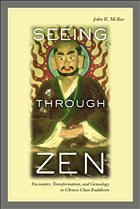
Chan-more popularly known as Zen-Buddhism has been romanticized throughout its history. In this book, John R. McRae shows how modern critical techniques, supported by recent manuscript discoveries, make possible a more skeptical, accurate, and - ultimately - productive assessment of Chan lineages, teachings, fundraising practices, and social organization. Synthesizing twenty years of scholarship, Seeing through Zen offers new, accessible analytic models for the interpretation of Chan spiritual practices and religious history.
Writing in a lucid and engaging style, McRae guides us through the emergence of this Chinese spiritual tradition and its early figureheads, Bodhidharma and the "sixth patriarch" Huineng, and the development of Zen dialogue and koans. In addition to providing a central narrative for the doctrinal and social evolution of the school, Seeing through Zen examines the religious dynamics behind Chan's use of iconoclastic stories and myths of patriarchal succession. The author also provides a lively and useful set of "Rules of Zen Studies" for those interested in furthering their understanding of Zen.
Writing in a lucid and engaging style, McRae guides us through the emergence of this Chinese spiritual tradition and its early figureheads, Bodhidharma and the "sixth patriarch" Huineng, and the development of Zen dialogue and koans. In addition to providing a central narrative for the doctrinal and social evolution of the school, Seeing through Zen examines the religious dynamics behind Chan's use of iconoclastic stories and myths of patriarchal succession. The author also provides a lively and useful set of "Rules of Zen Studies" for those interested in furthering their understanding of Zen.