
Andere Kunden interessierten sich auch für
 Asian Traditions of Meditation75,99 €
 Knowing Self, Changing Self104,99 €
 The Dog Who Followed the Moon18,99 €
 Consciousness, Knowledge, and Truth61,99 €
 Exploring the Self, Subjectivity, and Character Across Japanese and Translation Texts139,99 €
 Self, System and the Non-Conscious22,99 €
 The Illustrated Meditations29,99 €



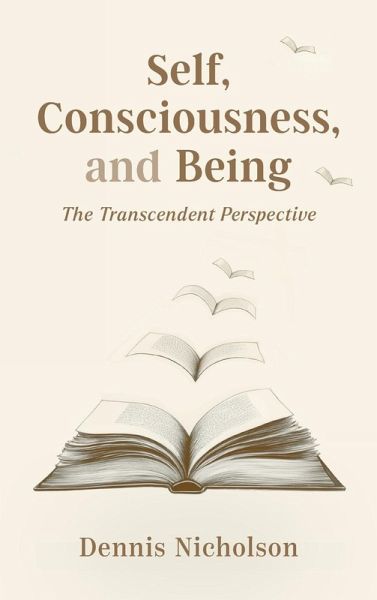
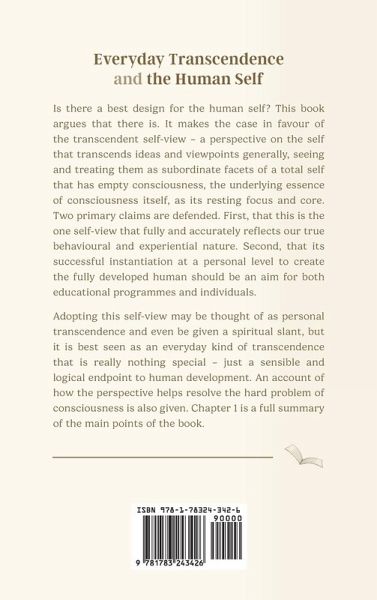
The book argues that there is a best design for the human self, making the case in favour of the transcendent self-view - a perspective on the self that transcends ideas and viewpoints generally, seeing and treating them as subordinate facets of a total self that has empty consciousness, the underlying essence of consciousness itself, as its resting focus and core. The two main claims defended are, first, that it is the one self-view that fully and accurately reflects our true behavioural and experiential nature; second, that making it the basis of the fully developed human self, whilst also maintaining unique personal elements, should be an aim for both the individual and educational professionals. For the individual, taking this step may be thought of as personal transcendence and may even be given a spiritual slant, but it is best seen as an everyday kind of transcendence that is really nothing special - just a sensible and logical endpoint to human development. An account of how the perspective helps resolve the hard problem of consciousness is also given. Chapter 1 is a full summary of the main points of the book.