
Andere Kunden interessierten sich auch für
 Semiotische Analyse von Baustrukturen der Wimpfener Königspfalz25,90 €
 Análise semiótica das estruturas dos edifícios do Wimpfener Königspfalz17,99 €
 Analisi semiotica delle strutture edilizie del Wimpfener Königspfalz17,99 €
 Analyse sémiotique des structures architecturales du palais royal de Wimpfen17,99 €
 Semioticheskij analiz stroitel'nyh konstrukcij Vimpfener Königspfal'c17,99 €
 Análisis semiótico de las estructuras de los edificios del Wimpfener Königspfalz17,99 €
 The Elements Of Railroad Engineering29,99 €

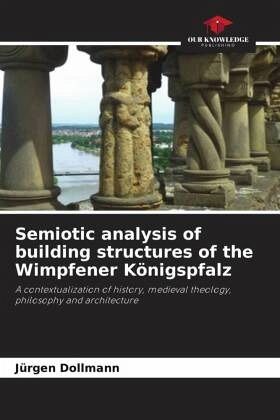
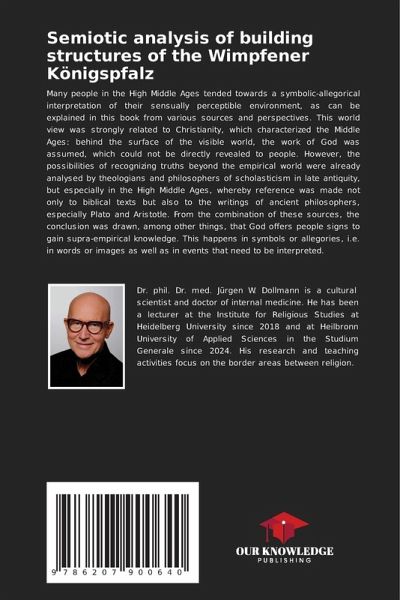
Many people in the High Middle Ages tended towards a symbolic-allegorical interpretation of their sensually perceptible environment, as can be explained in this book from various sources and perspectives. This world view was strongly related to Christianity, which characterized the Middle Ages: behind the surface of the visible world, the work of God was assumed, which could not be directly revealed to people. However, the possibilities of recognizing truths beyond the empirical world were already analysed by theologians and philosophers of scholasticism in late antiquity, but especially in the High Middle Ages, whereby reference was made not only to biblical texts but also to the writings of ancient philosophers, especially Plato and Aristotle. From the combination of these sources, the conclusion was drawn, among other things, that God offers people signs to gain supra-empirical knowledge. This happens in symbols or allegories, i.e. in words or images as well as in events that need to be interpreted.