
Andere Kunden interessierten sich auch für
 The Realms of Verse 1830-187057,99 €
 Paradise Lost and the Romantic Reader65,99 €
") The Arte of English Poesie (Book -III)19,99 €
The Arte of English Poesie (Book -III)19,99 € The Actor's Budget: Consisting of Monologues, Prologues, Epilogues, and Tales, Serious and Comic: Together With a Rare and Genuine Collect23,99 €
 The Text of Paradise Lost36,99 €
") The Arte of English Poesie (Book -I)15,99 €
The Arte of English Poesie (Book -I)15,99 € Mistaken Identities34,99 €
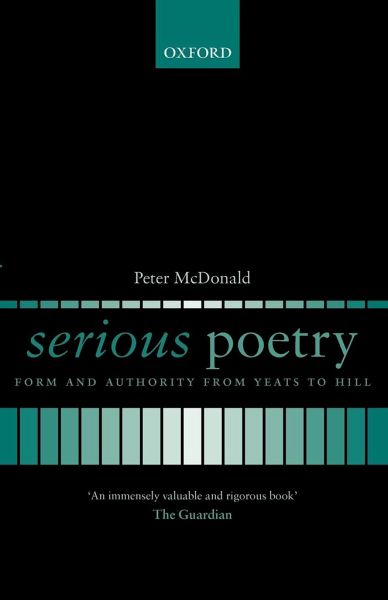
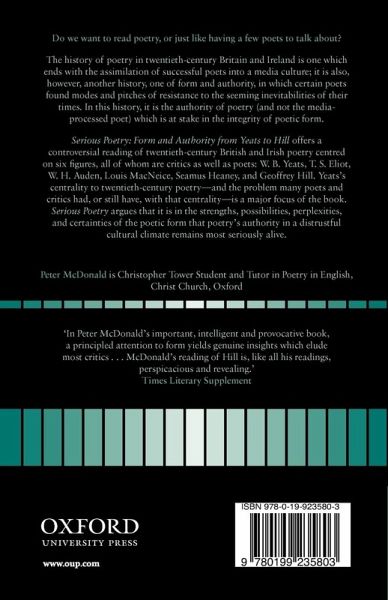
Do we want to read poetry, or just like having a few poets to talk about? The history of poetry in twentieth-century Britain and Ireland is one which ends with the assimilation of successful poets into a media culture; it is also, however, another history, one of form and authority, in which certain poets found modes and pitches of resistance to the seeming inevitabilities of their times. In this history, it is the authority of poetry (and not the media-processed poet) which is at stake in the integrity of poetic form. Serious Poetry: Form and Authority from Yeats to Hill offers a controversial reading of twentieth-century British and Irish poetry centred on six figures, all of whom are critics as well as poets: W. B. Yeats, T. S. Eliot, W. H. Auden, Louis MacNeice, Seamus Heaney, and Geoffrey Hill. Yeats's centrality to twentieth-century poetry - and the problem many poets and critics had, or still have, with that centrality - is a major focus of the book. Serious Poetry argues that it is in the strengths, possibilities, perplexities, and certainties of the poetic form that poetry's authority in a distrustful cultural climate remains most seriously alive.