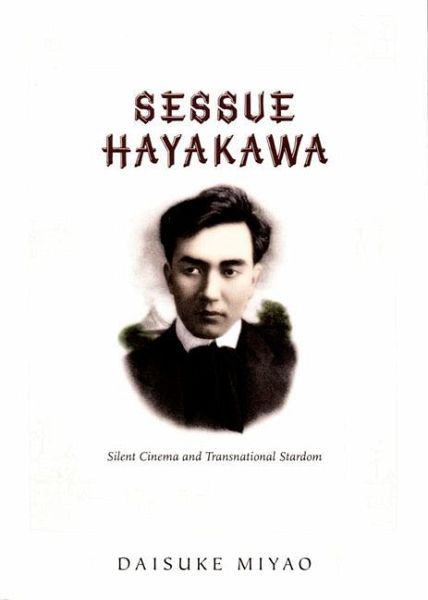
Critical biography of Sessue Hayakawa, a Japanese actor who became a popular silent film star in the U.S., that looks at how Hollywood treated issues of race and nationality in the early twentieth century.
Critical biography of Sessue Hayakawa, a Japanese actor who became a popular silent film star in the U.S., that looks at how Hollywood treated issues of race and nationality in the early twentieth century.
Daisuke Miyao is Assistant Professor of Japanese Literature and Film at the University of Oregon. He is a coeditor of Casio Abe’s Beat Takeshi vs. Takeshi Kitano and a co-translator of Kiju Yoshida’s Ozu’s Anti-Cinema.
Inhaltsangabe
List of Illustration ix List of Abbreviations xi Acknowledgments xiii Introduction 1 PART ONE: Emperor, Buddhist, Spy, or Indian: The Pre-Star Period of Sessue Hayakawa (1914-15) 1. A Star Is Born: The Transnational Success of The Cheat and Its Race and Gender Politics 21 2. Screen Debut: O Mimi San, or The Mikado in Picturesque Japan 50 3. Christianity versus Buddhism: The Melodramatic Imagination in The Wrath of the Gods 57 4. Doubleness: American Images of Japanese Spies in The Typhoon 66 5. The Noble Savage and the Vanishing Race: Japanese Actors in “Indian Films” 76 PART TWO: Villain, Friend, or Lover: Sessue Hayakawa’s Stardom at Lasky-Paramount (1916-18) 6. The Making of an Americanized Japanese Gentleman: The Honorable Friend and Hashimura Togo 87 7. More Americanized than the Mexican: The Melodrama of Self-Sacrifice and the Genteel Tradition in Forbidden Paths 106 8. Sympathetic Villains and Victim-Heroes: The Soul of Kura San and The Call of the East 117 9. Self-Sacrifice in the First World War: The Secret Game 127 10. The Cosmopolitan Way of Life: The Americanization of the Sessue Hayakawa in Magazines 136 PART THREE: “Triple Consciousness”: Sessue Hayakawa’s Stardom at Haworth Pictures Corporation (1918-22) 11. Balancing Japaneseness and Americanization: Authenticity and Patriotism in His Birthright and Banzai 153 12. Return of the Americanized Orientals: Robertson-Cole’s Expansion and Standardization of Sessue Hayakaway’s Star Vehicles 168 13. The Mask: Sessue Hayakawa’s Redefinition of Silent Film Acting 195 14. The Star Falls: Postwar Nativism and the Decline of Sessue Hayakawa’s Stardom 214 PART FOUR: Stardom and Japanese Modernity: Sessue Hayakawa in Japan 15. Americanization and Nationalism: The Japanese Reception of Sessue Hayakawa 235 Epilogue 261 Notes 283 Filmography 333 Bibliography 337 Index 365
List of Illustration ix List of Abbreviations xi Acknowledgments xiii Introduction 1 PART ONE: Emperor, Buddhist, Spy, or Indian: The Pre-Star Period of Sessue Hayakawa (1914-15) 1. A Star Is Born: The Transnational Success of The Cheat and Its Race and Gender Politics 21 2. Screen Debut: O Mimi San, or The Mikado in Picturesque Japan 50 3. Christianity versus Buddhism: The Melodramatic Imagination in The Wrath of the Gods 57 4. Doubleness: American Images of Japanese Spies in The Typhoon 66 5. The Noble Savage and the Vanishing Race: Japanese Actors in “Indian Films” 76 PART TWO: Villain, Friend, or Lover: Sessue Hayakawa’s Stardom at Lasky-Paramount (1916-18) 6. The Making of an Americanized Japanese Gentleman: The Honorable Friend and Hashimura Togo 87 7. More Americanized than the Mexican: The Melodrama of Self-Sacrifice and the Genteel Tradition in Forbidden Paths 106 8. Sympathetic Villains and Victim-Heroes: The Soul of Kura San and The Call of the East 117 9. Self-Sacrifice in the First World War: The Secret Game 127 10. The Cosmopolitan Way of Life: The Americanization of the Sessue Hayakawa in Magazines 136 PART THREE: “Triple Consciousness”: Sessue Hayakawa’s Stardom at Haworth Pictures Corporation (1918-22) 11. Balancing Japaneseness and Americanization: Authenticity and Patriotism in His Birthright and Banzai 153 12. Return of the Americanized Orientals: Robertson-Cole’s Expansion and Standardization of Sessue Hayakaway’s Star Vehicles 168 13. The Mask: Sessue Hayakawa’s Redefinition of Silent Film Acting 195 14. The Star Falls: Postwar Nativism and the Decline of Sessue Hayakawa’s Stardom 214 PART FOUR: Stardom and Japanese Modernity: Sessue Hayakawa in Japan 15. Americanization and Nationalism: The Japanese Reception of Sessue Hayakawa 235 Epilogue 261 Notes 283 Filmography 333 Bibliography 337 Index 365
Es gelten unsere Allgemeinen Geschäftsbedingungen: www.buecher.de/agb
Impressum
www.buecher.de ist ein Internetauftritt der buecher.de internetstores GmbH
Geschäftsführung: Monica Sawhney | Roland Kölbl | Günter Hilger
Sitz der Gesellschaft: Batheyer Straße 115 - 117, 58099 Hagen
Postanschrift: Bürgermeister-Wegele-Str. 12, 86167 Augsburg
Amtsgericht Hagen HRB 13257
Steuernummer: 321/5800/1497
USt-IdNr: DE450055826